




Wetlands are like the earth’s natural sponges. These muddy, water-filled areas—like lakes and marshes—are not just pools of water. They are bustling homes for thousands of birds, fish, and plants. When a wetland is given the title of a “Ramsar Site,” it means the whole world recognizes it as a special place that needs to be protected.
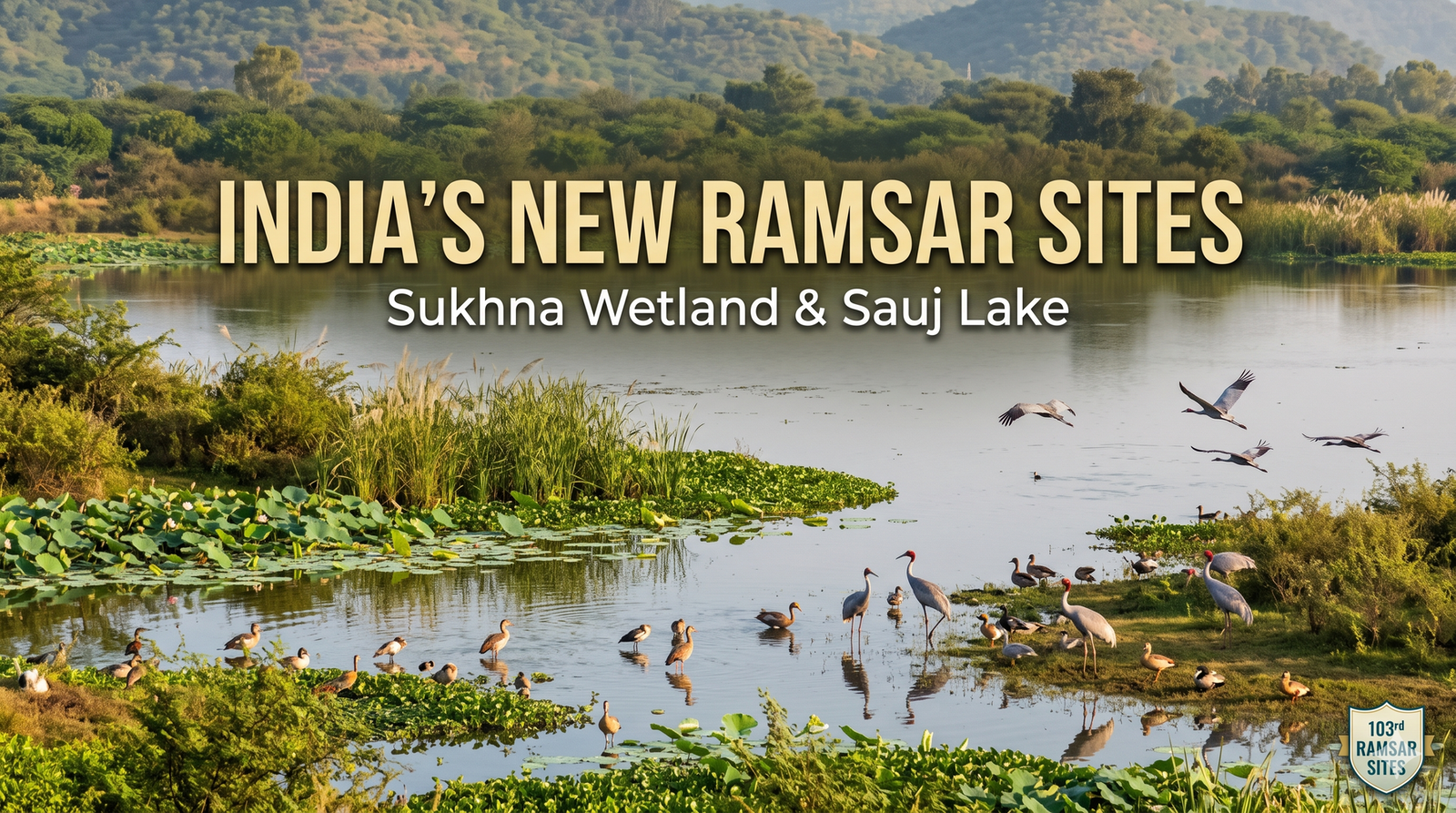
Recently, India took another big step for nature by adding two new locations to this international list. As of October 2026, India now proudly has 103 Ramsar sites. Let’s learn about the two newest additions in simple terms.
1. Sukhna Wetland (Chandigarh)
Located right at the bottom of the Himalayan mountains in Chandigarh, Sukhna Wetland is a beautiful and important water body. It acts as a natural controller, managing the water and soil that flow in from nearby areas.
Why it matters:
A Winter Vacation for Birds: When it gets too cold in Central Asia, birds fly thousands of miles to spend their winter here. It’s a safe place for them to eat, rest, and raise their babies.
Home to Rare Animals: You can find special and threatened creatures here, like the Common Pochard bird, Pallas’s Fish Eagle, and the Black Pond Turtle.
The Problems it Faces:
Even though it is beautiful, Sukhna Wetland has some problems. Dirt and mud (silt) constantly wash into the water, making it shallower. Also, unwanted, fast-spreading plants are taking over the space of natural plants.
2. Sauj Lake (Mainpuri, Uttar Pradesh)
The second new site is Sauj Lake, found in the Mainpuri district of Uttar Pradesh. It sits near the Ganga river and is surrounded by farming fields.
Why it matters:
Nature’s Kitchen: The lake is packed with lotus plants and wild sugarcane. These plants are perfect for providing food and shelter to wildlife.
Bird Paradise: Over 300 different types of water birds live here. Global wildlife experts have named it a highly important area for birds, especially for rare ones like the tall Sarus Crane and the Greater Spotted Eagle.
How they are protecting it:
To keep the lake healthy, strict rules are put in place. Fishing is paused during certain seasons, and fishermen aren’t allowed to use nets with tiny holes because they accidentally trap baby fish and destroy underwater plants. They also try to keep farm animals from wandering into the water.
What Exactly is a Ramsar Site?
The name “Ramsar” comes from a city in Iran. Back in 1971, leaders from around the world met there and signed an agreement to protect wetlands. India joined this mission in February 1982.
A Fun Fact: For a coastal or sea-level wetland to make the list, its water usually shouldn’t be deeper than 6 meters (about 20 feet) when the tide is at its lowest. Even shallow water that only reaches your knees can be a Ramsar site if it is important for nature!
We celebrate World Wetlands Day on February 2nd every year. In India, the state of Tamil Nadu has the highest number of these sites, while Uttar Pradesh now has 14.
A Quick Look at Other 2026 Additions
The year 2026 has been amazing for India’s wetlands. Before these two were added, India welcomed a few others earlier in the year:
Early 2026: Patna Bird Sanctuary (UP) and Chhari Dhand (Gujarat).
April 2026: Sheikha Jheel (UP) became India’s 99th site.
June 2026: Jai Prakash Narayan Bird Sanctuary (UP) hit the milestone as the 100th site.
August 2026: Glow Lake in Arunachal Pradesh became the 101st site.
Protecting these lakes and marshes is one of the best ways we can save our animals and ensure a clean, healthy planet for the future.