




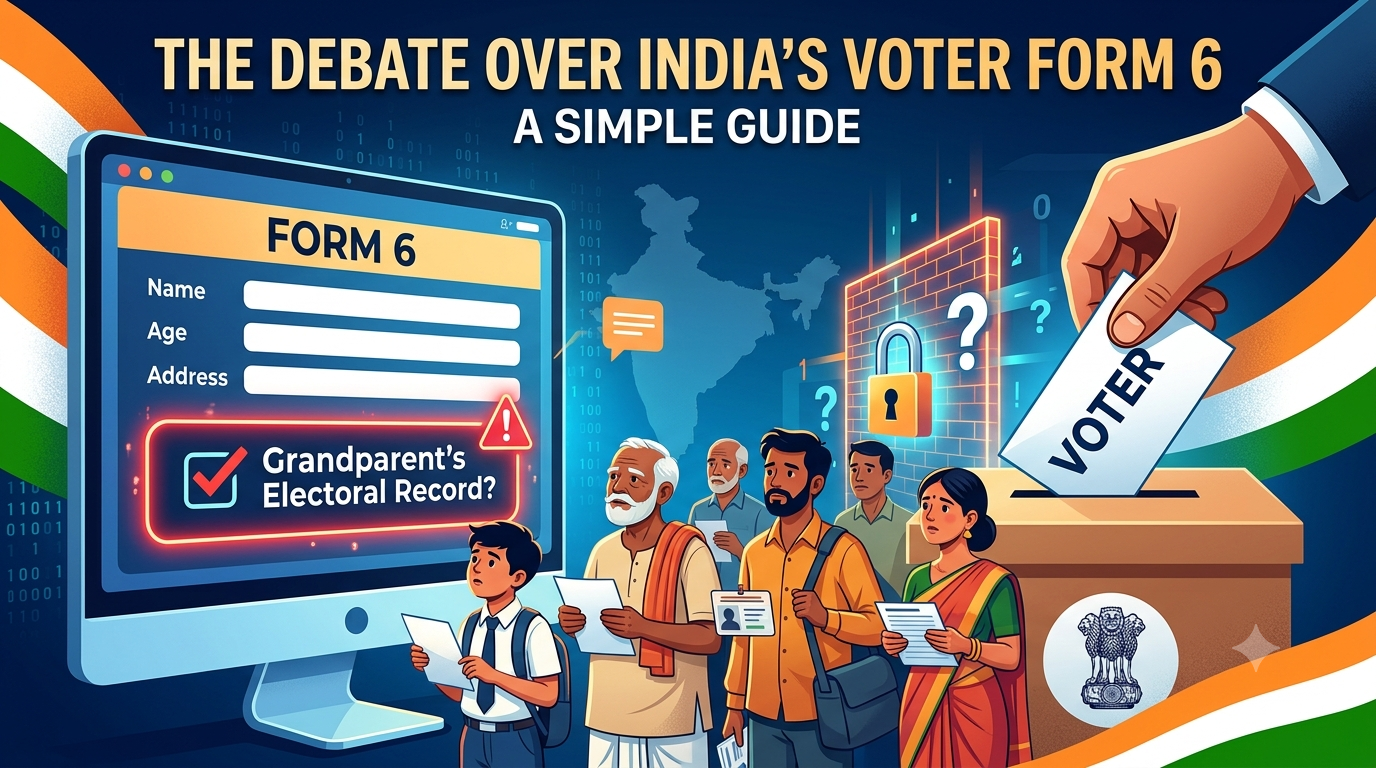
When you turn 18 in India and want to vote, the first step is to fill out a document called Form 6. This is the official form that gets your name added to the voter list. Recently, a major debate has started over unexpected changes made to the online version of this form, involving the Election Commission and the Supreme Court.
Here is a simple breakdown of what happened and why it matters.
What is Form 6?
Having a Voter ID card doesn’t automatically mean you can vote; your name must actually be on the official voter list. Form 6 is the legal paperwork you fill out to get on that list. Officially, it only asks for basic details like your name, address, age, and ID proof.
The Unexpected Change
Recently, the government was updating the voter list. During this time, people filling out Form 6 online noticed a new, surprise question. The website asked applicants to provide details proving that their parents or grandparents were on older voter lists.
The problem? This extra requirement was never added to the official legal rules for Form 6. It was only added to the online portal.
Disagreement Inside the Election Commission
The Election Commission of India (ECI), which runs the country’s elections, is led by three commissioners. They are supposed to make decisions by majority vote.
According to reports, two of the three commissioners were against adding this new family history question. They argued that it was wrong and illegal to change the form without officially updating the law first. Because a majority opposed it, the change became highly controversial.
What Did the Supreme Court Say?
At one point, a statement from the ECI suggested that the Supreme Court was okay with this extra question.
However, the Chief Justice of India recently cleared up the confusion. He stated firmly that the Supreme Court did not approve any changes to Form 6. The court has now asked to see the Election Commission’s internal records to find out exactly who authorized the new question and how it happened.
Why Should We Care?
This might just sound like a debate over paperwork, but it actually affects everyday citizens and how our laws work:
1. It Can Stop Genuine People from Voting
Imagine an 18-year-old from a poor family or a family that moves around a lot for work. They might have their own ID, but asking them to dig up decades-old records of their grandparents could be impossible. If the process becomes too difficult, real, eligible citizens might be left off the voter list and lose their voice in elections.
2. Websites Shouldn’t Make the Rules
This situation highlights a modern problem: can software change the law? If the actual law says you only need to provide five pieces of information, a government website shouldn’t block you from registering unless you provide a sixth. Technology is meant to follow the law, not secretly rewrite it through digital checkboxes.
What Happens Next?
The Supreme Court is currently looking into the matter and will make a final decision soon. Until then, this debate serves as a strong reminder that the path to voting should be fair, accessible, and strictly follow the law.