




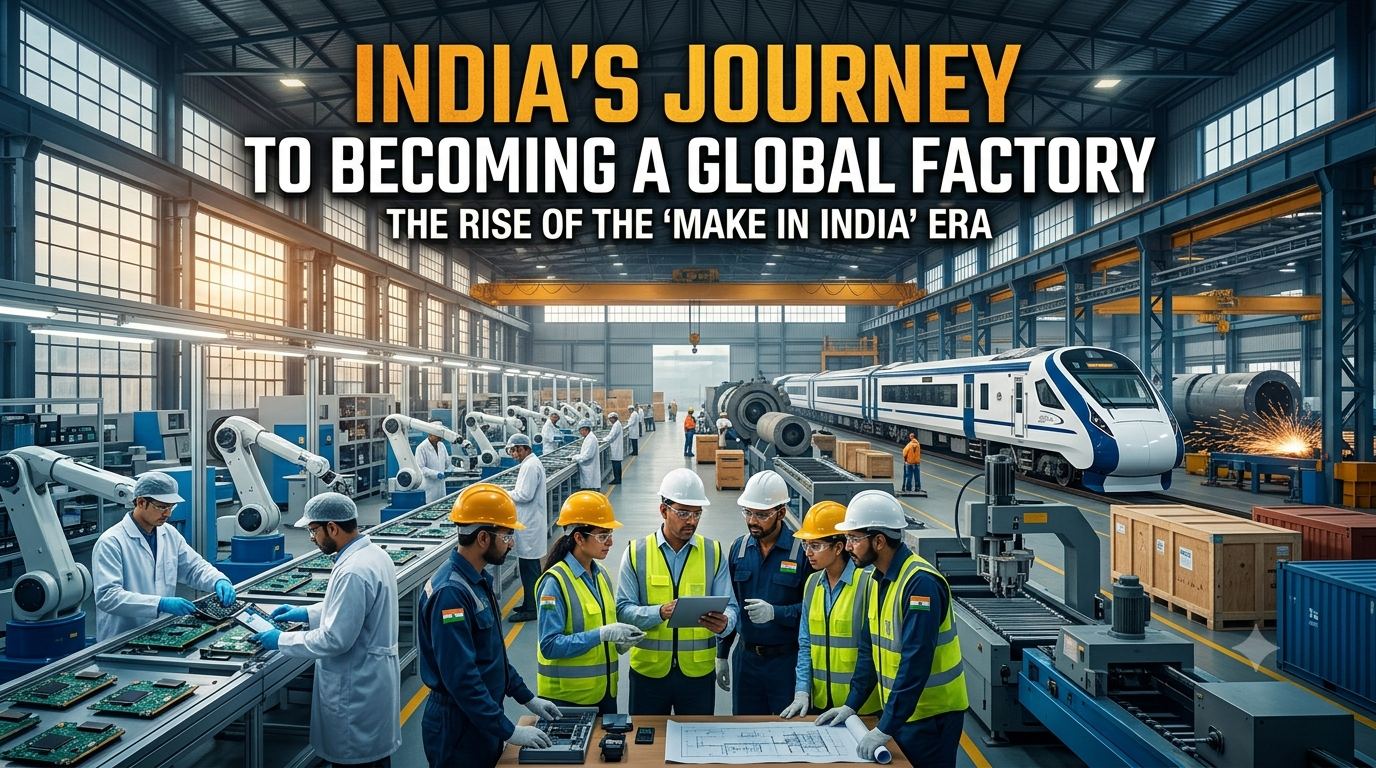
In 2014, Prime Minister Narendra Modi launched the “Make in India” campaign to transform the country from a giant consumer market into a massive global center for manufacturing and exports. At the time, economic growth was slowing down, and the country needed a way to create stable jobs for its large, young population.
The Four Main Goals
The program focuses on four main areas to improve how businesses operate:
Simpler Rules: Making it much easier for both new startups and established companies to run their businesses without unnecessary hurdles.
Better Infrastructure: Building smart cities, industrial zones, and high-speed communication networks to support factories.
Opening New Industries: Allowing more foreign money to flow into important sectors like defense, insurance, medical devices, and railways.
A Supportive Government: Changing the government’s role from a strict rule-maker to a helpful partner that actively encourages business growth.
Major Programs Driving Growth
To push this vision forward, the initiative now covers 27 different manufacturing and service sectors. Several massive programs help drive this effort:
Production Rewards: The government created a ₹1.97 lakh crore fund to reward companies across 14 sectors for producing goods locally. By March 2024, this brought in ₹1.23 lakh crore in investments and created roughly 8 lakh jobs.
PM Gati Shakti: Started in 2021, this project connects 36 government departments to better plan and build transport networks, aiming to help India reach a $5 trillion economy.
Tech and Microchips: The government set aside ₹76,000 crore to build a local industry for semiconductors, which are the essential computer chips used in modern electronics.
Taxes and Digital Payments: The 2017 Goods and Services Tax (GST) combined the country into a single market, making production cheaper. Meanwhile, India’s digital payment system (UPI) is booming, now handling 46% of all real-time digital payments worldwide.
Real-World Successes
Over the past decade, this focus on local manufacturing has led to major wins:
Healthcare: India is now a massive exporter of life-saving medicine, supplying nearly 60% of all vaccines used worldwide.
Electronics: The country is the second-largest maker of mobile phones in the world, building 99% of its smartphones locally rather than buying them from abroad.
Transport and Defense: India proudly built its own modern Vande Bharat passenger trains and its first domestic aircraft carrier, the INS Vikrant. Indian-made boots are even being used by the Russian Army.
Everyday Goods: The clothing industry has created 14.5 crore jobs nationwide. Furthermore, India now makes 400 million toys a year, exports bicycles to Europe, sells Amul dairy products in the US, and supplies Kashmiri willow cricket bats globally.
By making it easier to do business and investing heavily in modern infrastructure, India is steadily turning its vision of becoming self-reliant and globally competitive into a reality.