




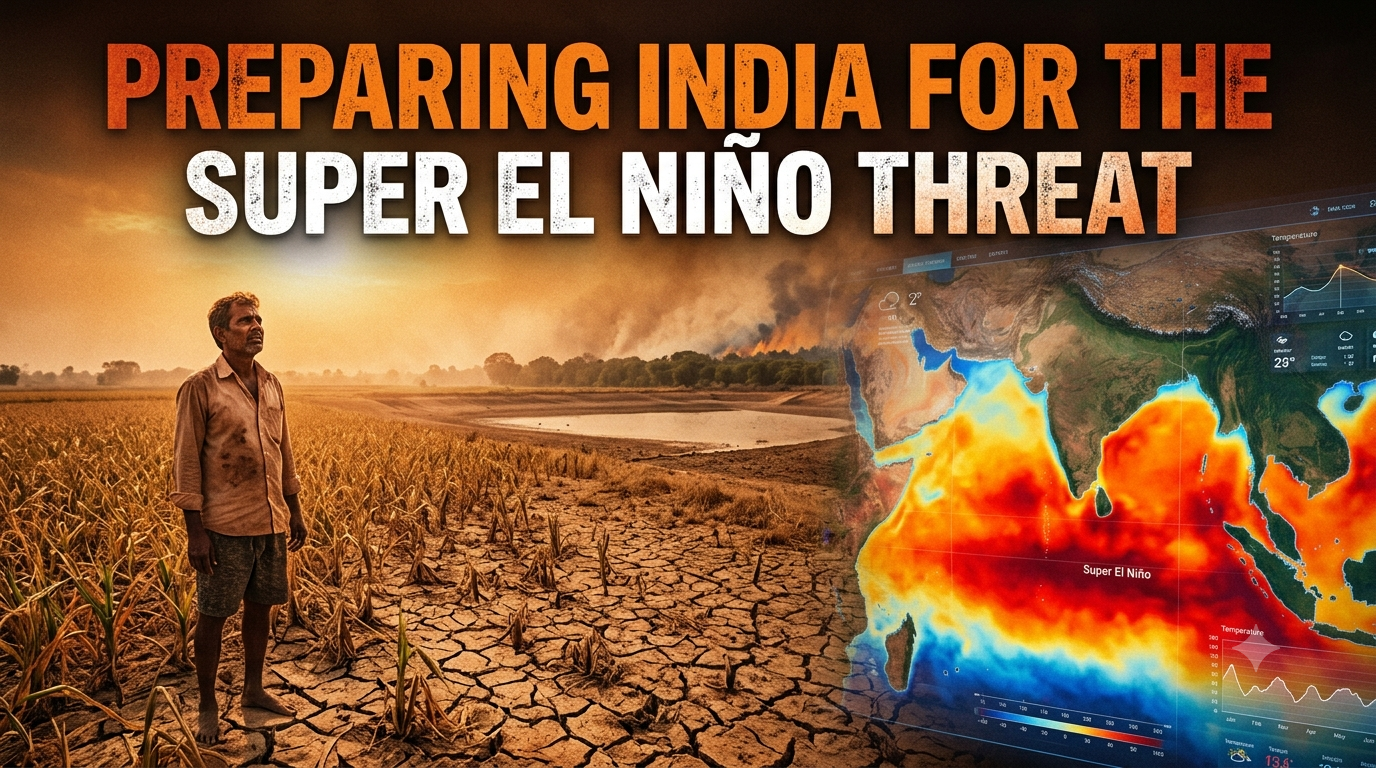
Weather experts are issuing a strong warning: current ocean warming patterns are expected to last until early 2027, with a high probability of developing into a severe “Super El Niño.” When this intense natural weather cycle combines with everyday global warming, it creates a massive challenge that could severely disrupt India’s climate, agriculture, and economy.
What is a Super El Niño?
Under normal conditions, steady ocean winds push warm surface water toward Asia and Australia. During a regular El Niño, these winds slow down or reverse, causing warm water to pool near the Americas and changing global weather patterns. A “Super El Niño” happens when this ocean water gets dangerously hot—rising between 2 to 4 degrees Celsius above normal. This dramatic temperature spike amplifies extreme weather worldwide, leading to worse heatwaves and severe droughts.
Why This Matters for India
India’s environment and farming rely heavily on the annual monsoon rains. A Super El Niño actively blocks the weather systems that bring these essential showers. Historically, similar events in 1972, 2002, and 2009 resulted in crippling droughts across the country.
Areas Most at Risk
Farming and Food Prices: Most Indian agriculture depends entirely on rainfall. A disrupted monsoon delays planting and shrinks harvests for everyday crops like rice and cotton. When food production drops, prices at the grocery store go up.
Ocean Health: The intense heat of a Super El Niño is devastating to underwater life. Corals cannot survive the hot water and expel the algae that keep them alive, turning stark white in a process known as coral bleaching.
Fishing Communities: As ocean temperatures rise, fish naturally migrate to cooler, deeper waters. This forces local fishermen to travel much further out to sea, increasing their fuel costs while decreasing their daily catch and income.
Cities and Forests: On land, the dry heat increases the risk of destructive forest fires. Meanwhile, concrete cities trap the excess heat, creating localized hotspots that make urban summers dangerously uncomfortable.
Steps for the Future
One of the biggest hurdles in fighting these climate shocks is a lack of localized data. Planners often do not know exactly how a specific district will be hit until it is too late. To protect the country moving forward, experts are pushing for a targeted, three-step action plan:
Upgraded Science: Track local weather, ocean temperatures, and environmental changes in real time so specific towns know what to expect.
Smarter Administration: Build early warning systems and force agricultural and weather departments to share information so they can prepare for droughts before they start.
Community Action: Bring farmers, fishermen, local citizens, and helpful organizations together to build emergency plans that make sense for their specific neighborhoods.