




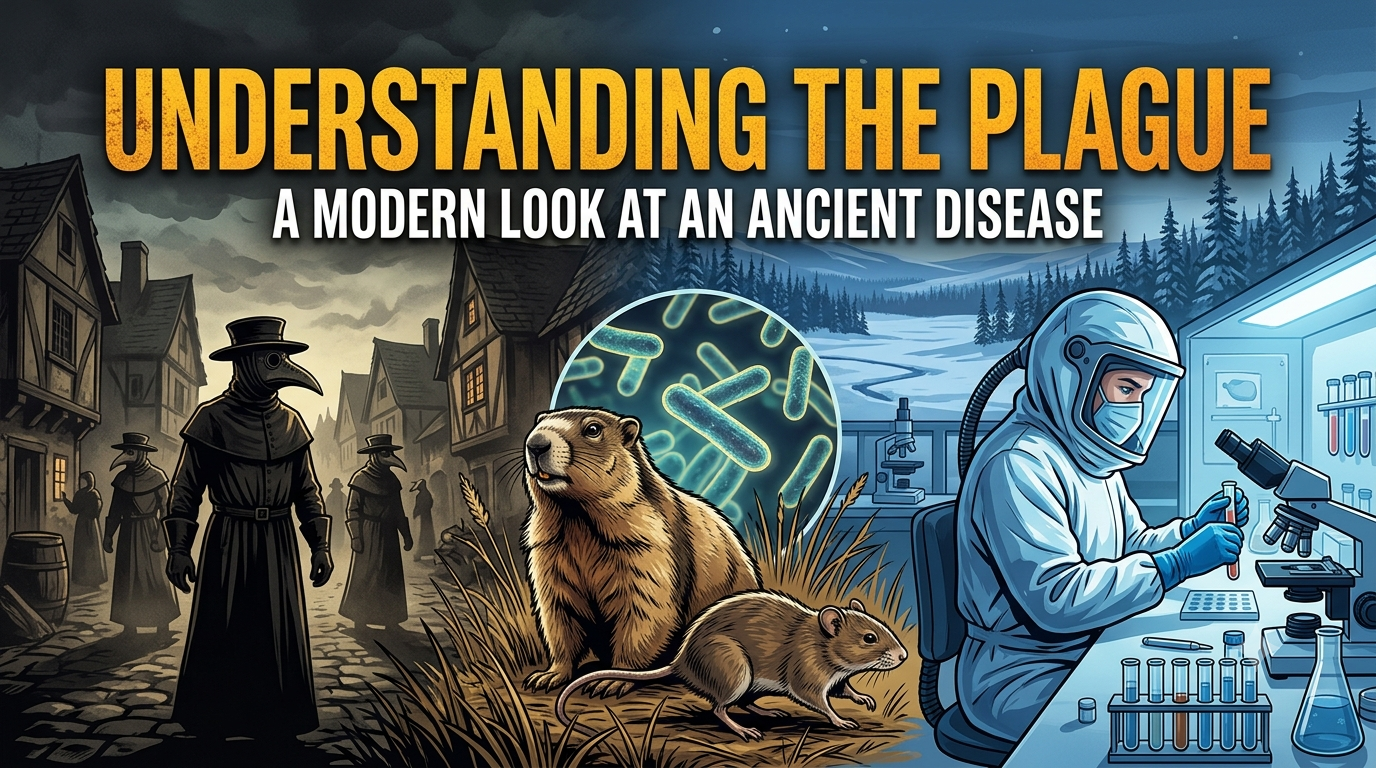
Recently, the world was reminded of a very old disease when a laboratory worker in Siberia, Russia, suddenly passed away. Doctors suspected it might be a case of “pneumonic plague.” This news made headlines because it brought back dark memories of the “Black Death,” a massive plague outbreak that took millions of lives hundreds of years ago.
How Did It Start?
The worker had recently traveled to a region near Mongolia where the plague naturally exists in wild animals like marmots. There were also rumors that a glass tube containing the bacteria might have accidentally broken in the lab. To be safe, local health officials quickly placed the worker’s close contacts in isolation, though they officially labeled the case as pneumonia of an unknown cause.
What Exactly is the Plague?
The plague is a serious illness caused by a specific type of bacteria. It is a “zoonotic” disease, meaning it jumps from animals to humans. In nature, the bacteria live in small rodents like rats, squirrels, and marmots. The disease usually spreads to humans through fleas. When a flea bites a sick animal and then bites a human, it passes the bacteria into the human’s body.
The Three Types of Plague
There are three main ways the plague attacks the body:
Bubonic Plague: This is the most common form and the one that caused the historic Black Death. After a flea bite, the bacteria travel to the body’s lymph nodes (often in the neck, armpits, or groin), causing large, painful, swollen lumps called “buboes.”
Septicemic Plague: This happens when the bacteria multiply directly in the bloodstream. It is very dangerous and can cause the body’s organs to shut down.
Pneumonic Plague: This is the deadliest and most aggressive form. It happens when the bacteria infect the lungs, causing severe pneumonia. Unlike the other types, pneumonic plague can spread directly from person to person through coughing and breathing. It works so fast that a person can become critically ill within just 24 hours.
Can It Be Cured?
The good news is that we no longer live in the Middle Ages. In the late 1800s, scientists finally discovered the bacteria and the fleas responsible for the disease. Today, the plague can be completely cured using common antibiotics, provided the medicine is given quickly. However, small outbreaks still happen today in parts of the world where people do not have easy access to good sanitation and modern healthcare.
Why We Must Still Be Careful
Even though the plague is easily curable today, the recent incident in Russia shows us why we cannot ignore it:
Lab Safety: Scientists study dangerous diseases to keep us safe, but laboratories must have incredibly strict rules so that germs do not accidentally escape.
Biological Threats: Because the lung-based (pneumonic) plague spreads so easily between people, there is always a fear that bad actors could try to use it as a weapon.
Animal Health is Human Health: The health of our environment and wild animals is directly linked to our own health. If diseases are spreading in nature, they can easily jump to us.
Global Teamwork: Diseases don’t care about borders. When a dangerous sickness appears, countries need to be honest and share information quickly so the rest of the world can help stop it from spreading.