




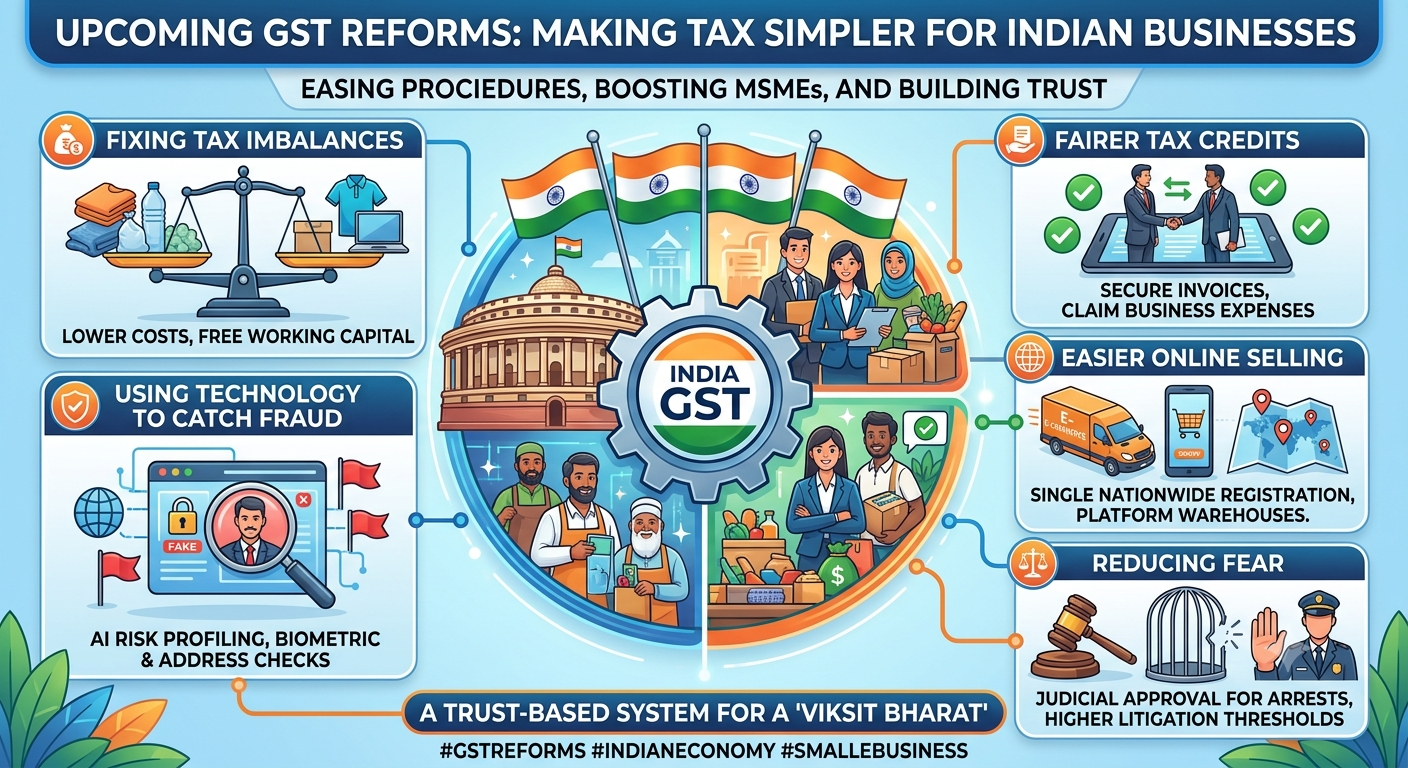
India is preparing to introduce a new set of changes to its Goods and Services Tax (GST) system. The GST Council is meeting on October 7, 2026, in New Delhi to finalize these updates. Instead of changing tax rates, the government is now focusing on making tax rules much easier to follow, especially for small businesses, to help speed up economic growth.
Here are the main changes expected to help business owners:
Fixing Unfair Tax Burdens
Sometimes, businesses pay a higher tax rate on their raw materials than on the finished products they sell. This traps their money in the government system as unreturned credits. The upcoming changes aim to fix this imbalance, which will free up cash for businesses and could lower the cost of making goods.
Fairer Tax Credits for Honest Buyers
Under the current system, if a business pays GST to a supplier, but that supplier secretly keeps the tax money instead of paying the government, the honest buyer loses their tax credit. The government plans to introduce a new matching system that protects genuine buyers so they do not lose their money. Additionally, businesses might finally be allowed to claim tax benefits on everyday expenses like company cars and employee insurance.
Easier Rules for Online Sellers
Right now, if a small business wants to sell products online across India, they have to register for GST in every state where they store goods. The new rules might allow these small online sellers to use just one nationwide registration or use the e-commerce platform’s warehouses for their paperwork. Registration will also become much faster for businesses earning less money.
Reducing the Fear of Arrest
Many business owners worry about tax officials misusing their power to arrest people simply on suspicion of tax mistakes. To build trust, the new rules will likely force tax officials to get permission from a court before arresting anyone for normal tax disputes. The government is also planning to increase the financial limit required to start criminal cases from ₹1 crore to ₹5 crore, meaning minor mistakes won’t lead to severe legal harassment.
Using Technology to Stop Real Thieves
While the government wants to make life easier for honest business owners, it is cracking down on fake companies created just to steal tax refunds. Instead of bothering everyone, the tax department will use smart technology like artificial intelligence, physical address checks, and fingerprint verification to catch real fraudsters.
By focusing on trust rather than suspicion, the government hopes to end “tax terrorism” and create a friendly, stress-free environment for India’s millions of retail traders. These practical changes are seen as a vital step in helping India’s economy grow and moving the country toward becoming a fully developed nation.