




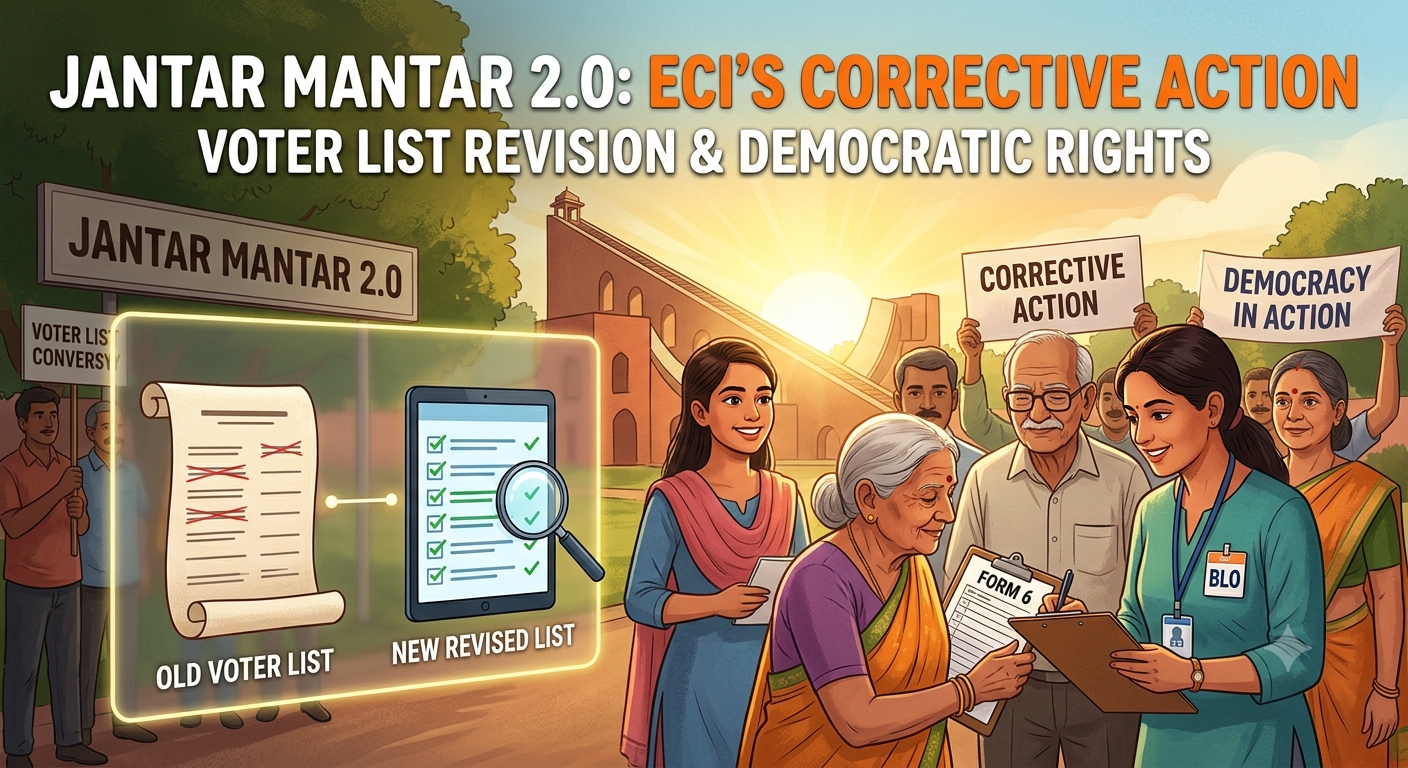
Recently, there has been a lot of public debate and protests regarding India’s voter lists. In response to concerns that millions of legitimate voters were removed, the Election Commission of India (ECI) has stepped in with a plan to fix the mistakes. Here is a simple breakdown of what happened, how it’s being fixed, and why it matters.
What Caused the Uproar?
The problem began with a massive update of the voter list called the Special Intensive Revision (SIR). The main goal of this update was to clean up the list by removing fake, duplicated, or deceased voters.
However, during this cleanup, a staggering 13 crore (130 million) names were deleted. Because this number was so huge, many people feared that real, eligible voters had been wrongly removed. This fear sparked public anger and led to street protests, with groups demanding answers from the Chief Election Commissioner.
How is the Election Commission Fixing It?
To make sure no genuine voter is left behind, the ECI has ordered a special one-month drive across 20 states and union territories. Here is how they plan to fix the list:
Comparing Old and New Lists: Officials will take the old voter list (before the cleanup) and compare it with the new one. If someone’s name was on the old list but is missing from the new one, they will be marked as “left out.”
Door-to-Door Checks: Local officers, known as Booth Level Officers (BLOs), will visit homes to double-check these missing names.
Teamwork with Political Parties: To keep the process fair and open, the ECI will share this data with agents from recognized political parties so they can also keep an eye on the process.
Helping New Voters: The drive will also help young people who are voting for the first time get registered.
Note: If you are an eligible voter who was wrongly removed, you can use Form 6 to apply and get your name back on the list.
A Big Difference: Voting Rights vs. Citizenship
When names get deleted from voter lists, people often panic about their citizenship. It is very important to understand that voter registration and citizenship are two completely different things.
If your name is removed from the voter list, it does not mean you lose your Indian citizenship. However, it does mean you lose your right to vote in upcoming elections, which is a serious loss for any citizen in a democracy.
Did the Protests Force the ECI to Act?
Because the ECI announced these fixes around the same time protests were happening, it looks like the public pressure forced their hand. But if you look at the calendar, the timeline tells a different story.
The ECI actually issued the order to fix the lists on September 29. The main protests did not officially begin until a few days later, on October 2. So, the ECI had already decided to act before the major protests started. Even so, the protests played a crucial role in keeping the issue of voter rights in the news and holding authorities accountable.
The Basic Rules of Voter Lists
The Indian Constitution lays down clear rules for how this works:
Article 324 gives the ECI the total power to control and manage elections and voter lists.
Article 326 promises that adult citizens have the right to vote.
A law from 1950 (The Representation of the People Act) sets the actual step-by-step rules for building the voter lists.
The Bottom Line
Managing a country’s voter list requires balancing three things:
Accuracy (removing bad entries),
Inclusion (keeping genuine voters), and
Correction (fixing mistakes).
The massive cleanup tipped the scales and caused a scare regarding inclusion. However, by launching this new door-to-door drive, the ECI is putting its focus back on correction to ensure every eligible citizen has the chance to cast their vote.