




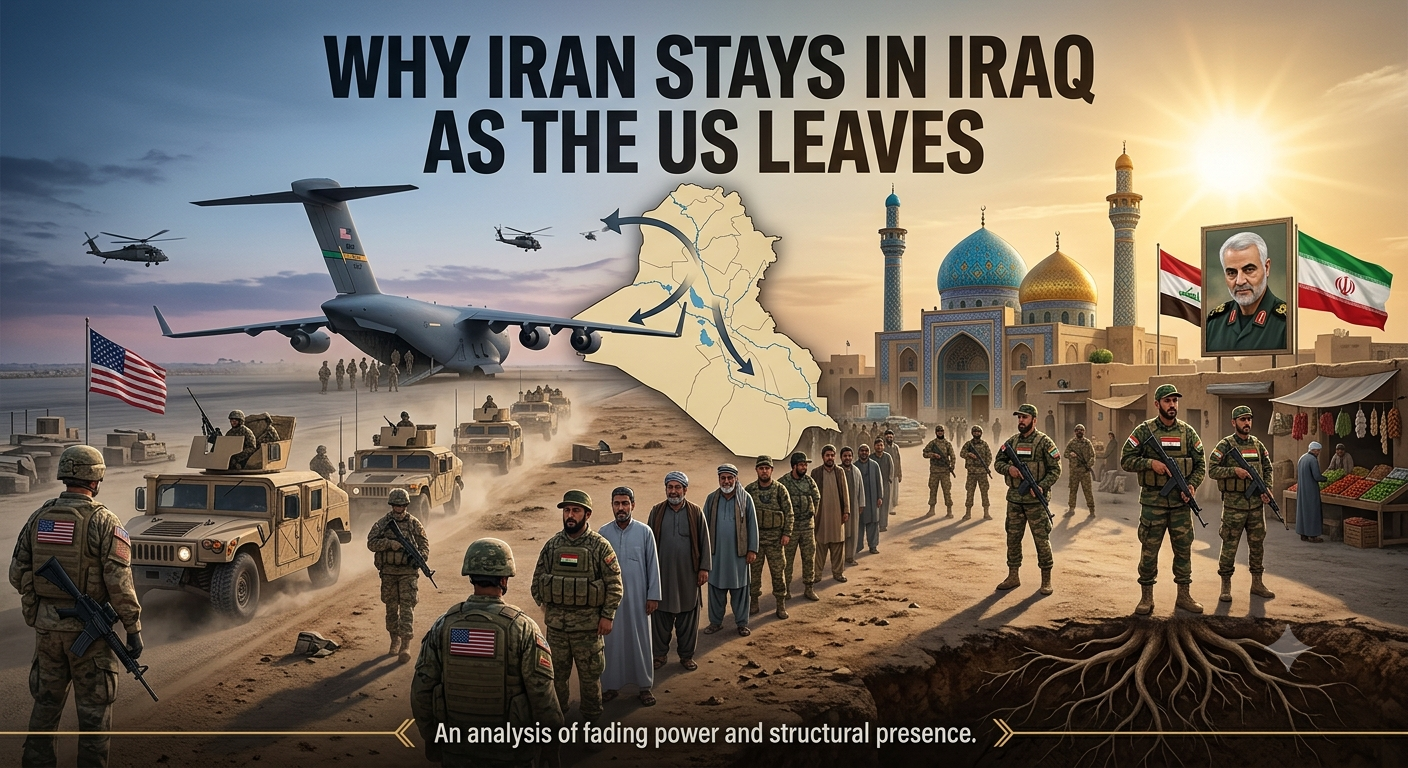
The United States spent over 20 years in Iraq trying to change the Middle East. Today, as American combat troops pack up and leave, a surprising reality has emerged. Iran—which never launched a massive invasion or sent hundreds of thousands of troops—is now the most powerful outside influence in Iraq. How did America fight the war, only for its biggest rival to win the peace?
The 2003 Turning Point
To understand this, we have to look back at 2003. The US invaded Iraq to remove its leader, Saddam Hussein, because they believed he was a danger to the world.
However, taking down Saddam accidentally did a massive favor to Iran. For a long time, Saddam Hussein and Iran were bitter enemies who had fought a terrible, bloody war in the 1980s. When the US got rid of him, they removed the biggest roadblock for Iran. With Saddam gone, Iran easily stepped in to build friendly ties with the new Iraqi leaders.
Why Iran’s Connection is So Strong
America is separated from Iraq by oceans, meaning its presence there is mostly military. Iran, on the other hand, has deep, everyday connections to Iraq that cannot just be packed up and taken home:
Neighbors: Iran and Iraq share a massive land border. Geography makes them permanent neighbors.
Faith: Both countries have a very large Shia Muslim population. Iraq is home to cities like Najaf and Karbala, which are deeply holy to Shia Muslims, naturally drawing the people of both nations together.
Business: The two countries rely heavily on each other for trade and business.
Fighting a Common Enemy in 2014
In 2014, a dangerous terror group called ISIS took over large parts of Iraq. The Iraqi army was struggling, so they asked for help. This created a strange situation where both the US and Iran were fighting the same enemy.
During this fight, Iran helped support and train local armed groups in Iraq to fight ISIS. While these local groups helped defeat the terrorists, they also became very loyal to Iran. This gave Iran powerful, armed allies directly inside Iraq’s borders.
Caught in the Middle (2020)
By 2020, things reached a boiling point. The US used a drone strike in Iraq’s capital to kill Qasem Soleimani, a very important Iranian military leader, along with a local Iraqi commander. This shocking event proved that Iraq was no longer just its own country—it had become a dangerous wrestling ring where the US and Iran fought their battles.
What Happens Next?
Now, the US is formally ending its military mission in Iraq. But just because America is leaving doesn’t mean Iraq’s problems are over.
America is taking its military home, but Iran’s influence is woven into Iraq’s politics, religion, and local armed groups. A military can leave, but a neighbor stays forever.
Going forward, Iraq faces tough questions:
Can Iraq’s own army protect the country from future terrorist threats without US help?
Can the Iraqi government control the local armed groups that are loyal to Iran?
Can Iraq survive being stuck in the middle of the ongoing rivalry between the US and Iran?
The US went to Iraq to change its government, but ultimately, it is Iran that is in the best position to shape Iraq’s future.