




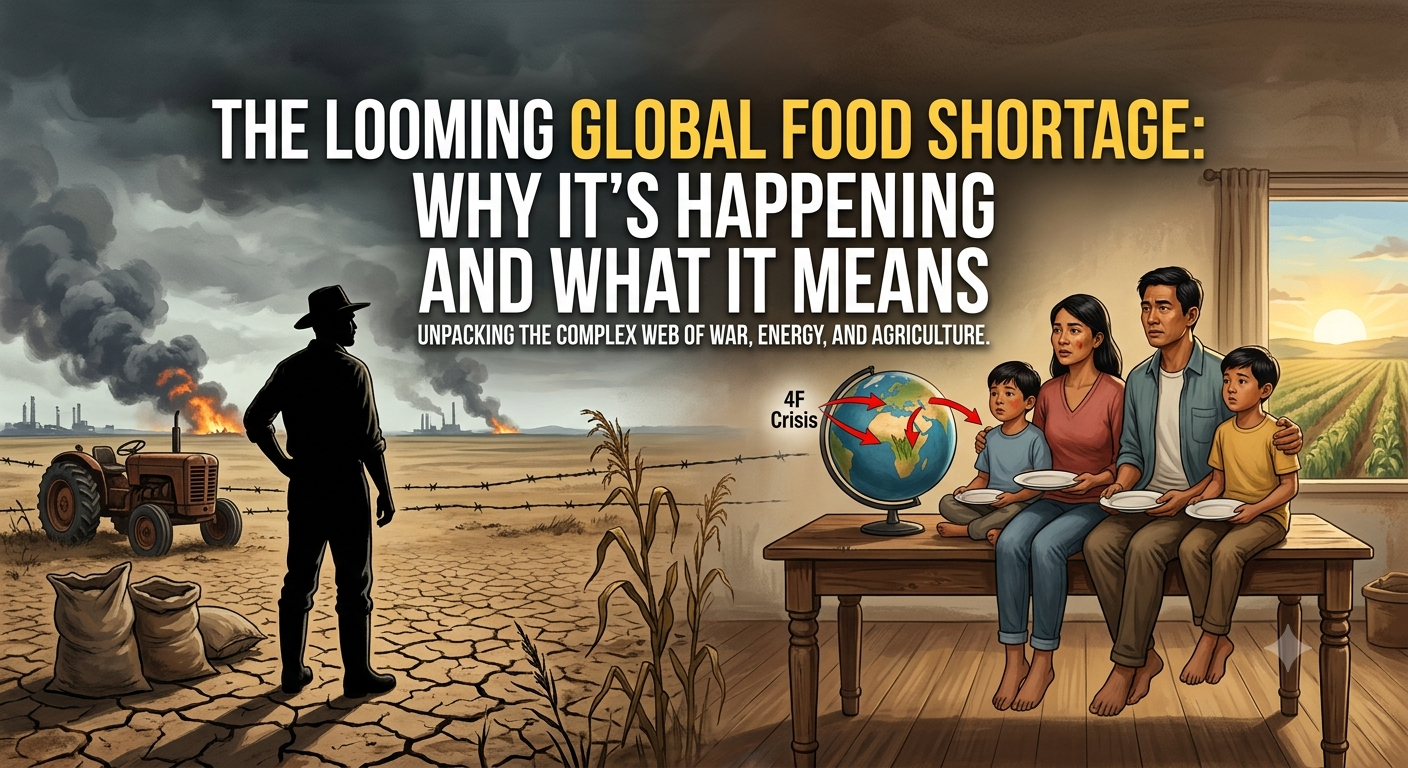
Recently, India’s External Affairs Minister, S. Jaishankar, shared a serious warning: the world could face a major food shortage in the coming months. He explained that ongoing wars, especially in Ukraine and the Middle East, are messing up the global systems that help put food on our tables.
But why do wars happening thousands of miles away affect what we eat? Here is a simple breakdown of the problem, a look at history, and what it means for the future.
The Hidden Connection: Energy and Farming
When people hear “food crisis,” they usually picture empty grocery store shelves. However, the real problem starts much earlier, right at the farm.
Growing enough food for the world requires fertilizers, and making fertilizers requires natural gas. Because of the current conflicts in oil and gas-rich areas, getting natural gas is becoming harder and more expensive.
This creates a dangerous chain reaction:
Less Gas: Wars disrupt the supply of natural gas and oil.
Less Fertilizer: Without natural gas, factories cannot make enough fertilizer (like urea).
Poor Harvests: If farmers can’t get fertilizer, their crops won’t grow properly.
Food Shortages: A bad harvest means less food available globally, which drives up prices and leads to hunger.
This is a much bigger problem than just running low on stored grain. If a country runs out of wheat, it can usually buy some from a neighbor. But if a farmer doesn’t have fertilizer for planting season, that entire crop is ruined, and there is no way to get that lost food back.
This interconnected problem is what Jaishankar calls the “4F Crisis”: Fuel, Food, Fertilizer, and Finance. When one breaks down, they all suffer.
We Have Been Here Before
To understand how serious this is, we can look at five times the world faced major food emergencies in the last 50 years:
The 1970s Oil Shock: Bad weather ruined global harvests, and at the same time, Middle Eastern countries stopped selling oil due to a war. Without oil, tractors couldn’t run and fertilizer couldn’t be made, causing massive food shortages.
The 2007-2008 Panic: A mix of high oil prices and a push for plant-based fuels caused food prices to jump. Panicked countries started banning the export of their own crops, which only made the global shortage worse.
The 2010 Russian Drought: Massive droughts and wildfires hit Russia, a major wheat supplier. They stopped exporting wheat, causing global prices to skyrocket.
The 2020 COVID Lockdowns: This time, there was enough food, but the world shut down. Trucks and ships couldn’t move food to where it was needed, and millions of people lost their jobs and couldn’t afford to buy groceries.
The 2022 Ukraine War: The start of the war blocked major shipping routes in the Black Sea, stopping the flow of important supplies like wheat, corn, and cooking oil.
How is India Doing?
Despite these scary global trends, India has managed to keep things under control so far. When the conflicts started threatening the supply of natural gas from the Middle East, there was real fear that Indian farmers would run out of fertilizer.
However, the Indian government acted quickly. They found new sources to buy natural gas from, making sure fertilizer factories kept running and farmers had what they needed for their crops.
What Happens Next?
The big takeaway from this warning is that the world cannot just sit back and hope the problem fixes itself. Food security relies heavily on world peace and smooth trade. Governments everywhere need to plan ahead, protect their farming supplies, and work together. Otherwise, the ongoing wars could lead to empty plates around the world in the very near future.