




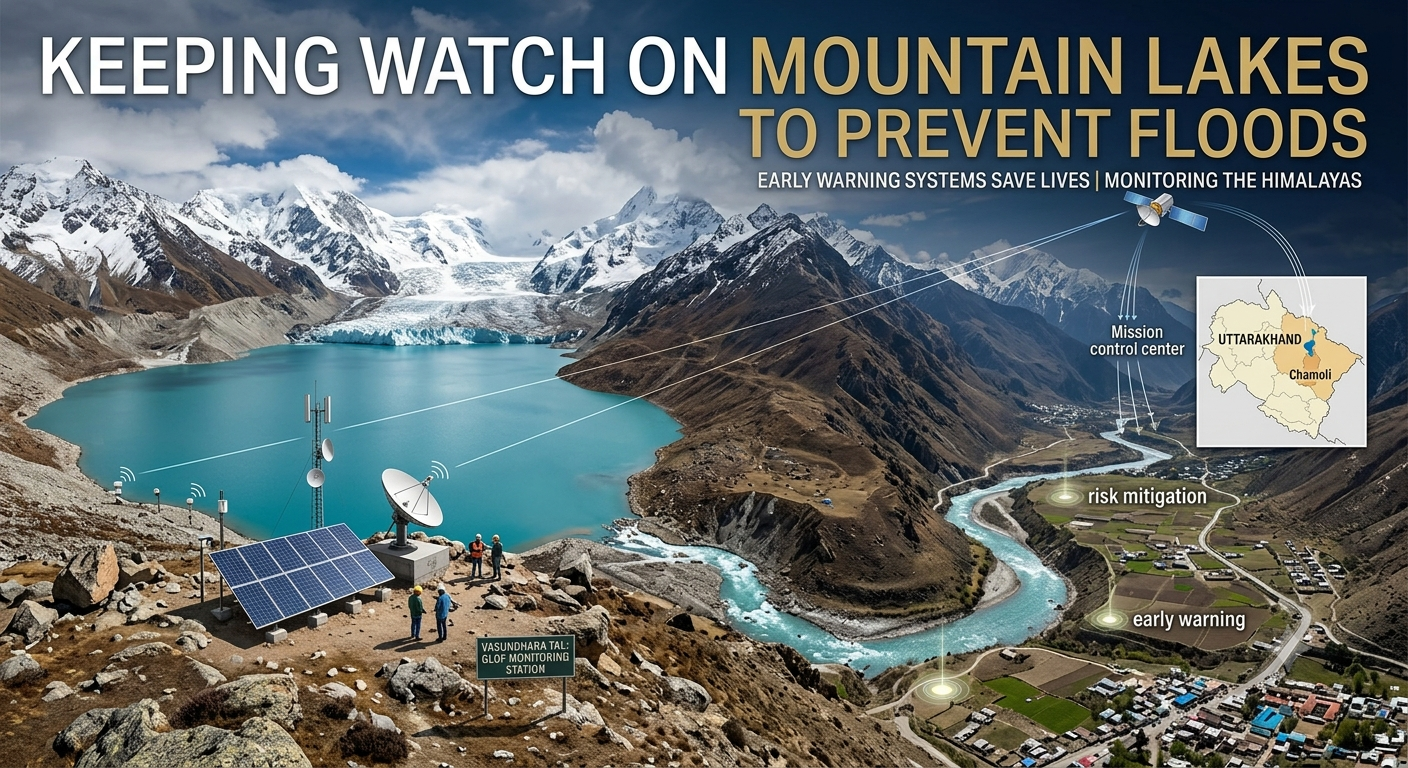
Uttarakhand is installing a new warning system to monitor mountain lakes and protect people from sudden, dangerous floods. This real-time alert system is located at Vasundhara Tal in the Chamoli district and is designed to operate from September 29 to October 15.
Why This Location Was Chosen
Out of more than 300 glacial lakes in the state, authorities have classified 13 as highly dangerous. Vasundhara Tal is one of these high-risk areas. If the water stored in this lake suddenly breaks out of its natural boundaries, it can cause massive flooding in the towns and villages located downstream.
Understanding the Flood Risk
A sudden flood from a mountain lake happens when the barriers holding the water fail. This sudden burst can be triggered by:
Landslides or snow avalanches crashing into the water.
Large chunks of glacier ice breaking off.
Rapidly rising water levels due to heavy rain or fast-melting snow.
Learning from Recent Disasters
Recently, a similar mountain flood caused severe damage and loss of life in neighboring Nepal. That tragedy highlighted a critical lesson: if people receive early warnings, many lives can be saved. Uttarakhand faces the exact same environmental risks because of its steep terrain, populated valleys, and changing climate.
How the New Warning System Works
Instead of relying only on distant satellites, this new setup uses equipment placed directly on the ground at the lake. Solar-powered sensors constantly check:
The water level and flow speed.
Local rainfall and weather conditions.
Snow depth and underground temperatures.
Ground vibrations and movement.
Because these lakes are in remote areas without cell phone service, the sensors beam their data up to communication satellites. If the readings indicate an upcoming flood, the system instantly sends an alert to a central dashboard so officials can start evacuations.
Moving from Reaction to Prevention
This project represents a major shift in how the region handles natural threats. Instead of waiting for a disaster to happen and cleaning up the damage afterward, officials are using ground technology to predict danger before it strikes. With climate change bringing more extreme weather to the Himalayas, spotting the warning signs early is the most effective way to keep local communities safe.