



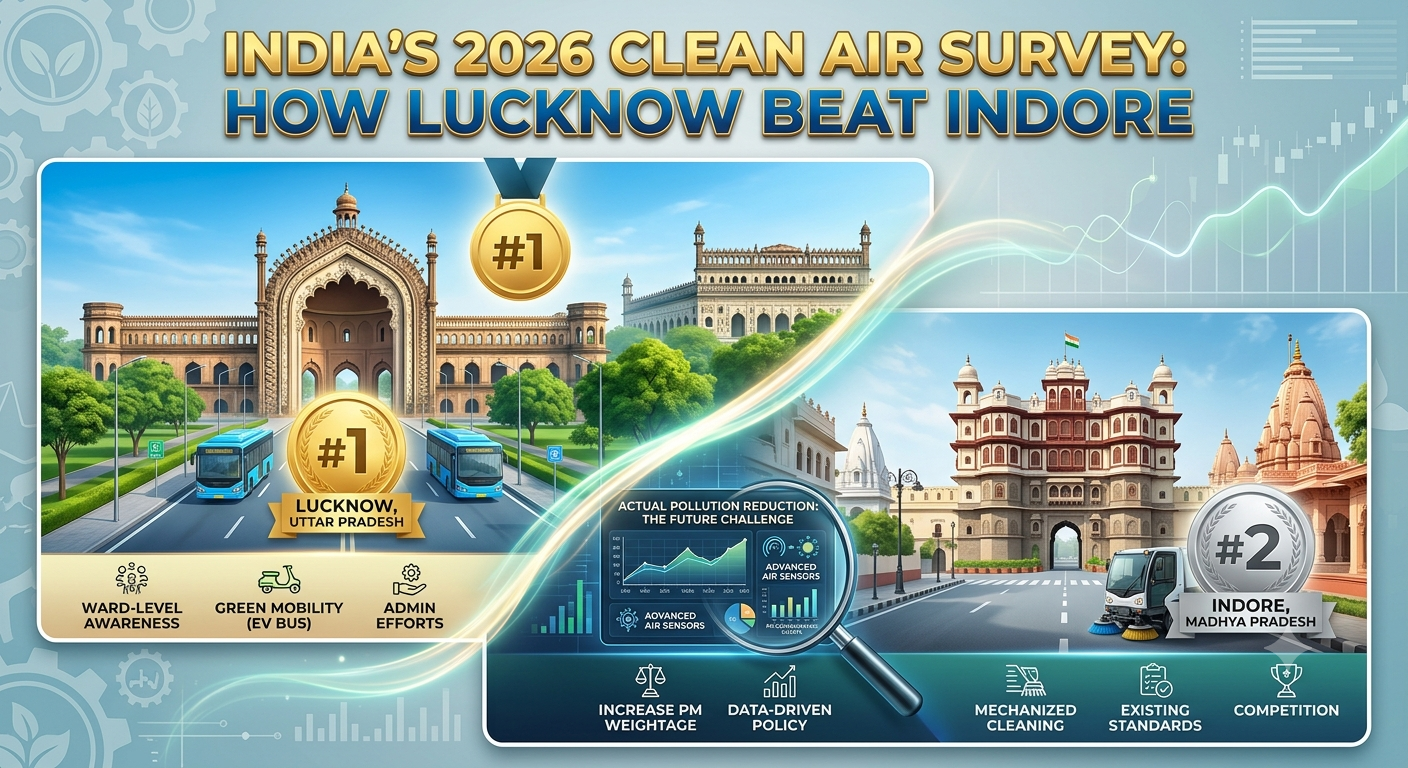
The Indian government has released the results of the 2026 Clean Air Survey (Swachh Vayu Survekshan). For years, Indore has been famous for topping cleanliness and air quality lists. However, this year brought a major surprise: Lucknow has taken the number one spot.
How the Survey Actually Works
To understand these results, it is important to know how the survey grades cities. This report does not just measure which city currently has the cleanest air. Instead, it ranks cities based on how hard they are trying. It rewards the actual efforts, policies, and steps a city’s administration is taking to fight pollution.
The Top Performers
To make the competition fair, cities are grouped by their population size. In the category for large cities with a population of over 10 lakh (one million) people, the top three spots went to:
First Place: Lucknow (making a massive jump to the top)
Second Place: Indore (dropping from its usual first-place position)
Third Place: Jabalpur
What Needs to Improve in the Future?
While the survey is a great way to encourage cities, experts say the grading system needs a few updates:
Measuring Actual Pollution: Right now, the actual reduction in pollution particles (PM levels) only makes up 2.5% of a city’s total score. In the future, this number needs to be higher to reflect real air quality improvements.
Rewarding Local Areas: Giving out awards at the smaller, neighborhood (ward) level is a great idea. It helps everyday citizens understand the importance of clean air and encourages them to help.
Upgrading Technology: The survey highlights that India needs to rely more on electric vehicles and machine-based street cleaning, rather than manual labor, to effectively reduce dust and smoke.
Conclusion
The 2026 Clean Air Survey proves that when local governments put in serious effort, they can achieve great results quickly. Lucknow’s success is a perfect example. Going forward, the real challenge for all cities will be using modern technology to bring actual pollution levels down permanently.