




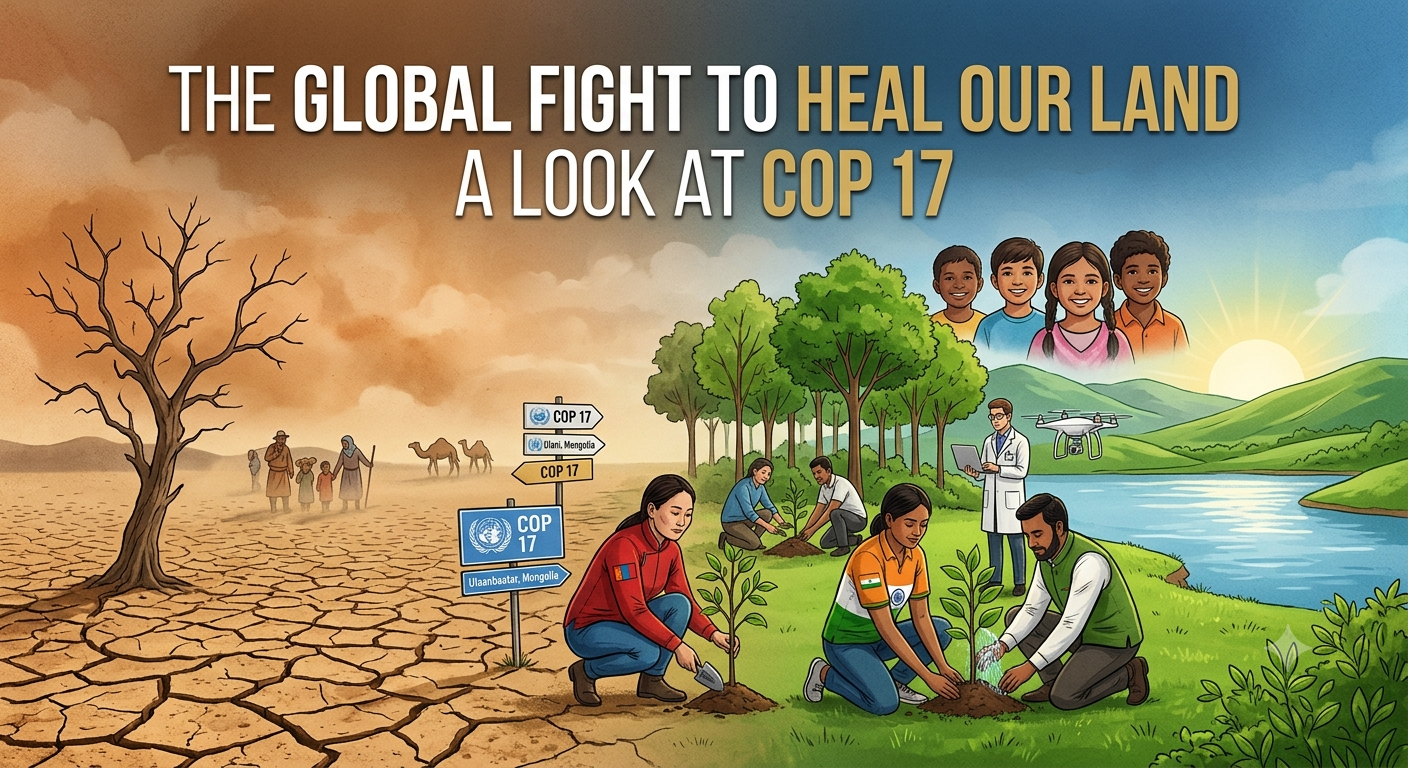
When countries gather for United Nations (UN) environmental meetings, known as COPs, they don’t just talk about global warming. Recently, leaders from around the world met in Mongolia for “COP 17.” This specific meeting was entirely focused on a growing crisis: how to stop our healthy soil from turning into deserts and how to survive severe droughts.
Why Fixing the Earth Matters
The main theme of the gathering was that healing our land brings back hope. Fixing damaged soil isn’t just about saving nature—it is absolutely necessary for growing enough food, protecting jobs, and ensuring people aren’t forced to abandon their homes.
Right now, the situation is serious. About 40% of all land on Earth is currently degraded or damaged. The host country, Mongolia, knows this struggle well, as nearly 77% of its land is suffering. To fight back and show leadership, Mongolia has launched a massive campaign to plant one billion trees by the year 2030.
New Technology and Funding
During the conference, leaders introduced several new ideas and funds to help vulnerable countries prepare for dry spells:
Smart Prediction Tools: A new system powered by artificial intelligence (AI) was introduced. It helps countries predict and prepare for droughts before they happen, which is much better than just rushing to send aid after a disaster strikes.
New Investments: With help from Luxembourg, a new financial platform was created to encourage private businesses to invest in water security and smart farming. In total, a massive $1.3 billion was promised at the event to help restore land globally.
Future Focus: Although the countries couldn’t quite agree on a strict, worldwide treaty for handling droughts, they made a major promise: drought will be a top-priority topic at all future meetings.
India’s Role and Successes
India took a strong stand at the meeting, asking for reliable funding for developing nations and sharing its own success stories:
Valuing Every Landscape: India released a special guide to protect open grasslands and deserts. The goal is to stop calling these areas useless “wastelands” and start treating them as valuable parts of nature.
Healing the Ground: India has already successfully restored over 21 million hectares of damaged land and forests, with a goal of reaching 26 million by 2030.
Empowering Local Herders: India strongly argued for protecting the rights of traditional animal herders. The country showed that the best way to save the environment is to combine modern science—like using space satellites to map damaged land—with the ancient, traditional knowledge of local communities.