

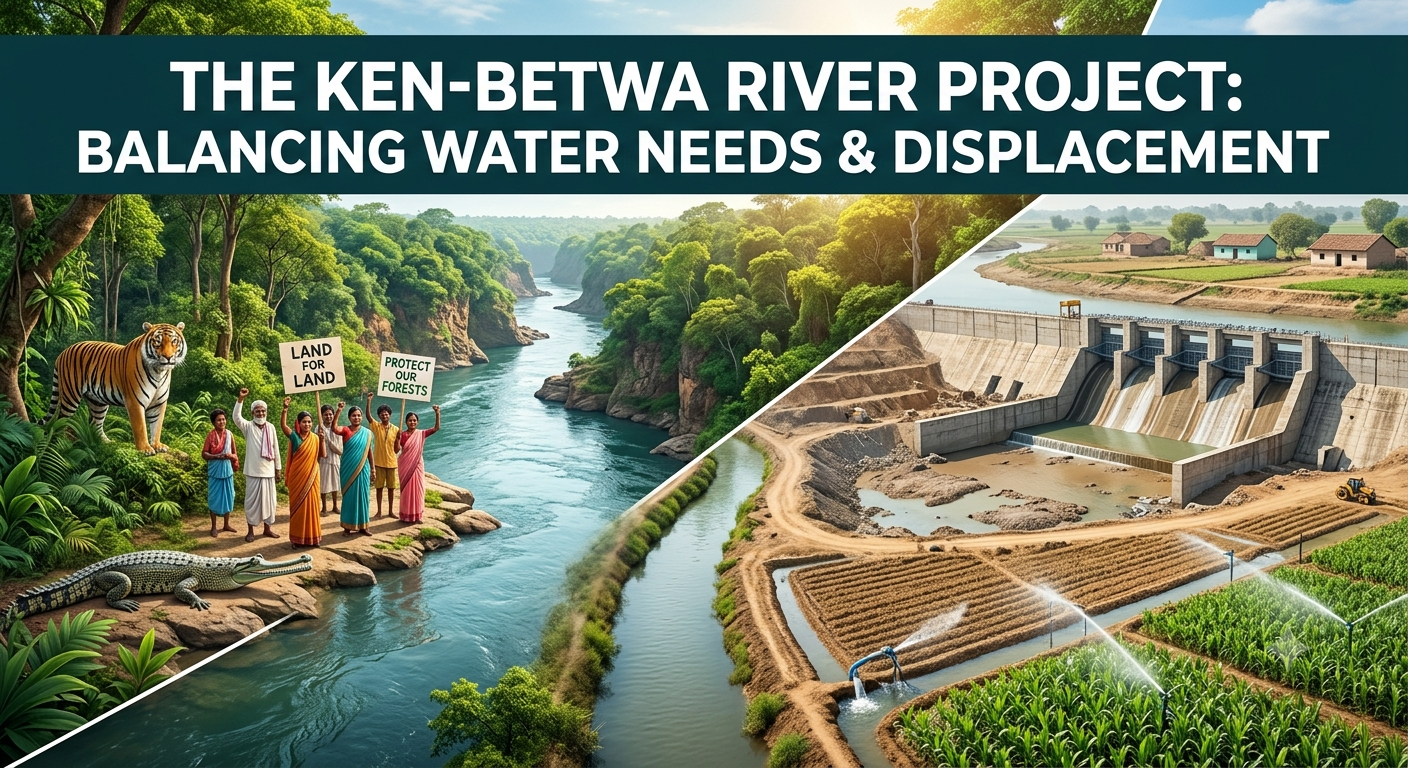
The Ken-Betwa River Link is a massive infrastructure plan in India designed to connect two rivers. The main idea is to move “extra” water from the Ken River in Madhya Pradesh to the drier Betwa River basin. While it aims to solve water shortages in the Bundelkhand region, the project has sparked intense debates about its cost to local people and nature.
The Promise of Water and Power
The Bundelkhand area has historically suffered from severe droughts and failed crops. By building a new dam and a long canal, the government hopes to bring major relief. The primary benefits include:
Supplying reliable drinking water to millions of residents.
Providing enough water to farm vast areas of dry land.
Generating new electricity to help power local towns and villages.
Why Are Local Communities Protesting?
To build the dam, large areas of land will be flooded, meaning thousands of people—mostly from indigenous tribal communities—will lose their homes. Around 24 villages are facing relocation, which has led to desperate protests.
Loss of Ancestral Land: Villagers are devastated to leave the forests they have called home for generations.
Demand for Fair Trade: Many families are refusing basic cash offers, demanding a “land for land” trade so they can rebuild their farming lifestyles.
Ignored Rights: Protesters argue that the government is rushing the process, failing to honor traditional forest rights and leaving women out of financial compensation plans.
The Impact on Nature and Wildlife
Beyond the human struggle, scientists are deeply worried about the permanent damage to the environment.
Flooding Tiger Habitats: The dam’s reservoir will drown a massive chunk of the Panna Tiger Reserve, cutting off safe zones for wild tigers and destroying ancient trees.
Threat to Rare Crocodiles: Changing the natural flow of the river threatens the survival of the gharial, a rare and critically endangered fish-eating crocodile.
Questioning the “Extra” Water: Climate experts warn that with changing weather patterns, the Ken River might not actually have enough surplus water to share without drying out its own ecosystem.
Finding a balance is crucial. While bringing water to dry regions is important, true progress should not destroy vibrant forests or force vulnerable communities into poverty.