




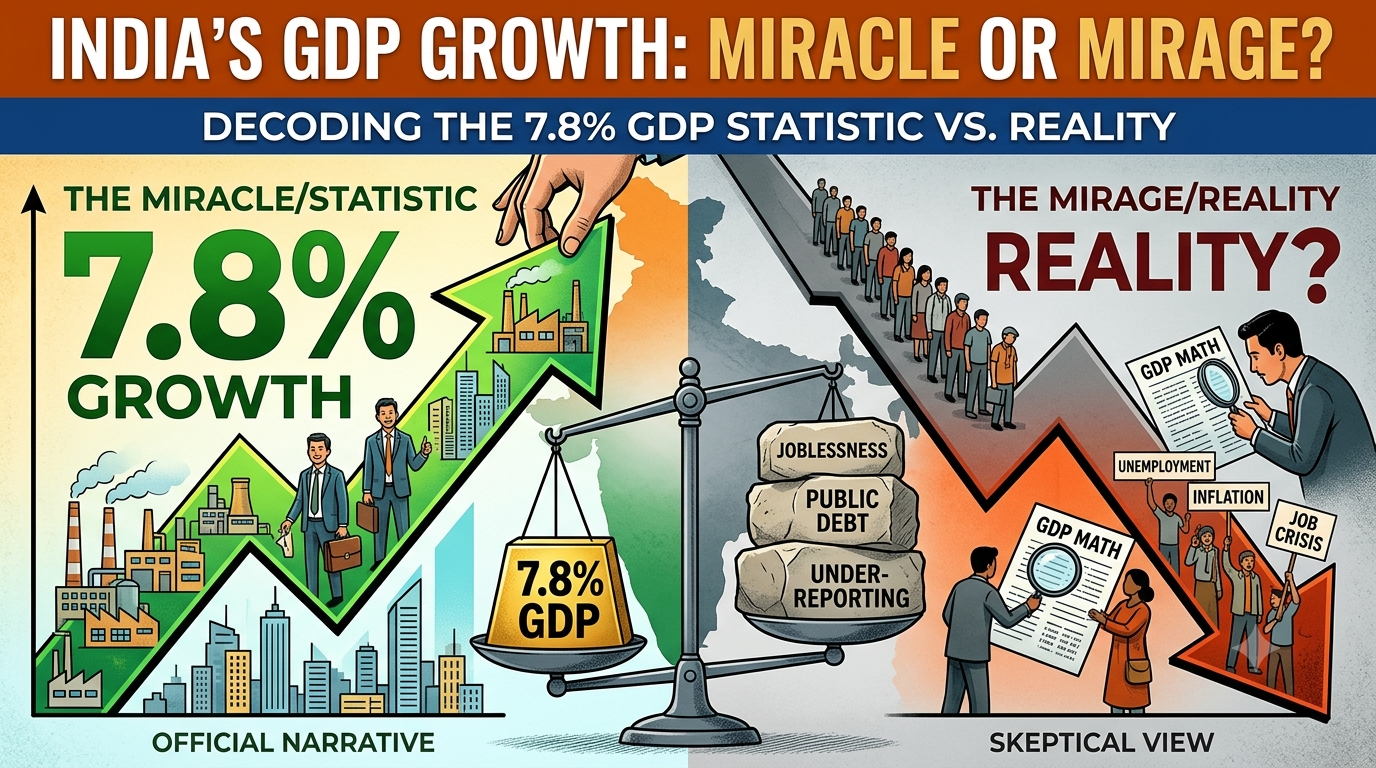
Recently, there has been a massive debate about the health of India’s economy. The government proudly announced a 7.8% growth in the Gross Domestic Product (GDP). However, instead of widespread celebration, many financial experts and everyday citizens are questioning whether this number paints an accurate picture of the country.
The Missing Excitement
In the past, major government announcements—like changing the tax system or banning certain currency notes—were met with immediate public trust and action. Today, the reaction to the 7.8% economic growth is quite different. The public feels a disconnect; on one hand, they are told the economy is booming, but on the other hand, they are being cautioned against spending money on things like gold or foreign travel.
Conflicting Economic Stories
The heart of the confusion lies in how the math is done. Depending on who you ask, you will get a very different story:
The Official View: The government insists the economy grew by 7.8%, meaning India is moving faster than most of the world.
The Skeptical View: Former finance officials argue that the numbers are being heavily manipulated. Some estimate that the true growth might be as low as 2.6%.
The Research View: Past studies by top economic advisors suggest that India’s growth has been artificially inflated for over a decade, calculating the real long-term average to be closer to 4.5%.
Are the Numbers Managed?
Critics argue that the government is focusing only on the “headline numbers” that look positive, while quietly hiding the data that looks bad. This lack of trust stems from a history of official statistics being questioned by the public, such as:
Health and safety data during national emergencies.
The actual success rates of major national infrastructure projects.
The real outcomes of sudden economic policy changes.
The Risk of Ignoring Ground Reality
The biggest concern is the gap between a shiny 7.8% growth rate on paper and what citizens are actually experiencing. While the statistics look amazing, the reality on the ground includes rising unemployment, frustrated youth, and ongoing protests.
If leaders continue to insist that everything is perfect, they lose the opportunity to fix real, underlying problems. Ignoring economic warning signs doesn’t make them go away; it only risks a larger crisis in the future.
How do you think we can better measure the actual financial health and happiness of everyday citizens?