



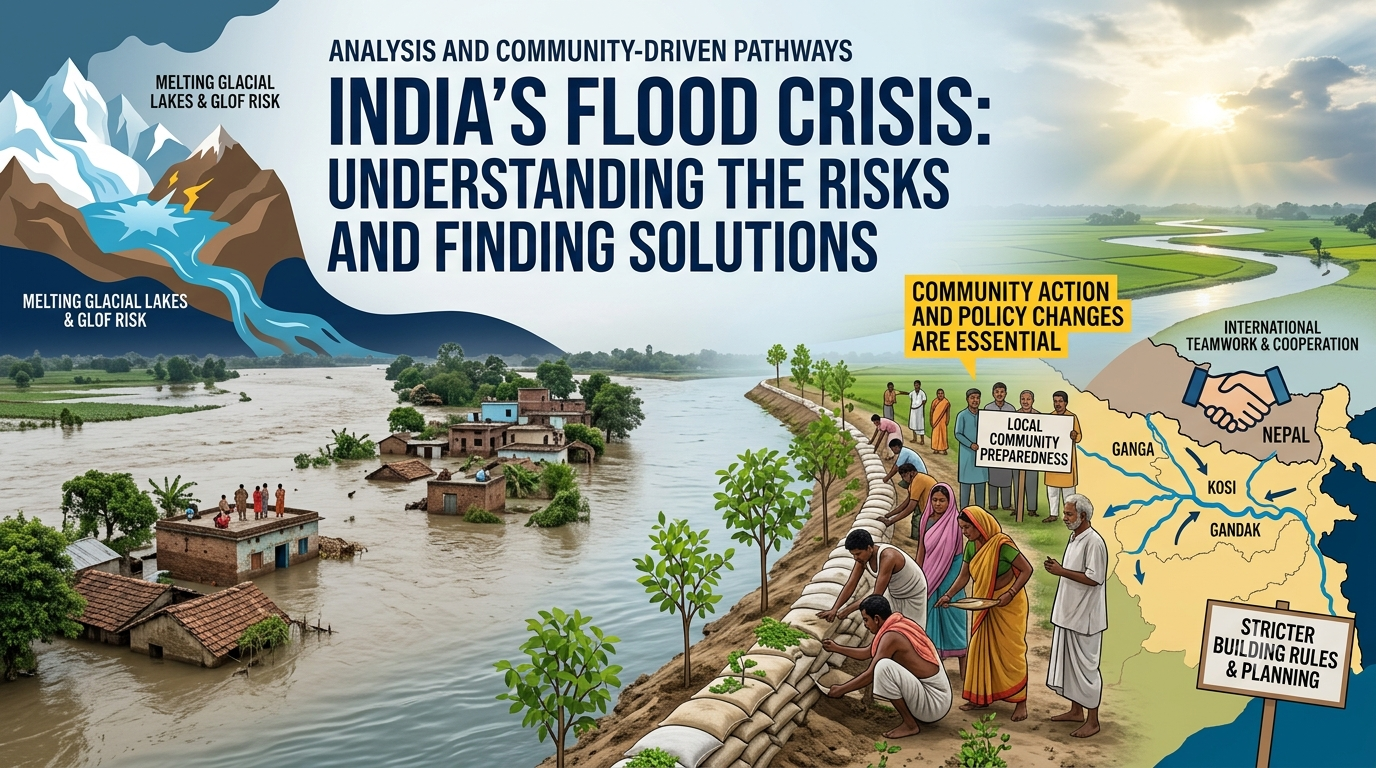
Recent heavy rains and floods in Nepal are causing major emergencies across the border in India, particularly in Bihar and Uttar Pradesh. Major rivers, including the Ganga, Kosi, and Gandak, are overflowing. In areas like Bhagalpur, the Ganga River is dangerously shifting its path toward populated towns, keeping local authorities on high alert.
Every year during the monsoon season, flooding becomes a severe issue. Experts recently gathered to discuss why this happens and how we can better protect our communities.
Why is India so Vulnerable?
India faces a massive natural risk when it comes to floods and water-related disasters:
Widespread Risk: Out of India’s 36 states and union territories, 27 are highly sensitive to natural disasters.
Melting Glaciers: In the Himalayan mountains, over 2,500 glacial lakes are in a critical state.
Sudden Floods: More than 400 of these mountain lakes are melting rapidly. If one bursts, it can send a sudden, massive wall of water crashing into the villages below—a disaster that is currently very hard to prevent.
How Human Actions Make Floods Worse
While heavy rain is a natural event, human mistakes often turn it into a disaster. A recent government report pointed out several man-made problems:
Building in the Wrong Places: People continue to build homes and businesses directly on floodplains, which are natural pathways for overflow water.
Disturbing Rivers: Unregulated activities in and around riverbeds mess up the natural flow of the water.
Poor Planning: There is a serious lack of large-scale planning to manage water flow across entire river basins.
How Can We Fix This?
Because rivers do not care about borders, dealing with this issue requires teamwork. Since the floodwaters start in Nepal and flow into India, both countries must work together closely to manage the crisis.
Furthermore, experts believe that the government cannot handle disaster preparation alone. Real change happens when local communities are involved. Thanks to recent updates in disaster management laws, local city councils now have more power to set up their own emergency response teams. By combining international teamwork, stricter rules on where we build, and local community action, we can better protect ourselves from the devastating impact of floods.
What specific aspect of disaster management do you think your own local community needs the most help with?