


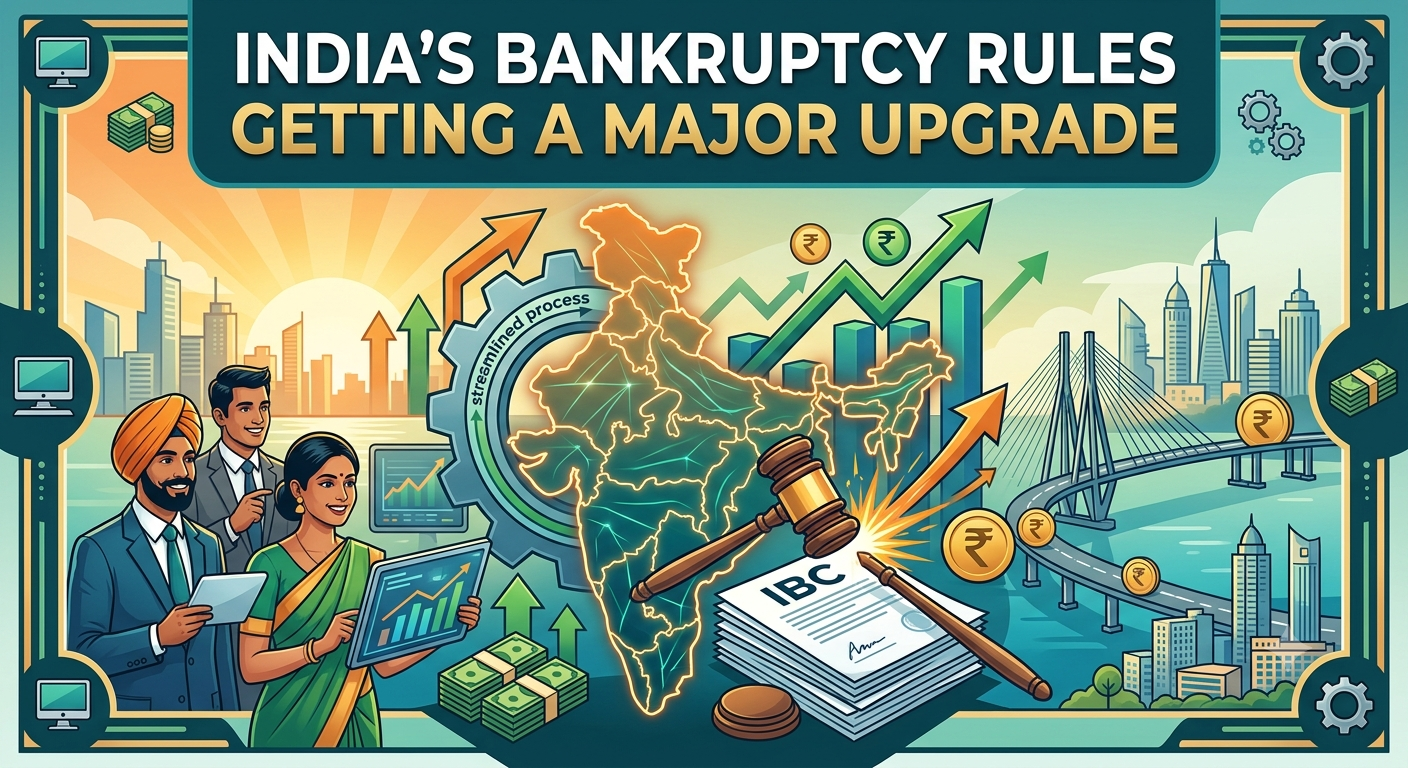
When a business runs out of money and fails, what happens next? In India, the way this is handled has changed a lot in recent years thanks to the Insolvency and Bankruptcy Code (IBC).
Recently, Member of Parliament Baijayant Panda discussed the IBC on Sansad TV. He explained how this law saved Indian banks and why new updates are being made to make the whole process faster and fairer.
The Problem with Unpaid Loans
Before 2016, India did not have a good system for handling bankrupt businesses. When companies failed, they didn’t officially close. They just got stuck doing nothing. This was a huge problem for banks because they were sitting on massive amounts of unpaid loans (known as bad loans).
The IBC changed everything. It created a clear step-by-step process to either save a failing company or sell it to pay off its debts. Thanks to this system, banks are now recovering about ₹50,000 crore every year. Today, Indian banks are much healthier, and their bad loans have dropped to extremely low levels.
Why Update the Rules Now?
Even though the IBC was a huge success, it had one major flaw: it was too slow. Cases were supposed to be wrapped up in less than a year, but many were dragging on for over two years due to legal delays. The government realized the system needed an update to speed things up.
What Are the New Changes?
The latest updates to the law focus on saving time and using better technology. Here are the biggest changes:
Strict Time Limits: In the past, people could drag out legal appeals for a long time. Now, there is a strict 90-day limit for the appeal stage.
Global Business Rules: Many companies today do business across borders. The new law includes rules to handle bankruptcies for companies that have branches or loans outside of India.
Smarter Technology: Previously, incomplete paperwork would be submitted, rejected, and sent back, wasting months of time. Now, there is a smart online portal. If a form is missing any information, the system simply won’t let you upload it. This forces everything to be correct from day one.
Help for Small Businesses: For smaller businesses (MSMEs), it is now easier to approve a rescue plan. Previously, 66% of lenders had to agree on a plan. Now, that number has been lowered to 51%.
Who Gets Paid First?
When a company goes broke, there is always a debate about who should get their money back first: the banks, the workers, or the suppliers?
The law follows a standard global rule: banks get paid first. This is because banks provide the massive, long-term loans that allow businesses to exist in the first place. If banks lose all their money, the whole country’s economy suffers.
However, this doesn’t mean workers are ignored. The law has rules to make sure employees get what they are owed. Also, the new updates allow lenders to step in much earlier when they see a company struggling. Stepping in early makes it easier to save the business before the debt gets too high, which ultimately protects everyone, including the workers.
The Big Picture
For India to continue being one of the fastest-growing economies in the world, it needs a smooth system for handling failed businesses. You cannot have a healthy economy without a way to clean up companies that don’t survive. By making the bankruptcy process faster and more balanced, these new updates will help keep India’s financial system strong and make it a better place to do business.