




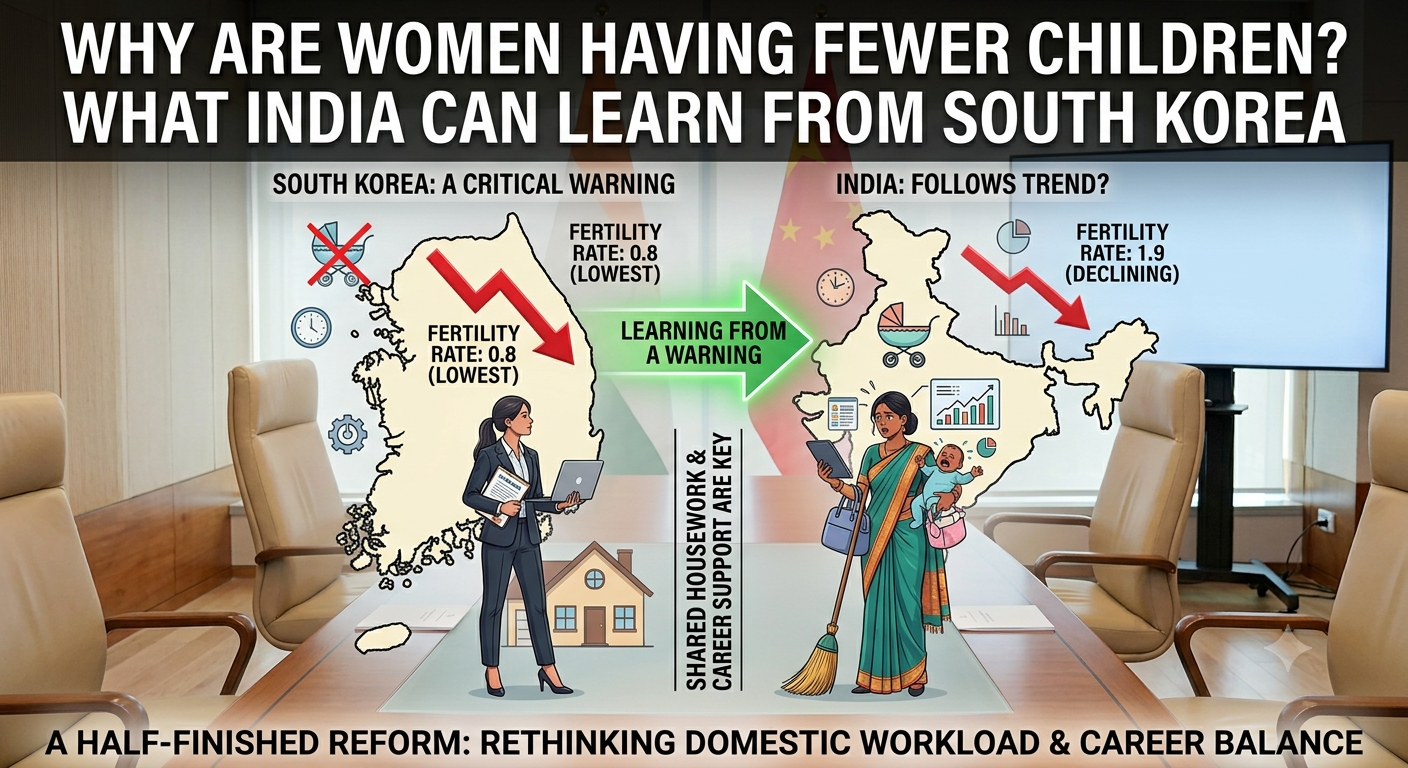
Millions of people in India love South Korean TV shows and music. But behind the glitz and glamour, South Korea is facing a massive crisis: its population is shrinking because women have almost completely stopped having babies. Their birth rate is currently the lowest in the world.
When we look closely at India’s numbers, our birth rate is also dropping and recently fell below the level needed to maintain our current population size. While India isn’t in an emergency yet, we are slowly walking down the same path. So, why is this happening? There are three main reasons.
1. Education and Later Marriages
As India has developed, more women are getting a higher education and moving to cities. Because they spend more time studying and building careers, women are getting married much later than they did a few decades ago. Consequently, many are choosing to delay having their first child until they are older and financially stable.
2. Financial Independence and Choice
In the past, society expected every woman to get married and raise a family—it was just what you did. Today, that mindset has completely shifted. More women are working and earning their own money than ever before. Motherhood and marriage are now seen as personal choices rather than strict social duties.
3. The “Double Workload” Trap
This is the biggest—but least talked about—reason. Just like in South Korea, Indian women are encouraged to get degrees and go to work. However, the expectations at home haven’t changed.
The Chores Gap: On average, an Indian woman spends about 5 hours a day on unpaid housework and childcare. An Indian man spends less than an hour and a half.
The Second Shift: Even though more women have paying jobs now, their chores at home have barely decreased. They are essentially working one shift at the office, and a “second shift” when they get home.
Because this workload is so exhausting and unequal, many women feel that adding children to the mix is just too overwhelming.
Why This Matters for Everyone
Having fewer babies isn’t just a cultural shift; it is an economic issue. If the birth rate keeps dropping, India will eventually face a future with fewer young workers, less tax money collected, and a much larger elderly population that needs medical care and support. We are already starting to see the early signs of this, with school enrollments dropping in recent years.
The Solution
The issue isn’t that women want careers; the issue is that society only changed halfway. We accepted women going to the office, but we didn’t change how we handle the home. For things to improve, men need to take on an equal share of household chores and childcare, fathers need to take paternity leave, and workplaces must offer better childcare support and flexible hours for parents.
Do you think modern workplaces are doing enough to support families who are trying to balance their careers and children?