




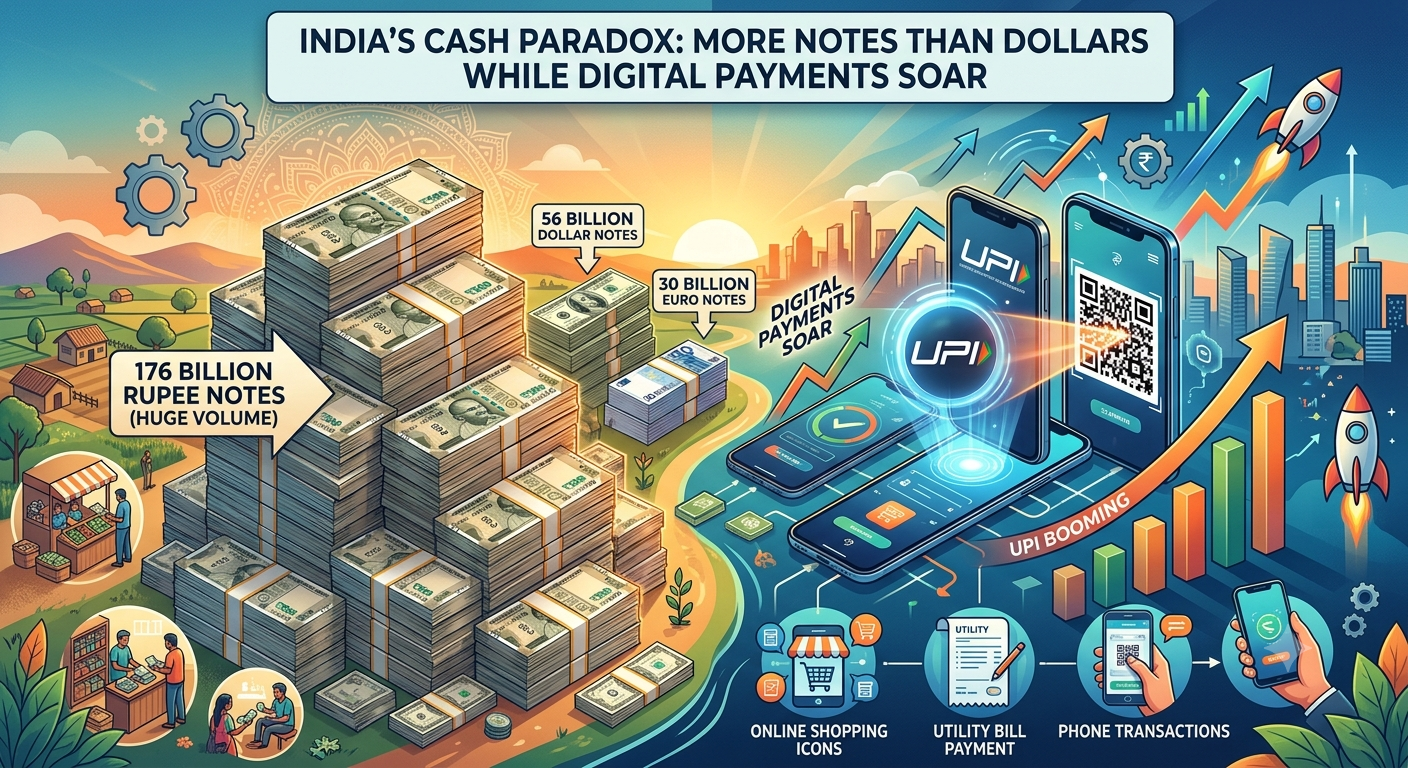
A fascinating economic trend is unfolding in India. Even though digital payment methods like UPI are booming across the country, the use of physical cash is also hitting record highs. Surprisingly, India now has more physical paper notes circulating than both the US dollar and the Euro.
Here is a simple look at why physical cash continues to thrive alongside the digital payment revolution.
Rupee Notes Outpace Global Currencies
Recent data highlights an incredible milestone for the Indian Rupee in terms of sheer physical volume. While the financial value of dollars and Euros remains higher due to exchange rates, India easily leads in the total number of individual paper notes printed and used.
To put the numbers into perspective:
India: A massive 176 billion bank notes are currently in circulation.
United States: There are roughly 56 billion US dollar bills circulating globally.
Eurozone: The Euro has about 30 billion physical bank notes in use.
Out of India’s massive currency pool, the ₹500 note is the most popular, making up a significant portion of the cash people hold.
Why Cash and Digital Payments Are Growing Together
It might seem confusing that cash usage is growing when UPI QR codes are practically everywhere. The total amount of physical cash held by the Indian public recently reached a record high of over ₹41 lakh crore.
This happens largely because of India’s rapidly expanding economy. Here is why both payment methods are thriving:
A Bigger Economy: As the overall economy grows, the total number of transactions increases. Even if the percentage of cash payments drops compared to digital, the actual dollar amount of cash changing hands still goes up.
Daily Habits: Cash remains the preferred choice for paying domestic workers, shopping at small rural markets, and keeping household savings.
Digital Convenience: At the same time, UPI seamlessly handles online shopping, utility bills, and daily conveniences, meaning both systems support different parts of a person’s life.
What is the Future of UPI?
Keeping the massive, instant UPI network running smoothly requires expensive technical infrastructure. Recently, discussions have emerged about the possibility of introducing a Merchant Discount Rate (MDR) in the future.
If implemented, this would mean a tiny percentage fee is deducted from the merchant’s end to cover the costs of maintaining the network. While some worry this might push people back to cash, experts believe any potential fee would be incredibly small. The unmatched speed, security, and convenience of UPI mean that digital payments are here to stay, continuing to grow right alongside traditional cash.
Do you have any specific questions about how the potential merchant fees might impact small businesses using UPI?