




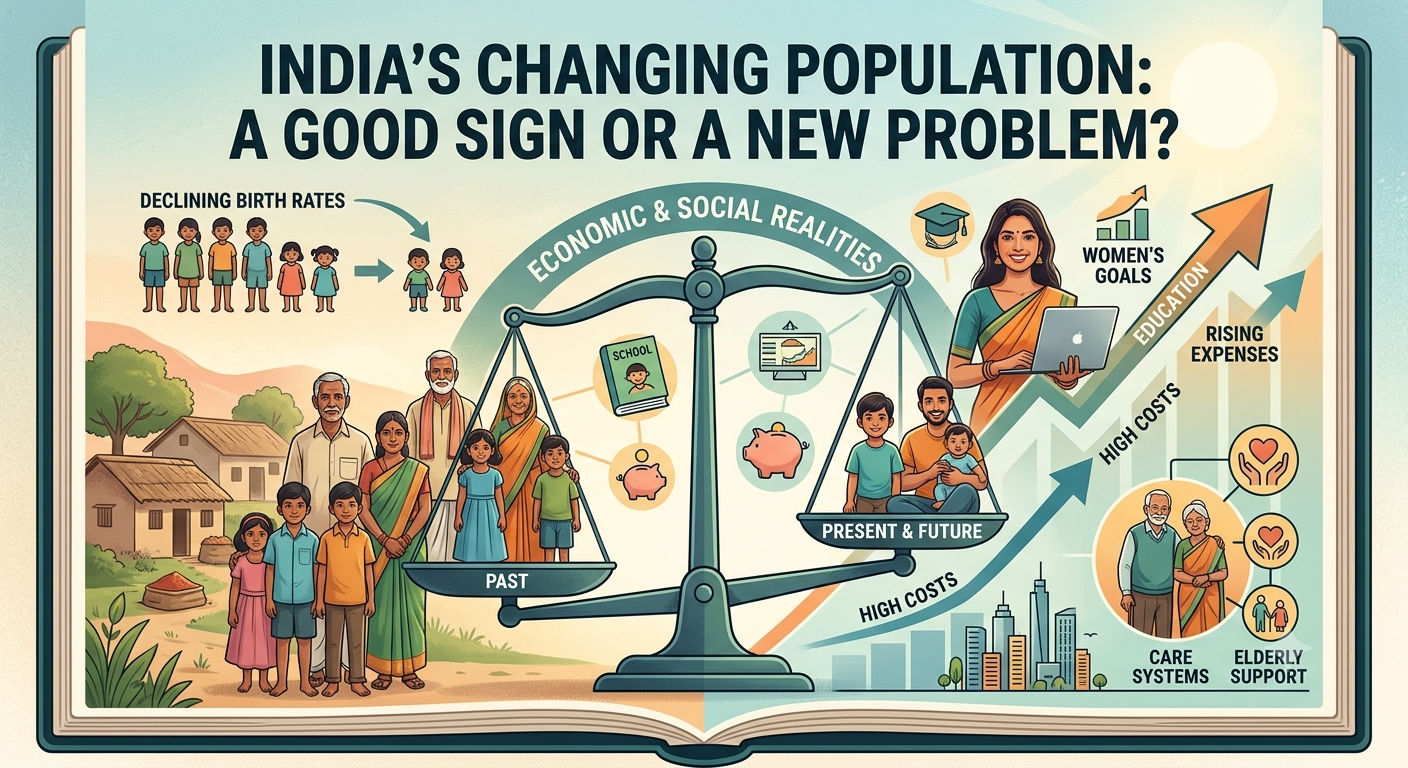
For a very long time, India worried about having too many people. Today, that story is changing. Recent data shows that Indian women are now having an average of two children. This is slightly below the “replacement level”—the number needed to keep a population perfectly stable.
But is this drop in birth rates a sign of progress, or is it a problem for the country’s future?
No Need to Panic
Even though people are having fewer children, India’s population is not going to suddenly crash. Because India has a huge number of young people right now, the total population will actually keep growing until around the year 2051.
It is also important to note that the birth rate isn’t the same everywhere. People in cities and certain states are having fewer kids, while people in rural areas and other states are still having more. Instead of panicking about the dropping numbers, experts say we just need to plan smartly for the future.
Why Are Indians Having Fewer Children?
Couples today are choosing to have smaller families for a few main reasons:
High Costs: Raising a child is very expensive today. The costs of good schools, healthcare, and housing have gone up so much that many middle-class families feel they can only afford one or two children.
Women’s Goals: Times have changed. Young women today want to focus on their education, build careers, and achieve personal goals before, or instead of, settling down to just manage a household.
Health Challenges: Health issues like infertility are becoming more common. Due to pollution and stressful lifestyles, many couples who want to have children are finding it difficult.
How Should the Country Prepare?
Rather than worrying about the numbers, society and the government need to make life easier for families. Here is what needs to happen:
Better Care Systems: As the birth rate drops, the number of older people in India will increase over the next few decades. The country needs to build affordable and reliable care centers for both young children and the elderly.
Men Must Help at Home: In most homes, working women still do almost all the cooking, cleaning, and child-rearing. For families to thrive, men must step up and share these household duties equally.
Supportive Workplaces: Companies need to be more flexible. They should offer better working hours and give both mothers and fathers paid time off to take care of their newborns.
Learning from the Rest of the World
Countries like Japan, South Korea, and China are already dealing with dropping populations. They have tried giving out cash rewards to encourage people to have more kids, but it hasn’t worked well.
Instead, India should learn from Northern European countries. These countries succeed because they treat women equally in the workplace. They provide great child support, long paid leaves, and ensure women don’t lose out on job promotions just because they become mothers.
Final Thoughts
India’s falling birth rate is actually a sign of positive change. It shows that education, healthcare, and women’s rights are improving. The goal now shouldn’t be to force the birth rate back up, but to accept this change. By planning ahead, supporting working mothers, and taking care of the elderly, India can easily turn this population shift into a major strength for the future.