

India is famous for its rich traditions, many of which are kept alive by families in rural villages. Recently, two beautiful cultural events made the news: a special government recognition for a traditional Bhojpuri painting style called Pidiya Lekhan, and a grand classical dance festival in Tripura.
Here is a simple look at these beautiful cultural milestones.
Pidiya Lekhan: A Sister’s Love Expressed Through Art
For a long time, Bhojpuri culture has been known for its music and language, but its visual art is finally getting the spotlight. Pidiya Lekhan, a unique painting style from Bihar, was recently awarded a Geographical Indication (GI) tag. This tag is a special honor that protects and officially recognizes regional crafts.
The Tradition Behind the Paintings
Pidiya Lekhan is not just art; it is a deep-rooted religious and family tradition practiced mostly by women. It is closely connected to a month-long festival where sisters pray for the health and long life of their brothers.
Here is how the tradition is practiced:
- Creating the Pindis: Women and girls gather in cattle sheds and make small mounds (called pindis) out of cow dung.
- Folk Songs and Stories: Over 15 days, they sing traditional songs and create small clay figures of snakes, scorpions, and local folk characters.
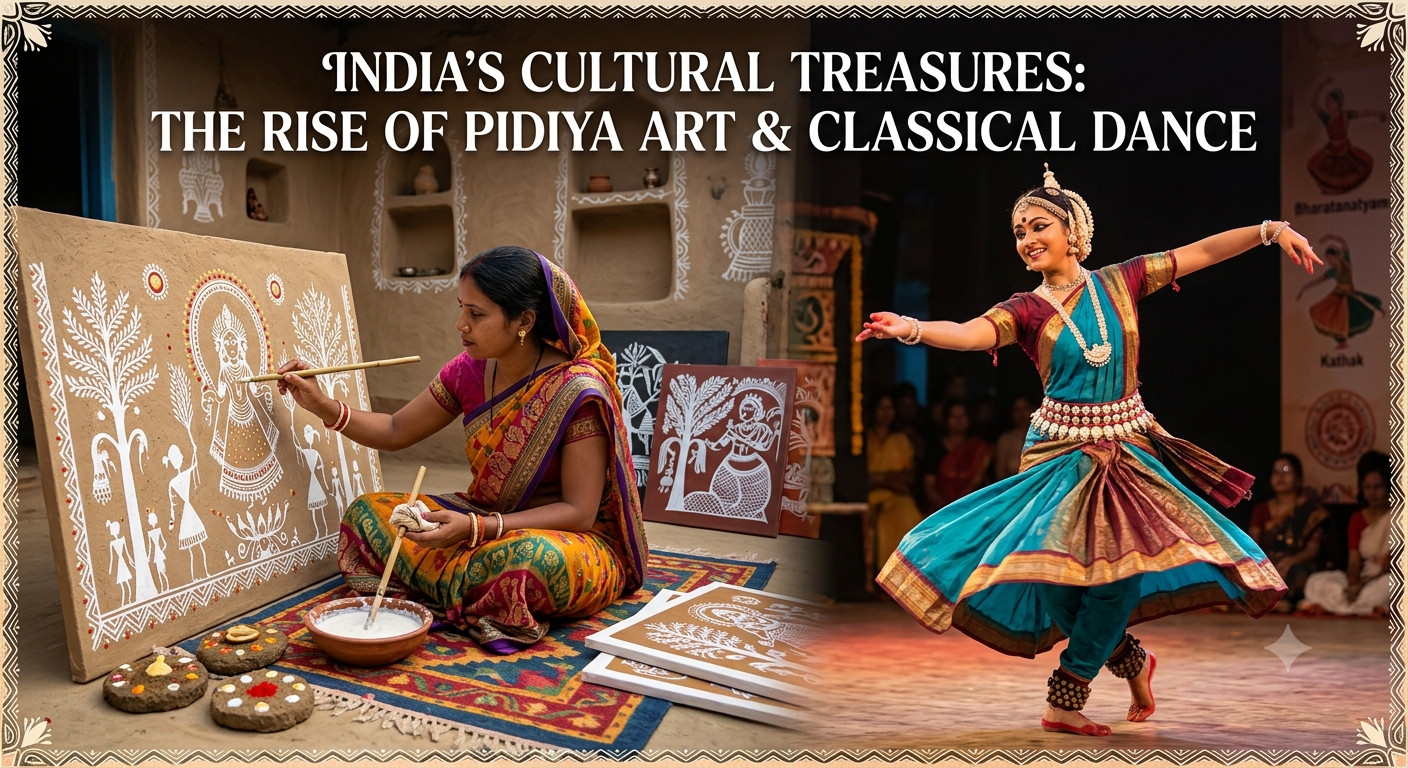
- Wall Art: At the end of the month, the sacred mounds are carefully removed. The women then plaster the wall and paint beautiful images of the goddess Pidiya Mata.
- Immersion: Finally, brothers and sisters carry the items to a local pond and respectfully place them in the water.
Moving from Mud Walls to Paper
Historically, Pidiya Lekhan was only drawn on the mud walls of village homes. Today, artists like Vinita are working hard to bring this art to a wider audience by drawing it on paper and canvas.
The artists still use very natural, traditional methods:
- They use a homemade liquid paste made from ground rice instead of chemical paints.
- Instead of normal paintbrushes, they use small bamboo sticks wrapped in cloth.
- The paintings are decorated with dots of pure ghee and red vermilion (sindoor) to maintain their sacred meaning.
The First Bhojpuri Art Exhibition
To celebrate the new GI tag, the Bihar Museum in Patna hosted a special art exhibition in early July. This was a major step for regional artists.
- The event displayed 45 unique paintings.
- It featured several types of traditional Bhojpuri art, including Pidiya Lekhan, Kohbar, and Aripan.
- The goal of the exhibition was to give rural artists a national platform and make sure these ancient art styles are not forgotten.
”Nrityangan”: Celebrating Indian Classical Dance
While Bihar celebrated visual arts, the state of Tripura celebrated the performing arts. A major two-day festival called Nrityangan (The Festival of Dance) took place in Agartala.
Organized by the Sangeet Natak Akademi and the local government, the festival was a tribute to the diversity of Indian classical dance. The event was filled with beautiful music and colorful costumes, featuring amazing performances by talented dancers in several famous styles:
- Bharatanatyam: Known for its precise footwork and expressive hand gestures.
- Sattriya: A beautiful, devotional dance from Assam.
- Kathak: A rhythmic dance focused on storytelling and fast spins.
- Odissi: A highly graceful dance known for its fluid movements.
Keeping Traditions Alive
From the simple, heartfelt paintings created by sisters in Bihar to the highly trained classical dancers performing on stage in Tripura, these events remind us of the beauty of Indian culture. By celebrating and sharing these arts, we make sure they are safely passed down to the next generation.