




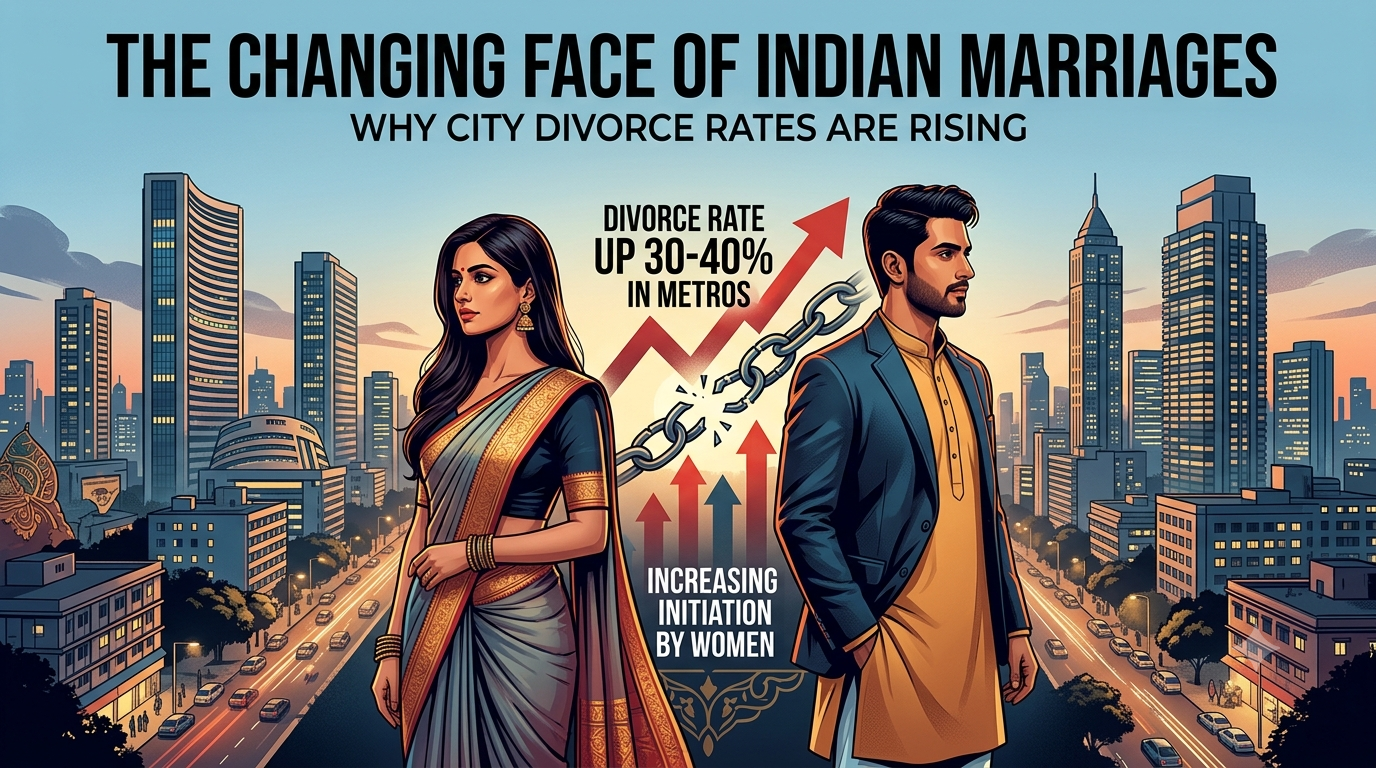
The 1% Myth vs. City Reality
If you look at global numbers, India’s divorce rate seems incredibly low at just 1%, compared to roughly 50% in places like the United States. While this might look like a victory for traditional family values, the reality in big Indian cities is very different. Over the last ten years, courts in major cities like Mumbai, Delhi, and Bangalore have seen a huge spike in couples wanting to separate. Most of these individuals are in their 20s and early 30s.
When People Feel Trapped
Sometimes, when individuals are stuck in unhappy or toxic marriages and see no way out, things can take a dark turn. Recent news stories have highlighted extreme cases where trapped partners resorted to violence or crime because they felt they had no peaceful way to end the relationship. These tragic incidents show what can happen when society forces people to stay in broken marriages.
The Real Reasons Behind the Rising Numbers
The growing number of divorces is not about people losing their morals. It is the result of major shifts in how we live today:
Financial Independence for Women: In the past, many women stayed in bad marriages because they relied entirely on their husbands or in-laws for money. Today, as more women get educated and build their own careers, they no longer have to endure mistreatment just to survive. In cities, women are now initiating the majority of divorces because they can afford to prioritize their dignity.
The Stress of City Life: Moving away from quiet towns to fast-paced cities changes a relationship. Long commutes, exhausting work hours, and high costs of living leave couples with little time for each other. Additionally, the anonymity of a big city removes the traditional pressure of “what will the neighbors say,” making it easier for people to walk away.
The End of the Joint Family Buffer: Previously, large joint families acted as peacekeepers. If a couple fought, an aunt, uncle, or grandparent would step in to cool things down. Today, most young couples live alone. When arguments happen, there is no one around to help them resolve the issue, and small fights can quickly snowball into permanent breaks.
Marrying Later in Life: Young people are waiting longer to tie the knot, often marrying in their late 20s or 30s. By this age, people are already set in their habits and routines. It is much harder for two fully independent adults to suddenly change their lifestyles to fit someone else, leading to less patience for incompatibility.
The Hidden Stress on Both Partners: Running a home requires a lot of invisible mental work—like remembering bills, planning meals, and keeping track of chores. When women work full-time and still carry this entire mental burden, they burn out. At the same time, men face a silent pressure to be perfect providers and hide their emotional struggles. This exhaustion slowly chips away at the marriage.
Easier Laws as a Safety Net
In the past, getting a divorce in India was so complicated and expensive that people just gave up and stayed unhappy. Now, the legal system is catching up. If both partners agree to separate peacefully, the process is much faster and simpler. Courts are even making it easier to skip long waiting periods. Having a smooth, legal way out is actually a good thing for society, as it stops people from taking desperate or dangerous measures.
Looking Forward
So, why is the national average still only 1%? It is because in many rural areas and small towns, the fear of society and lack of money still make divorce nearly impossible.
The rising divorce rate in cities does not mean the Indian family is falling apart. Instead, it shows that the idea of marriage is growing up. A bad marriage is no longer a life sentence. Today, young couples are bravely choosing their mental health and self-respect over society’s expectations, and that is a sign of a society that is maturing.