




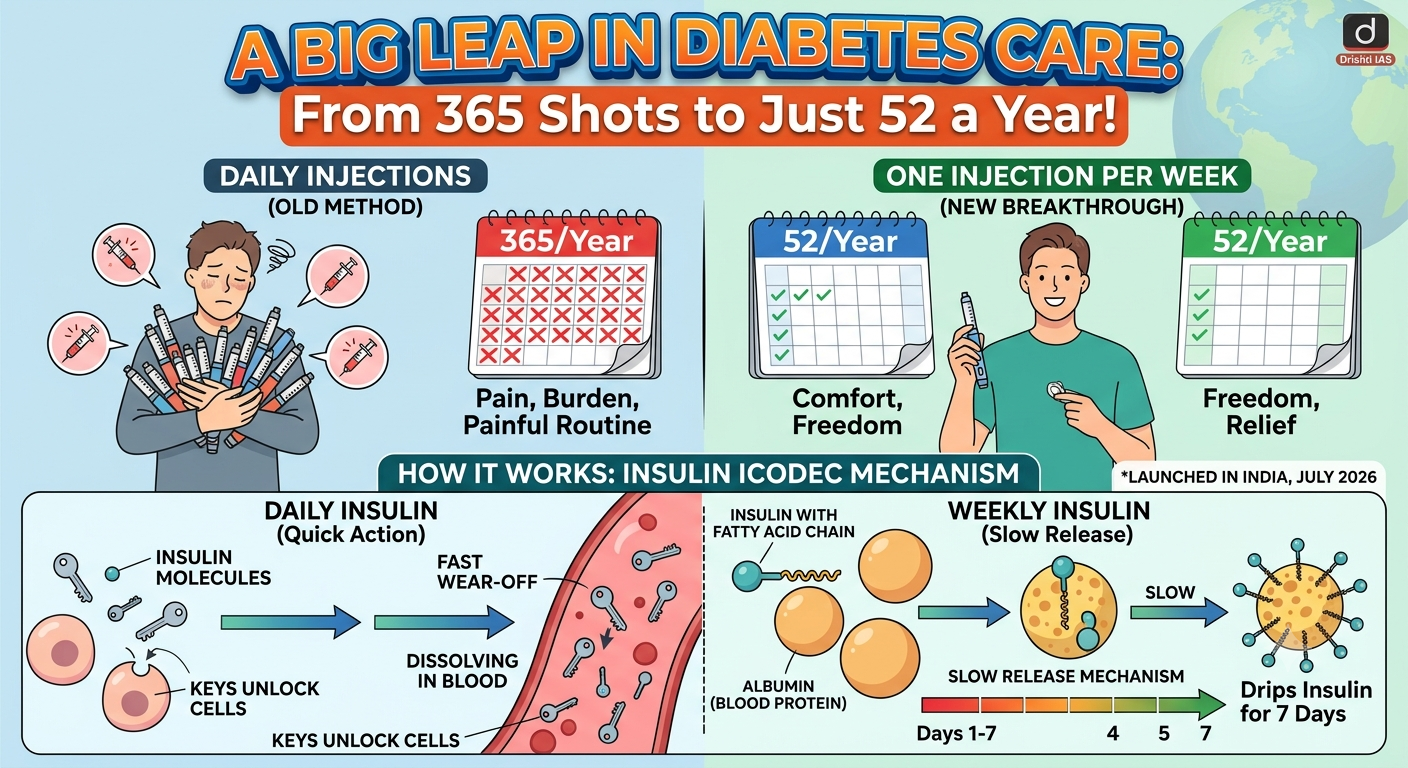
Diabetes is a massive health issue around the world. In India alone, more than 10 crore people live with the condition, and millions more are at high risk. For about 60 lakh of these patients, managing their blood sugar means enduring a painful routine: taking an insulin injection every single day. That adds up to 365 shots a year.
However, a major medical breakthrough is changing everything. Patients can now manage their diabetes with just one injection a week—bringing the yearly total down from 365 to only 52.
Here is a simple breakdown of how diabetes works and how this new weekly medicine does its job.
Why Does the Body Need Insulin?
To understand this new treatment, it helps to know what diabetes actually does to the body:
Food becomes sugar: Whenever you eat, your digestive system turns that food into sugar (glucose) and sends it into your bloodstream.
The missing “key”: That sugar needs to move out of your blood and into your body’s cells to give you energy. To unlock the cells, the body uses a special hormone called insulin, which is made by an organ called the pancreas.
The diabetes problem: If you have Type 1 diabetes, your body completely stops making this “key.” If you have Type 2 diabetes, your body either doesn’t make enough or forgets how to use it properly.
Without insulin, sugar piles up in the blood. Over time, high blood sugar can cause severe damage to the heart, eyes, nerves, and kidneys. This is why many patients have to inject artificial insulin into their bodies every day.
The New Weekly Breakthrough
On July 9, 2026, a pharmaceutical company named Novo Nordisk launched the world’s first weekly insulin shot in India. The medicine relies on a generic drug called Icodec.
But how does a medicine that normally wears off in 24 hours manage to last an entire week? The secret is in a clever biological trick.
How Does the Weekly Shot Work?
Scientists found a way to make the insulin release very slowly inside the body.
The Blood Protein: Human blood is full of a natural protein called Albumin.
The Chemical Hook: Scientists attached a special “fatty acid chain” to the new insulin. This acts like a hook that firmly attaches the medicine to the Albumin in the patient’s blood.
The Sponge Effect: Once the medicine hooks onto the Albumin, it acts just like a soaked sponge. Instead of releasing all the medicine into the body at once, it slowly and steadily drips the insulin over seven days.
Scientists also tweaked the medicine’s structure so that it doesn’t hit the body too hard on day one and wear out by day six. It provides a smooth, consistent dose every single day of the week.
A Century of Medical Progress
We have come a long way in the last 100 years. A century ago, a Type 1 diabetes diagnosis was often fatal, and early treatments relied on insulin taken from animals.
Like regular daily insulin, this new weekly shot can still cause side effects like hypoglycemia (when blood sugar drops too low, causing dizziness). However, cutting out 313 needle pricks every year is a massive upgrade for patients. While it is not a complete cure for diabetes, this weekly shot brings a huge amount of comfort, freedom, and relief to those who need it most