




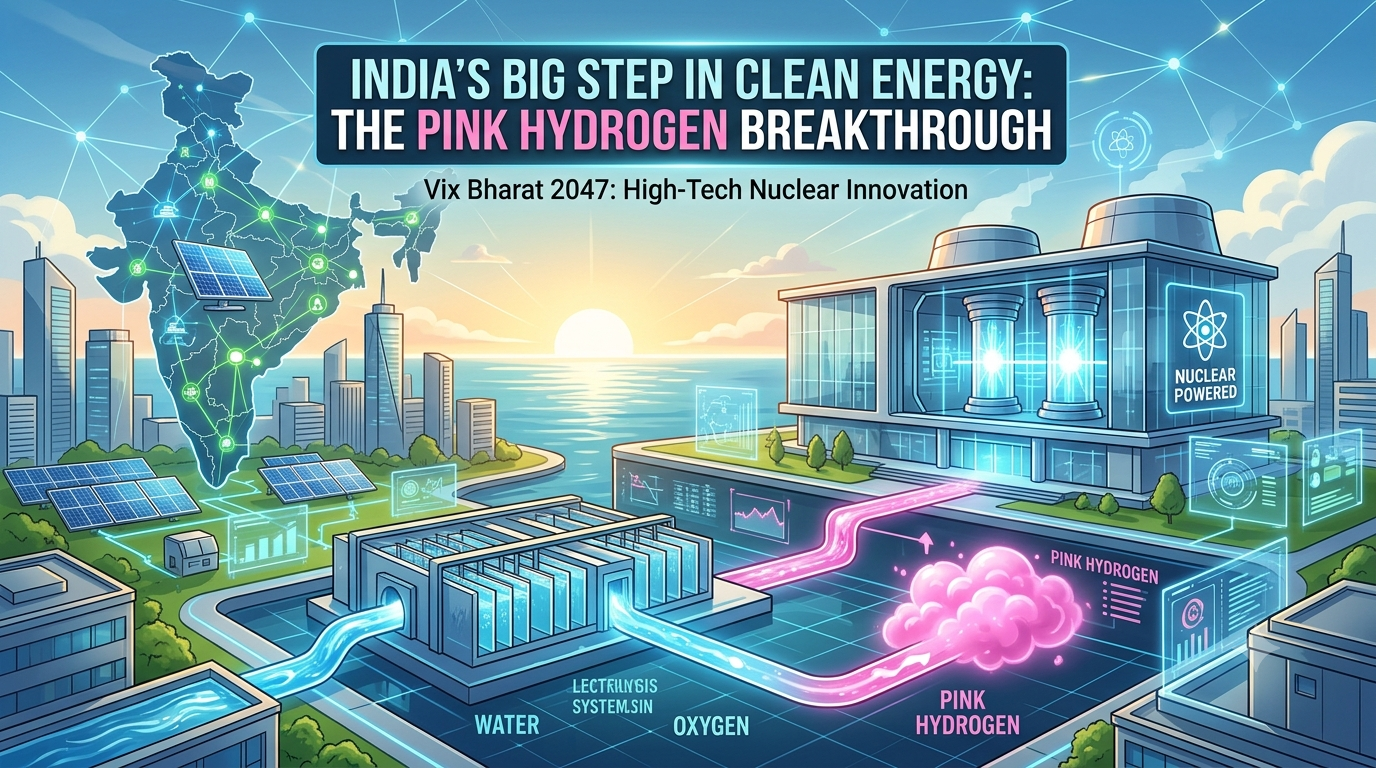
India has just reached a major milestone in the world of clean energy by opening a brand-new “Pink Hydrogen” pilot plant in Kalpakkam, Tamil Nadu. This facility uses nuclear power to create clean fuel, marking a huge step forward in the fight against industrial pollution.
Here is a simple breakdown of what Pink Hydrogen is, how the new plant works, and why it is a game-changer for the future.
The Colors of Hydrogen: Grey, Green, and Pink
To understand why this new plant is so important, it helps to look at the different ways we currently make hydrogen:
- Grey Hydrogen: This is made using natural gas. While we can make it all day and night, it releases a massive amount of harmful greenhouse gases into the air.
- Green Hydrogen: This is made using renewable energy, like wind or solar power, to separate water into hydrogen and oxygen. It is completely clean and pollution-free. However, it is not always reliable—if the sun isn’t shining or the wind isn’t blowing, production stops.
- Pink Hydrogen: This is the best of both worlds. It is made using nuclear energy. Like Green Hydrogen, it produces absolutely zero pollution. But because nuclear reactors run constantly, Pink Hydrogen can be produced 24 hours a day, 7 days a week.
How the New Kalpakkam Plant Works
Run by the Indira Gandhi Centre for Atomic Research (IGCAR) and the Bhabha Atomic Research Centre (BARC), this plant uses a very special method called the Copper-Chlorine Thermochemical Cycle.
Normally, making clean hydrogen is a long process. You have to use heat to create electricity, and then use that electricity to power a machine (an electrolyzer) that splits water. Every time you convert energy from one form to another, you lose some of it.
The Kalpakkam plant skips the electricity step entirely. Instead, it uses the direct, intense heat from a local nuclear reactor to split the water. Because there are fewer steps, the process wastes much less energy.
The Magic of the Copper-Chlorine Cycle
To make this work, the plant only needs four basic things:
Water
Heat (specifically around 500°C)
Copper
Chlorine
When water and intense heat are mixed with the copper and chlorine, a chemical reaction occurs. The result? Pure hydrogen gas and pure oxygen.
The best part is that the copper and chlorine are continuously recycled inside the machine, meaning nothing goes to waste. The nuclear reactor powering this—known as a Fast Breeder Test Reactor—is specially designed to safely and easily maintain that perfect 500°C temperature using liquid sodium.
Why Does This Matter for the Future?
Because Pink Hydrogen provides a massive, uninterrupted supply of clean energy, it is the perfect solution for heavy industries that are notoriously difficult to clean up.
Right now, giant factories rely heavily on dirty fossil fuels to run. In the future, a steady supply of Pink Hydrogen can replace those polluting fuels in:
- Fertilizer Plants: To create ammonia without the carbon footprint.
- Oil Refineries: To help process petroleum more cleanly.
- Steel Manufacturing: Providing extreme heat without releasing greenhouse gases.
For a long time, we only thought of nuclear energy as a way to generate electricity for our homes. Now, it is proving to be a powerful tool for creating clean industrial fuels, helping pave the way for a greener, healthier planet.