




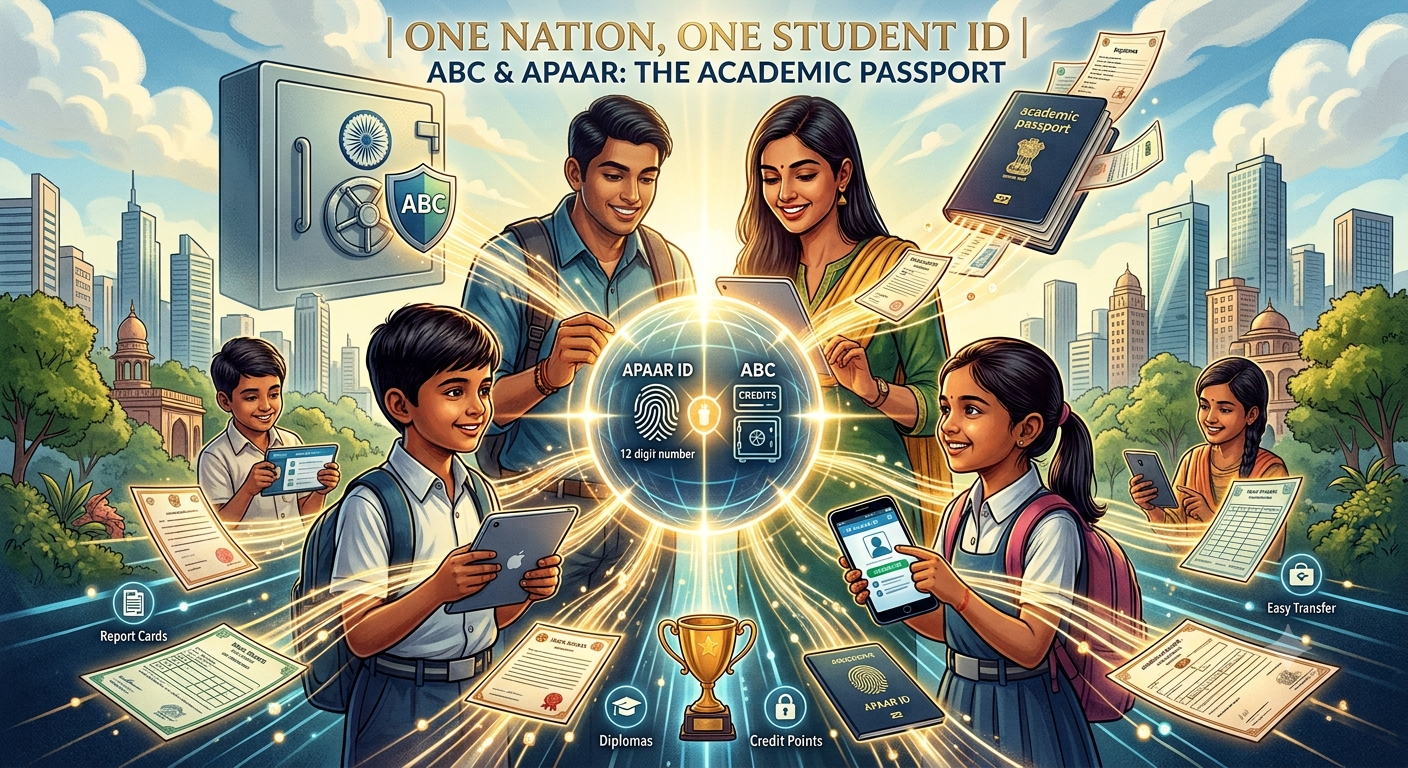
India’s education system is getting a major digital upgrade, thanks to the National Education Policy (NEP) 2020. To make learning easier and more flexible, the government has launched the “One Nation, One Student ID” program. This system relies on two main digital tools: APAAR and ABC. Together, they act as a lifelong digital folder for a student’s entire educational journey.
What is the APAAR ID?
Think of the APAAR (Automated Permanent Academic Account Registry) ID as a student’s digital “academic passport.”
- A Lifelong Number: Every student, from kindergarten all the way to university, gets a unique 12-digit number.
- All Records in One Place: This ID connects all of a student’s educational achievements in one spot. It holds everything from report cards and college degrees to sports awards and Olympiad scores.
What is the Academic Bank of Credits (ABC)?
While the APAAR ID is the student’s identity, the Academic Bank of Credits (ABC) is like a regular bank account—but instead of holding money, it holds educational “credits.”
- Earning and Saving Credits: Whenever a student finishes a course or passes an exam, their school or college deposits educational points (credits) into this digital bank account.
- Taking a Break: The best part about this bank is that it saves these credits for at least seven years. If a student needs to drop out of college for personal or financial reasons, they don’t lose their hard work. They can come back years later, even to a different college, and pick up right where they left off.
Why is This System So Helpful?
Putting all student records online brings several big benefits:
- Easy School Transfers: Moving to a new school or college across the country becomes completely hassle-free. There is no need to carry physical documents or wait for manual paperwork checks.
- Less Paperwork for Jobs: Because everything is linked to secure apps like DigiLocker, applying for universities or jobs is much faster.
- High Security: The system uses Aadhaar to verify identities, keeping data extremely safe. A student’s academic records cannot be shared with anyone unless the student (or their parent) gives clear permission.
How Do You Get an APAAR ID?
The government has made it very easy to sign up using existing online platforms:
- For College Students: Adult students can create their own ID by logging into the DigiLocker app, the UMANG app, or the official ABC website. They simply follow the steps to create an APAAR ID and verify it using their Aadhaar number.
- For School Children: For kids still in school, parents must give their permission first. Once a parent signs a consent form, the school takes care of creating the ID and linking it to the child’s records.
How is it Going So Far?
The program is growing incredibly fast. As of July 2026, over 26.3 crore students across India have already received their verified APAAR IDs. On top of that, more than 110 crore academic records have been successfully uploaded and linked to these accounts, marking a massive leap forward for digital education in India.