


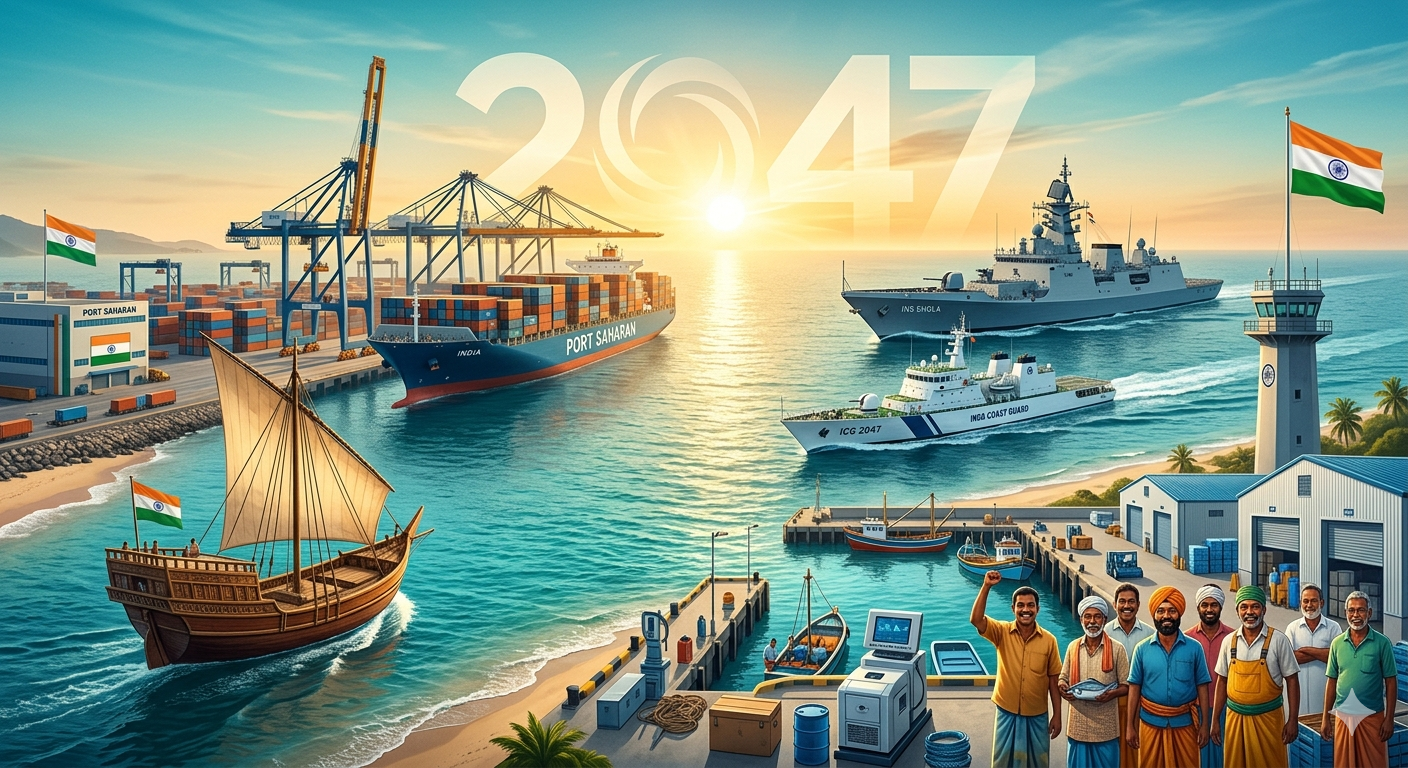
India’s connection to the ocean runs deep. Long before the era of modern globalization, ancient Indian ships were already navigating the waters to trade with Africa, Arabia, and Europe. Despite this rich maritime heritage—from the ancient docks of Lothal to the naval dominance of the Chola Dynasty—India’s coastal infrastructure struggled to keep pace with the demands of the modern global economy.
Historically plagued by massive logistical costs, inefficient waterways, and port delays, India’s maritime sector was performing below its potential. However, over the past decade, a sweeping transformation has taken root, shifting the focus toward making the ocean a primary engine for the “Viksit Bharat 2047” (Developed India 2047) vision.
Revamping Infrastructure and Cutting Delays
Prior to 2014, the maritime logistics sector was hindered by severe bottlenecks. The average time it took for a ship to enter a port, unload, reload, and depart stood at a staggering 96 hours, pushing national logistics costs to nearly 14% of the GDP.
Recognizing the strategic and economic value of the country’s 11,999 km coastline and expansive navigable waterways, the government launched a massive modernization drive:
Streamlined Governance: In 2020, the government expanded the traditional shipping department into the comprehensive Ministry of Ports, Shipping and Waterways, providing a unified direction for maritime growth.
Drastic Efficiency Gains: Through aggressive technological and infrastructural upgrades, port turnaround times have been slashed from four days to under 26 hours, aligning Indian ports with global standards.
The Sagarmala Initiative: Launched in 2015, this flagship program was designed to modernize ports, boost connectivity, and spur industrialization. Hundreds of projects have already been completed, drastically increasing cargo handling capacities.
Building Mega Ports for Strategic Autonomy
To reduce dependency on foreign transshipment hubs like Singapore, Dubai, and Colombo, India has invested heavily in developing its own deep-water capabilities:
Vizhinjam International Seaport: Located in Kerala, this facility features a natural draft of 20 meters, making it India’s premier dedicated deep-water container transshipment hub.
Vadhavan and Great Nicobar Projects: Massive investments are pouring into greenfield projects like Maharashtra’s Vadhavan Port and the Great Nicobar Integrated Development Project. These multi-billion-dollar endeavors include international container terminals, modern townships, and enhanced regional connectivity.
The Blue Economy: Uplifting Coastal Communities
A significant portion of India’s coastal strategy involves directly improving the livelihoods of communities that depend on the sea, moving beyond just industrial shipping.
Dedicated Fisheries Support: With the creation of a specialized Fisheries Ministry in 2019 and the launch of the Pradhan Mantri Matsya Sampada Yojana (PMMSY) in 2020, the government has injected billions into the sector. This has resulted in a fish production surge of over 80%.
Modernizing Livelihoods: Coastal communities are benefiting from upgraded fishing harbors, cold storage facilities, and digital tracking systems.
Expanding Horizons: The Blue Economy strategy is branching out into innovative sectors like seaweed cultivation and deep-sea exploration, highlighted by the Matsya 6000 submersible project.
Fortifying Maritime Security and Diplomacy
Economic prosperity on the water requires robust security. In the wake of the 26/11 Mumbai attacks, India fundamentally restructured its coastal defense mechanisms.
Enhanced Surveillance: The establishment of the Sagar Prahari Bal and the modernization of the Indian Coast Guard have dramatically improved the monitoring of India’s Exclusive Economic Zone (EEZ).
Securing Island Territories: Recognizing the strategic positioning of the Andaman & Nicobar and Lakshadweep islands near vital global shipping lanes, India has bolstered its radar, communication, and naval outposts in these regions.
Regional Leadership: Through the SAGAR (Security and Growth for All in the Region) doctrine, India is actively promoting stability, cooperation, and secure trade routes across the broader Indian Ocean.
Looking Toward 2047
As India looks toward the centenary of its independence in 2047, the “Maritime Amrit Kaal Vision” sets an ambitious roadmap. By developing new shipbuilding hubs, promoting eco-friendly “green ports” funded by innovative financial tools like Blue Bonds, and exploring sustainable offshore energy, India is charting a bold new course.
The ocean is no longer viewed as merely a geographic boundary; it is increasingly recognized as the ultimate frontier for India’s 21st-century economic prosperity and geopolitical strength.