





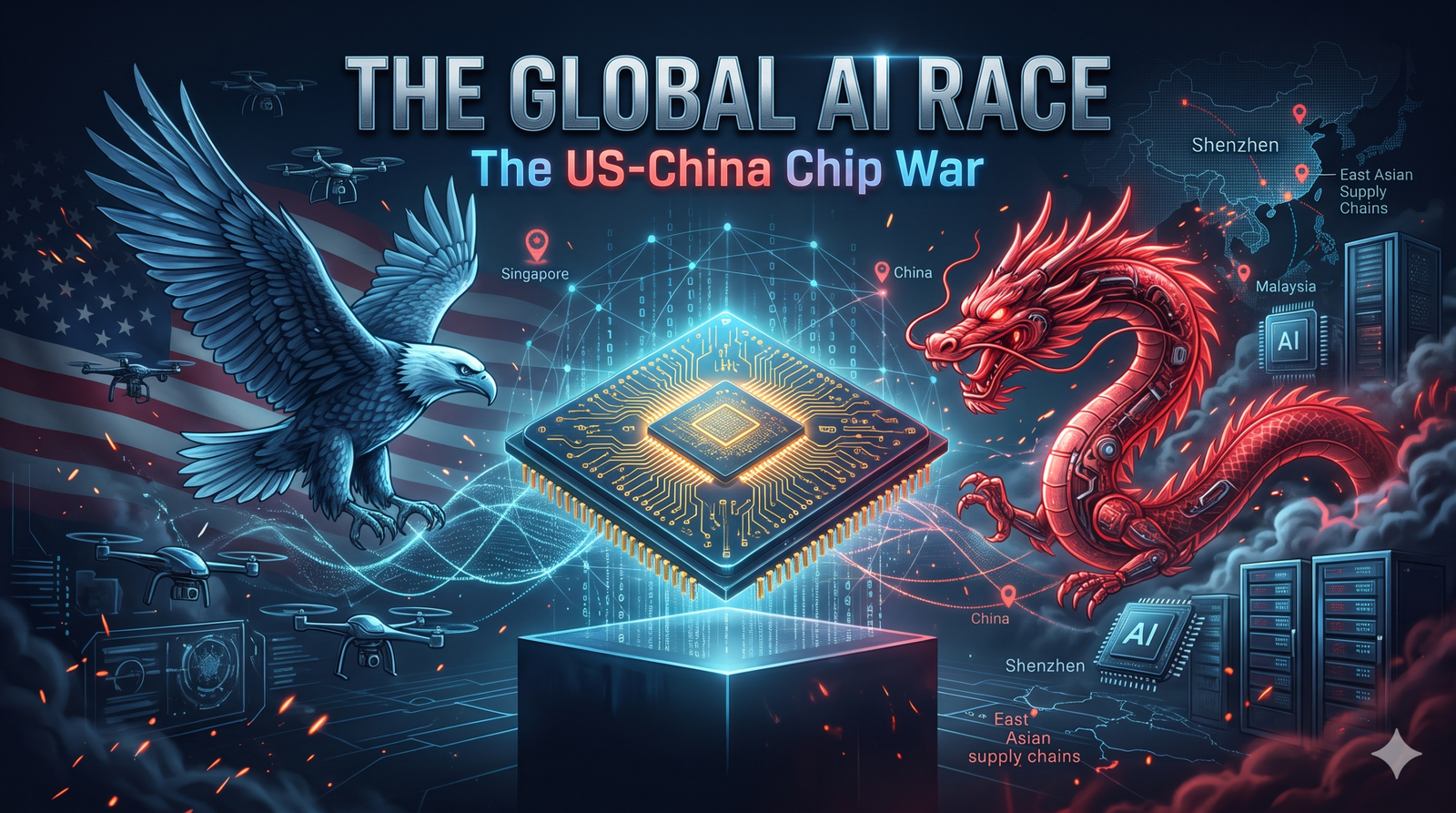
The Struggle for AI Dominance: The global competition to lead in Artificial Intelligence (AI) revolves significantly around securing advanced AI hardware, particularly high-end chips. The United States and China are the primary contenders in this strategic race.
The Crucial Role of Nvidia: Nvidia is positioned as a central player in global chip design, while manufacturing heavily relies on Taiwan. The US Department of Defense is heavily dependent on Nvidia components for critical operations, including drone technology and the guidance systems of cruise missiles.
US Sanctions and Geopolitical Tensions: To maintain its technological edge, the US has implemented sanctions meant to prevent the export of highly capable, dual-use AI chips (which can be used for both commercial and military purposes) to China.
Corporate Intrigue and Allegations: A significant controversy involves Nvidia’s CEO, Jensen Huang, and a purported relationship with Alice Huang, a top executive at a Singapore-based firm called Mega Speed. This relationship has raised immense security concerns because Mega Speed allegedly operated as a front for Chinese interests.
The Smuggling Network: According to a CIA investigation presented to the US leadership, Mega Speed purchased restricted Nvidia chips under the pretense of using them for data clouds in Singapore (a US ally). However, these chips were reportedly repackaged as standard electronics and routed through shell companies in Malaysia, Indonesia, and Thailand, eventually reaching tech hubs in China like Shenzhen.
Strategic Leaks via Informal Channels: Security agencies fear that casual conversations during informal meetings between the Nvidia CEO and the Mega Speed executive led to the inadvertent disclosure of critical US security blueprints and future chip technology directions.
China’s Strategic Gain: Armed with insider knowledge regarding Nvidia’s future thermal cooling shifts and power estimates, China reportedly saved billions of dollars in research and development. They were able to effectively adapt their digital infrastructure to align with upcoming chip architectures instead of wasting resources on blind experimentation.
Financial Maneuvering and Shell Companies: The funding for Mega Speed’s massive chip purchases is believed to have originated from the Chinese state. This capital was reportedly disguised through over-invoicing, cryptocurrency transactions, and investments routed through dummy corporations across Southeast Asia to bypass detection by US commerce watchdogs.
Bypassing Security Measures: While the advanced chips were equipped with software codes and telemetry tracking meant to alert California headquarters of their location, smugglers successfully intercepted and manipulated these tracking sensors to send false data.
Anticipating that the US would eventually uncover this smuggling route, China heavily subsidized domestic tech giants like Huawei. Huawei has been tasked with developing local AI processors to reduce reliance on American technology.
Reducing Reliance on US Allies: To secure its supply chain, the Chinese state has also heavily funded domestic memory manufacturers to break free from its reliance on South Korean high-bandwidth memory chips, knowing South Korea is susceptible to US geopolitical pressure.
India’s Position: Amidst this superpower rivalry, India is actively pushing its own AI and semiconductor ambitions, allocating significant funds for an AI mission and focusing on developing domestic semiconductor fabrication plants to reduce its vulnerability to global supply chain disruptions.