




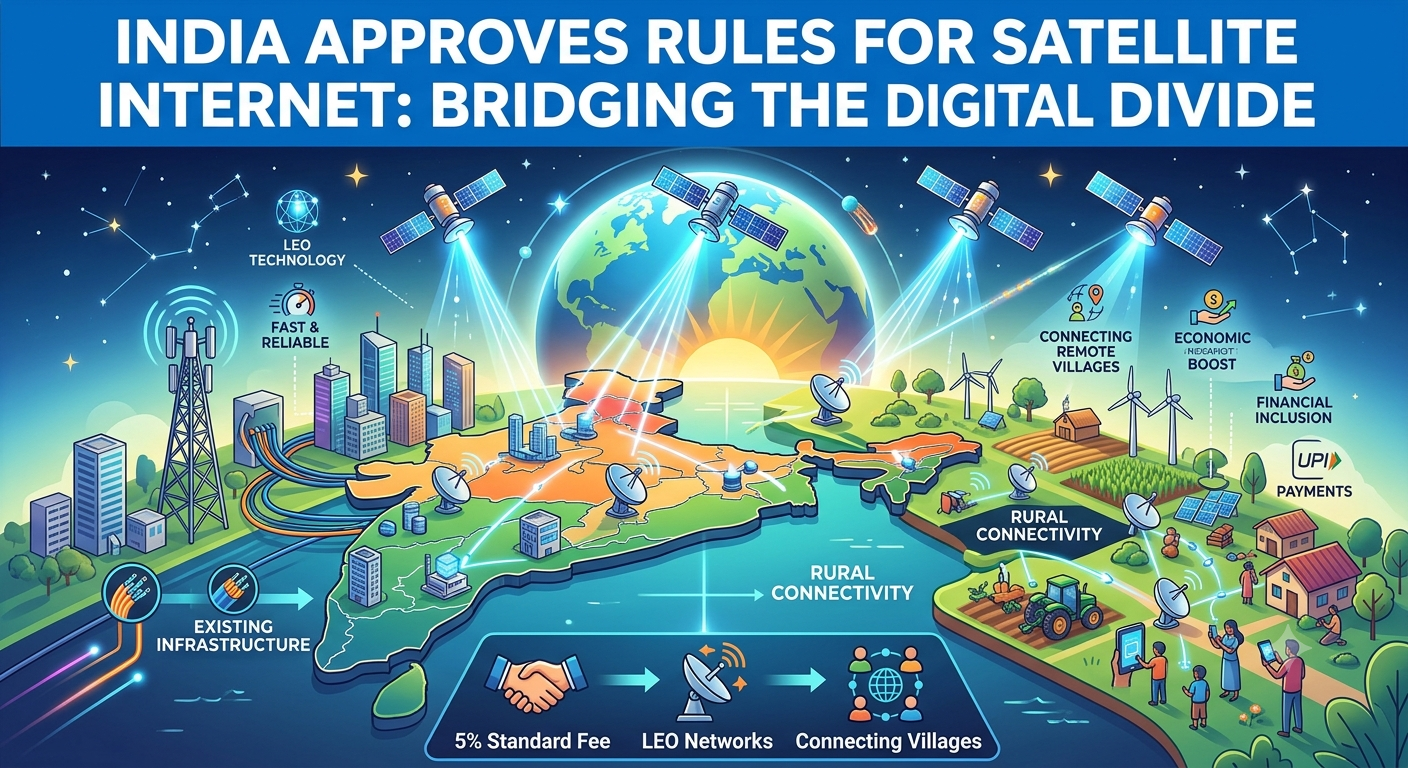
India is taking a major step toward bringing satellite internet to the public. The government recently cleared the basic rules for how satellite internet signals will be priced and distributed. This decision opens the door for companies like Starlink, Eutelsat OneWeb, and Reliance Jio to start offering their services in India.
What Are the New Rules?
The government has set clear guidelines for how these companies will operate:
Standard Fee: Internet providers will pay 5% of their revenue to the government for using the satellite signals.
Discount for Remote Areas: In hard-to-reach places, this fee drops to 4% to encourage companies to provide service there.
Direct Assignment: The government will hand out the rights directly for a set price, rather than making companies bid against each other in an auction.
Time Period: Companies get these rights for an initial period of five years, with options to extend later.
While the rules are set, companies still need final security approvals before they can start selling internet plans to the public.
Why is Satellite Internet Better Now?
In the past, satellite internet was slow and had noticeable delays. Today, companies use Low Earth Orbit (LEO) satellites. Because these satellites fly much closer to Earth, the internet connection is incredibly fast and has very little delay, making it feel just like a regular home Wi-Fi connection.
Helping Rural India Grow
While cities have good mobile networks and fiber cables, many faraway villages still struggle to get a reliable connection. Satellite internet can fix this problem by:
Supporting local businesses and boosting the rural economy.
Making digital payments and banking (like UPI) easy to use anywhere.
Connecting smart devices and modern farming tools directly to the internet.
What Are the Challenges Ahead?
Even with this exciting progress, a few problems still need to be solved:
Cost: The equipment (like the satellite dish) and the monthly internet bill must be affordable for everyday consumers.
Safety: The networks must be safe from hackers and protect the country’s national security.
Market Competition: Satellite companies will have to compete with traditional mobile network providers to win over customers.
The Big Picture
Bringing satellite internet to India is not just about testing new technology. It is about creating a mixed system where mobile towers, underground cables, and space satellites work together. The ultimate goal is to make sure every single person in the country can get a fast, reliable internet connection, no matter where they live.