


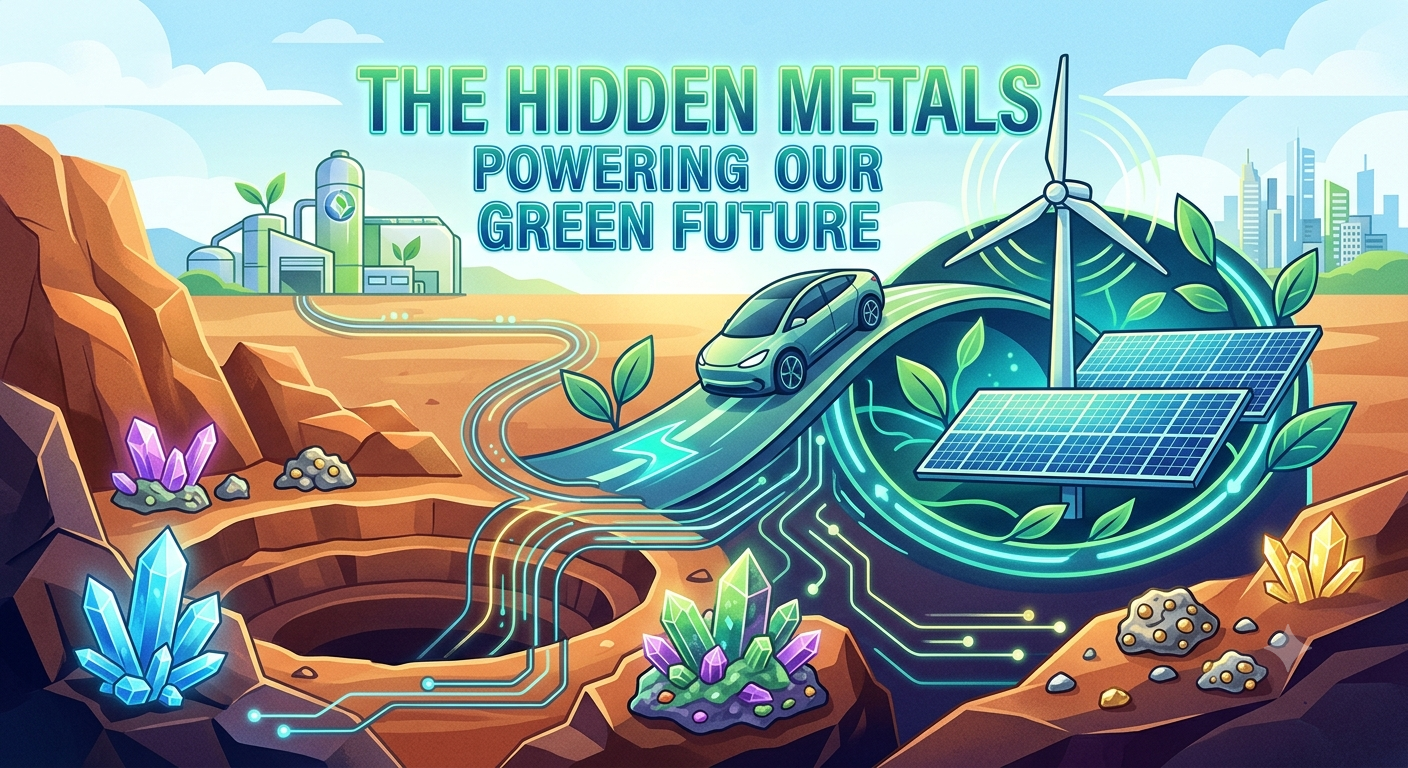
When we think about energy, we usually picture oil, coal, or sunlight. However, the future of our planet relies on a special group of materials found deep underground: critical minerals and rare earth elements.
Though you might not see them, these materials are the secret ingredients inside our everyday devices, from smartphones and laptops to electric cars and wind turbines. As the world shifts away from polluting fossil fuels to fight climate change, the demand for these special metals is skyrocketing.
Understanding the Terms
People often use the terms “rare earths” and “critical minerals” to mean the same thing, but they are slightly different:
Rare Earth Elements: This is a specific family of 17 metals. They are usually found mixed together in the dirt, which makes them very difficult to separate. They are highly valued because they help make our modern gadgets smaller, faster, and much more powerful.
Critical Minerals: This is a broader term. A mineral is labeled “critical” if it is extremely important for a country’s economy but is at risk of being in short supply. All rare earths are critical minerals, but not all critical minerals are rare earths.
Why Are They So Important?
Without these materials, the shift to clean energy simply wouldn’t be possible. Here is how they are used:
Solar Power: Metals like silicon and gallium are essential for building the cells inside solar panels.
Wind Energy: Giant wind turbines rely on super-strong magnets made from rare earth elements like neodymium.
Electric Vehicles (EVs): If you want to build the rechargeable batteries that power electric cars and store energy, you absolutely need lithium, cobalt, and nickel.
The Supply Problem and India’s Goals
India has big plans for a greener future. The country aims to get half of its electricity from non-polluting sources by 2030 and wants to completely eliminate its carbon footprint by 2070.
To achieve this, India needs a massive amount of critical minerals. The problem is that the global supply is currently very fragile. Right now, China controls roughly 60% to 70% of the world’s critical mineral exports. If India wants to guarantee its clean energy future, it cannot rely on just one country for its supplies.
The Solution: Building a Self-Reliant Future
To secure these vital materials, the Indian government launched the National Critical Mineral Mission. The goal is simple: make India self-reliant. The strategy includes three main steps:
Searching at Home: The government has ordered over 1,200 exploration projects to search for these minerals within India’s borders over the next few years. They have also changed mining laws to make it easier for private companies to mine 24 specific critical minerals.
Making Global Partnerships: India is teaming up with resource-rich countries. For example, India recently signed deals to explore for lithium in Argentina and is working with Australia to secure lithium and cobalt projects.
Recycling and Innovation: Instead of just digging for new materials, the mission also focuses on extracting these valuable minerals from industrial waste and recycling old products.
Looking Ahead
The transition to green energy isn’t just about building wind turbines and solar panels; it’s about securing the raw materials needed to build them. By searching for minerals at home, making smart partnerships abroad, and finding clever ways to recycle, India is taking the necessary steps to build a cleaner, stronger, and more secure future.