

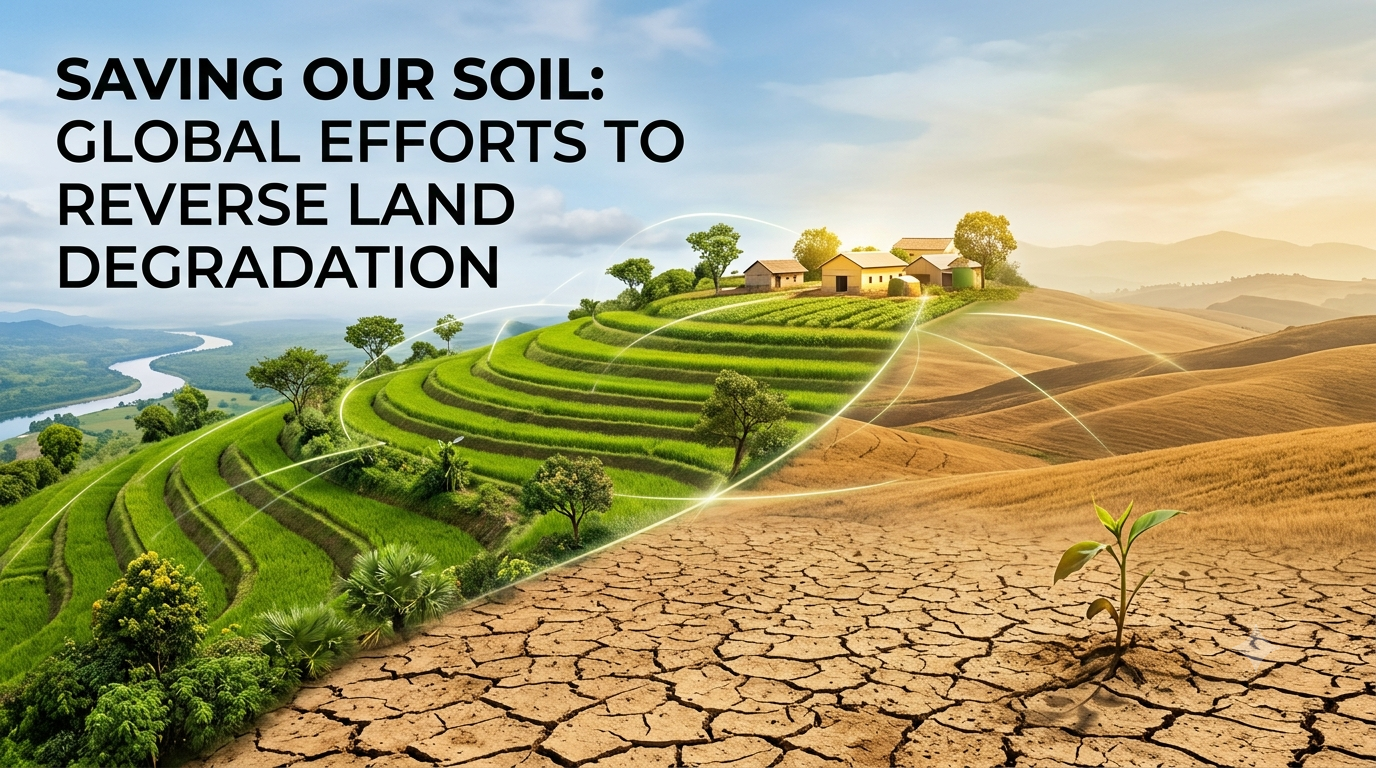
Healthy land is turning into dust, and it is a much bigger emergency than most people realize. Recently, global leaders gathered in Ulaanbaatar, Mongolia, for a major United Nations meeting (known as UNCCD COP 17) to figure out how to stop the earth from drying up.
Here is a simple breakdown of why this issue matters, how bad it really is, and what the world is doing to fix it.
A Historic Year for the Planet
To understand this meeting, we have to look back to the famous Earth Summit in 1992. Out of that summit came three major groups to protect the planet: one for climate change, one for nature and wildlife, and one to stop lands from turning into deserts (the UNCCD, created in 1994).
The year 2026 is unique because all three of these groups are holding major global meetings in the same year—a milestone experts are calling the “Rio Trio.” It started with the land meeting in Mongolia, followed by a nature meeting in Armenia, and will end with a climate meeting in Turkey.
The Big Goal: No More Lost Land
The main mission of the UN land group is something called Land Degradation Neutrality.
While that sounds complicated, the idea is very simple: we must stop losing healthy land. If a piece of land gets damaged, another piece must be healed. Ultimately, the total amount of healthy, food-producing land in the world should either stay the same or grow. It must not shrink.
How Bad is the Problem?
The global numbers are alarming:
Over 1.5 billion hectares of land around the world are already damaged.
Every single year, we lose another 12 million hectares of fertile soil to droughts and desertification.
This crisis directly threatens the food, water, and jobs of over 2 billion people.
If we don’t fix this, people will not be able to survive in these dried-out areas. They will be forced to leave their homes, creating a massive wave of global migration as people search for places with enough food and water.
Why Meet in Mongolia?
Mongolia was chosen to host this meeting because the country is currently living through this nightmare. Mongolia is one of the top 10 countries most affected by climate change. A shocking 79% of its land is already damaged, and less than 9% of the country has any forest cover left. Mongolia wanted to use its own crisis to wake up the rest of the world.
The Ripple Effect of Healing the Earth
Stopping land degradation isn’t just about saving dirt; it fixes a whole chain of human problems. When we restore damaged land, we also:
Restore Economies: Healthy land means more farming and more jobs.
Restore the Climate: Good soil and trees naturally pull harmful carbon out of the air.
Restore Water: Healthy landscapes hold onto water like a sponge, protecting our drinking supply.
What Did the Leaders Agree To?
The meeting in Mongolia ended with some massive financial commitments to help solve the problem:
A $1.2 Billion Grassland Plan: Mongolia helped launch a massive, long-term plan called the Steppe Action Agenda. Backed by $1.2 billion, it will help protect grasslands worldwide and support the people who herd animals on them.
A New Fund for Droughts: A brand-new global bank account was created specifically to help countries survive severe droughts. Supported by the UN, the government of Luxembourg, and an international alliance, it is expected to start with $400 million.
Passing the Torch to Egypt: It was announced that Egypt will host the next big land conference (COP 18) to keep the world on track for its 2028 goals.
The Bottom Line
The earth beneath our feet provides our food, our water, and our livelihoods. The recent meeting in Mongolia proved that the world is finally treating dying land as a true global crisis. However, the clock is ticking, and action must be taken immediately before more fertile ground turns to dust.