




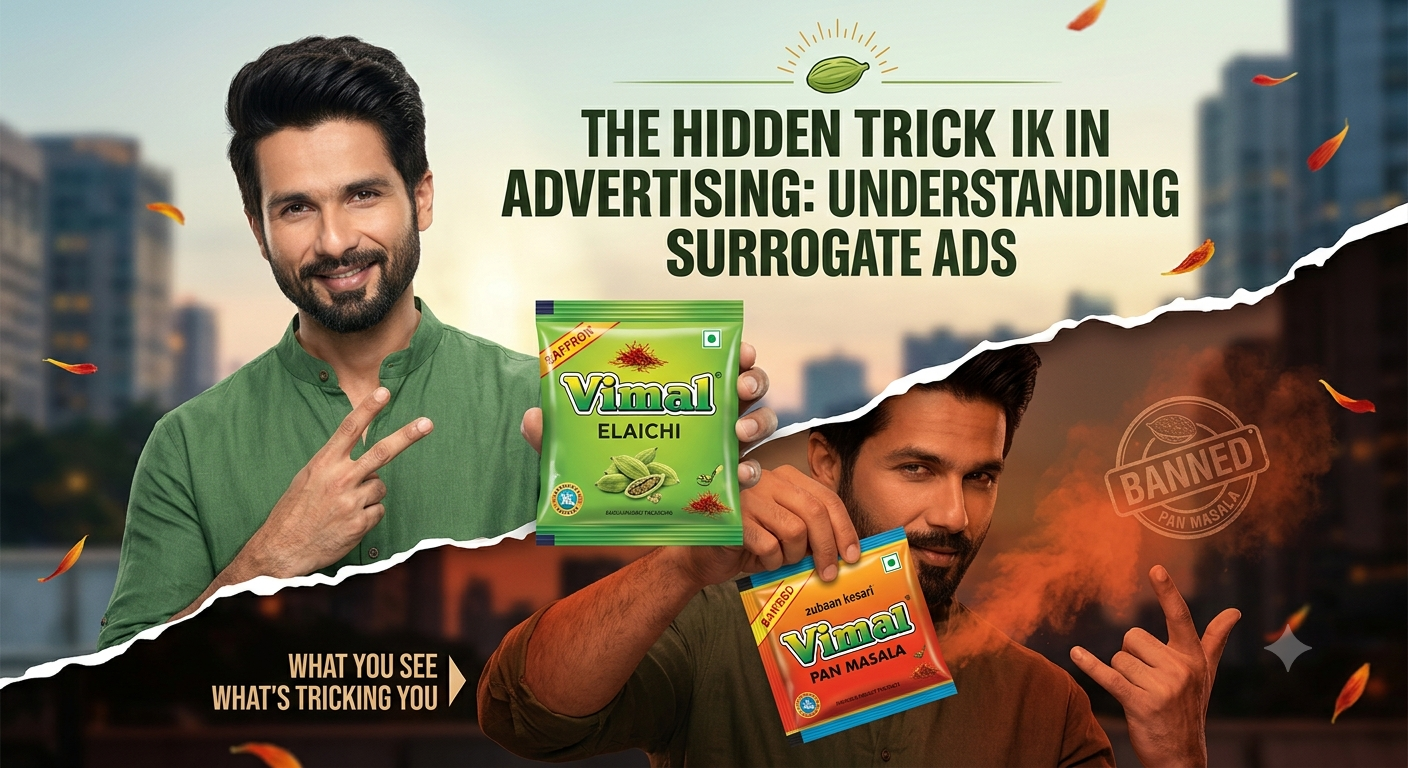
Have you ever seen famous actors promoting a simple mouth freshener using flashy slogans and recognizable colors? Often, these commercials are not actually trying to sell you a mouth freshener. Instead, they are using a clever marketing loophole known as “surrogate advertising.”
What is a Surrogate Ad?
When a company is legally banned from advertising a harmful or restricted item (like pan masala, alcohol, or tobacco), they often create a harmless “dummy” product—like cardamom or bottled water.
They design this harmless product using the exact same name, logo, colors, and font as the restricted item. When consumers see the ad, their brains automatically link it to the banned product. Consequently, when a customer walks into a shop and asks for that brand name, the shopkeeper usually hands them the restricted item, not the harmless one.
The Recent Celebrity Controversy
This issue recently made headlines when a major advertisement for a cardamom (elaichi) product aired featuring top Bollywood stars. The commercial heavily used the signature colors and style of a well-known pan masala brand.
Because pan masala is banned in Maharashtra due to severe health risks, the state’s Food and Drug Administration (FDA) stepped in. They accused the brand of using the cardamom ad to secretly promote their banned pan masala.
Strict Rules and Heavy Penalties
To crack down on this deceptive marketing, the FDA took aggressive action against the campaign:
Halt all promotions: The actors were ordered to immediately step away from the ad campaign.
Scrub social media: All promotional posts had to be deleted from the stars’ social media accounts within 15 days.
Investigate contracts: The actors were required to hand over their endorsement agreements to see if they knew what they were truly promoting.
The consequences for misleading the public are severe. Celebrities caught in these traps can face fines up to ₹50 lakh and be completely banned from acting in any commercials for up to three years.
The Big Debate: Who is Responsible?
Celebrities often defend these endorsements by arguing that they are only hired to promote the harmless, legal product. However, authorities and consumer watchdogs argue that this is a poor excuse. Because fans trust and imitate their favorite stars, using celebrity influence to push deceptive branding ultimately tricks the public into buying unhealthy products.
Have you ever noticed a brand using a harmless everyday item to secretly advertise something else?