


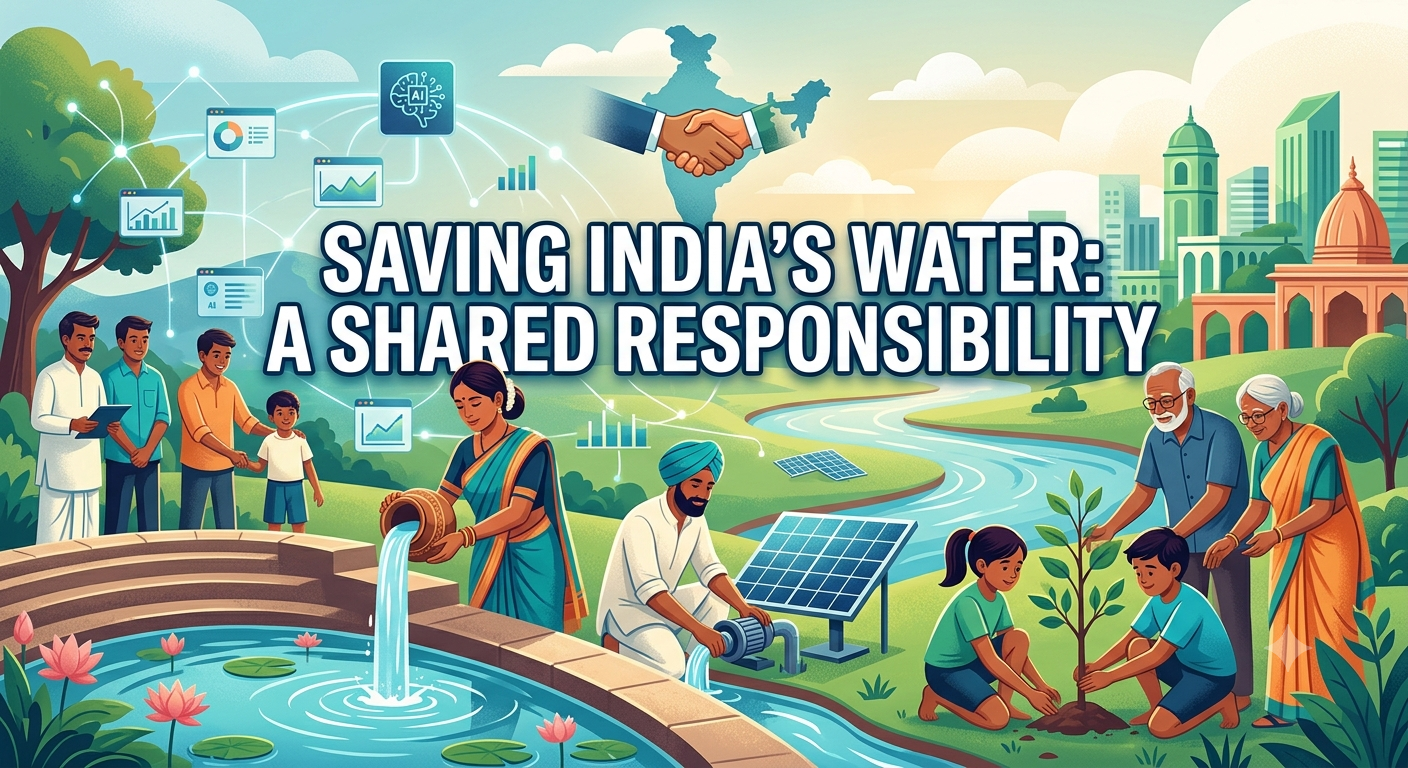
Water conservation is one of the most pressing issues in India today. Recently, leaders and experts gathered at a national water summit to discuss how the country can secure its water future. The main takeaway? Saving water is a massive task that requires both smart government planning and the active participation of every citizen.
Teamwork and Smart Technology
At the recent National Water Summit, Prime Minister Narendra Modi highlighted the importance of “cooperative federalism.” In simple terms, this means the central government and state governments must stop working in silos and instead come together as a unified “Team India.”
To manage water better, the Prime Minister also suggested using modern technology, like Artificial Intelligence (AI). By using AI, the government can track water levels, collect accurate data, and make smarter decisions about how to distribute and save water.
Bringing Old Water Bodies Back to Life
During a discussion on the topic, Member of Parliament Balayogi Umesh Nath shared an inspiring update from the Jal Ganga Mission. Across the country, communities, local leaders, and officials are joining hands to restore ancient water sources. Traditional wells, ponds, and stepwells (baodis) that were forgotten or dried up are being cleaned and revived. This shows the incredible power of local action.
A Continuous Process, Not a Short-Term Project
A major point raised by experts is that water conservation cannot be a temporary campaign with a strict start and end date. It needs to be a long-term, ongoing effort. For this to happen, state departments and local administrations at the district level need to stay continuously active and committed to the cause.
The Power of the People (Jan-Bhagidari)
No government plan can succeed without the help of the public. Today, people are busy with their daily lives and can sometimes forget their environmental duties. That is why it is crucial to constantly educate and guide citizens about saving water and keeping rivers clean. When ordinary people align their daily habits with the nation’s goals, large-scale change happens naturally.
Educating the Next Generation
To ensure our water resources are protected in the future, the youth must be involved. There is a strong push for universities and colleges to include water management in their studies. By teaching the younger generation how to govern and protect our water, we are building a more secure future.
The Bottom Line
Protecting India’s water isn’t just the government’s job—it is everyone’s duty. By combining modern technology, teamwork between states, and the dedication of the general public, India can build a sustainable and water-secure future for generations to come.