



Recently, world leaders gathered in Mongolia for the UNCCD COP17 summit. The main goal of this meeting was to figure out how to stop healthy land from dying and how to protect our environment for the future.
Understanding the Problem
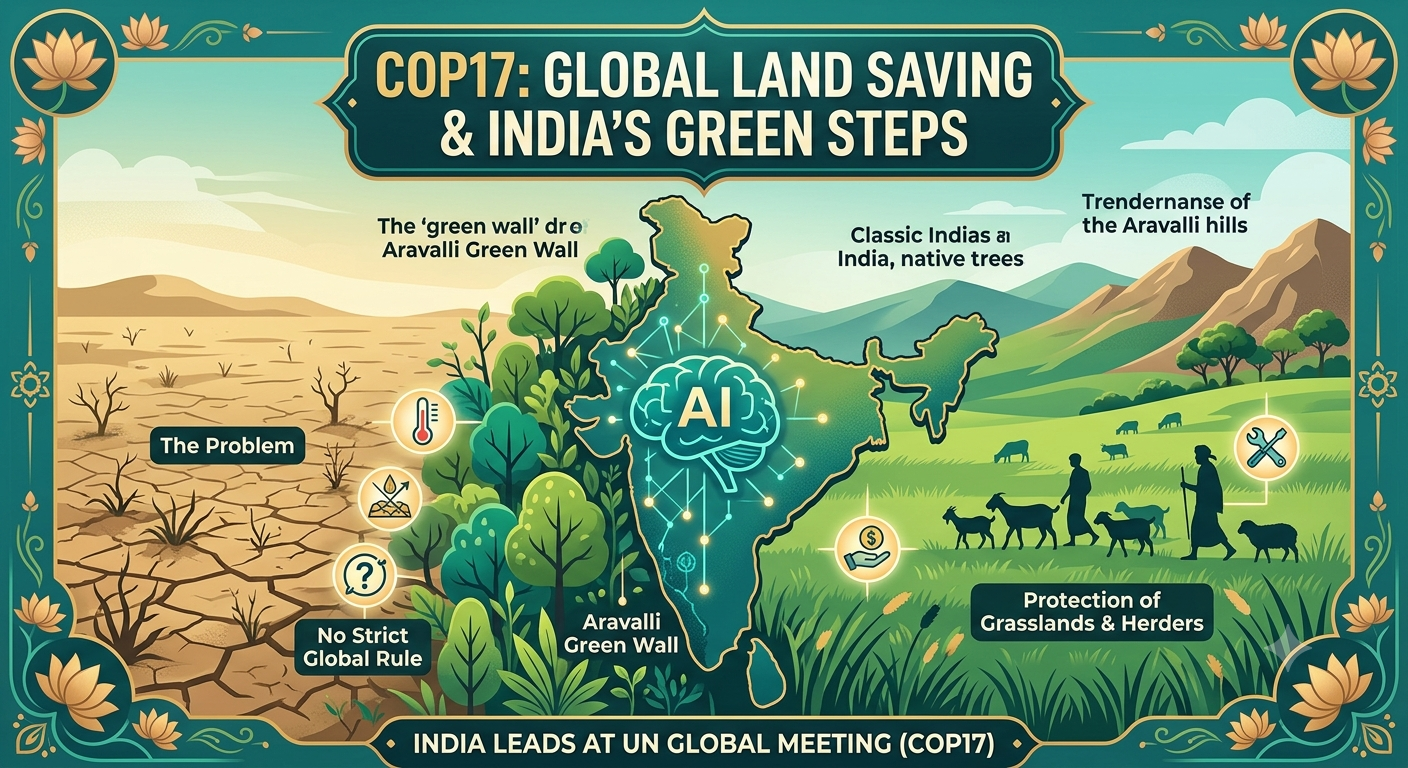
To fix the earth, we first have to understand what is happening to it:
Land Degradation: This is when healthy soil gets damaged by things like bad weather or over-farming, and it can no longer support plant life.
Desertification: When land degradation happens in areas that are already dry, the land slowly turns into a permanent, lifeless desert.
Key Results from the Summit
The leaders tried to make big rules to protect the earth, but they faced some disagreements. Here is a summary of what they decided:
No Strict Global Rule: Countries could not agree on a strict, worldwide law for handling droughts. Some nations believed that every country faces unique challenges and a “one-size-fits-all” rule would not work.
New Tools and Money: Instead of a strict law, they created a voluntary guide and a smart tech tool to help track drought risks. They also pledged $1.3 billion to repair damaged land globally.
Focus on Grasslands: The summit put a special spotlight on protecting natural grasslands and the traditional animal herders who live there.
India’s Green Steps
India played a major role at the meeting by sharing fresh ideas and massive environmental projects:
Changing the “Wasteland” Idea: India explained that open places without thick forests, like grasslands and cold deserts, are not useless “wastelands.” They are special natural habitats that need the right kind of care, rather than just planting trees everywhere.
The Aravalli Green Wall: To stop the Thar Desert from growing eastward, India is planting a massive 1,500-kilometer wall of trees and native plants along the Aravalli hills.
A Huge Goal: India has promised to heal 26 million hectares of damaged land by the year 2030.