




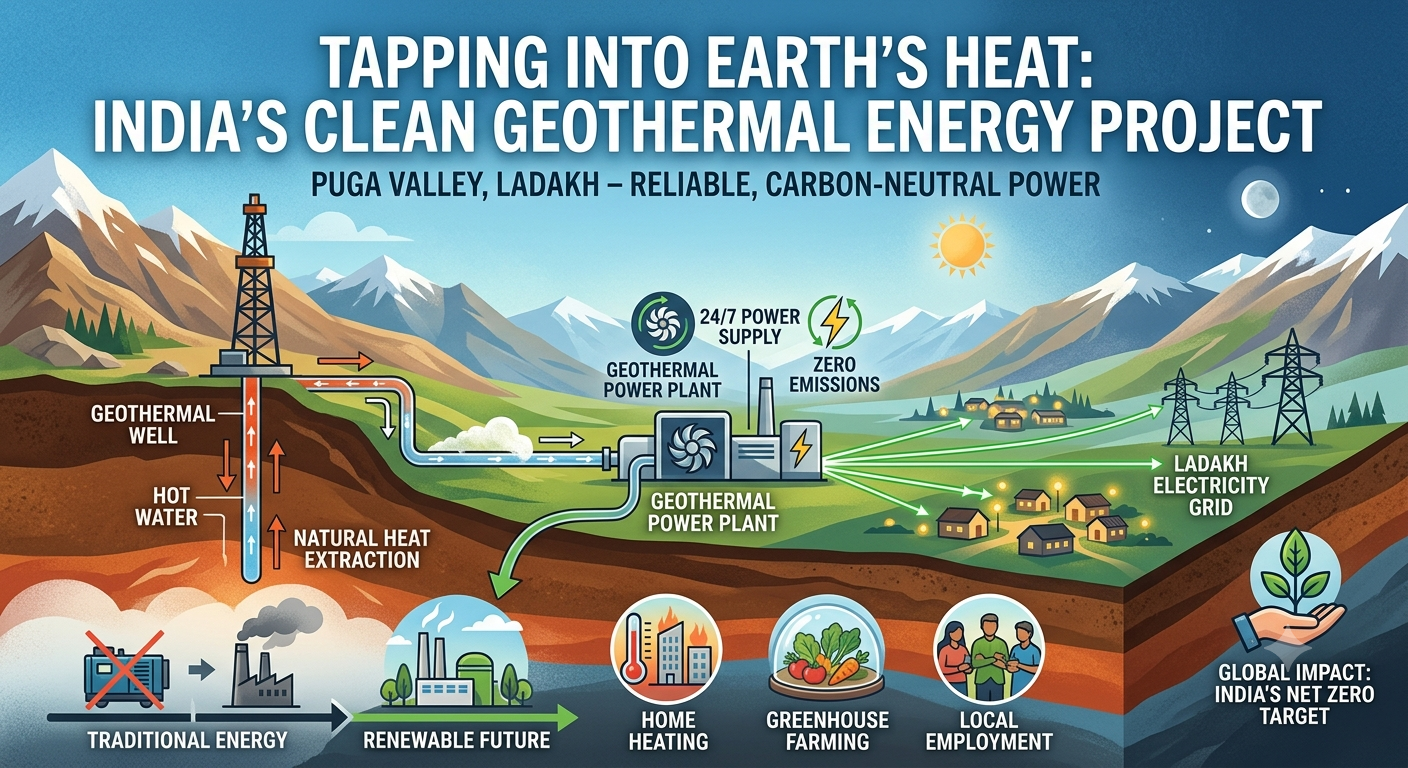
Ladakh is famous for its stunning mountains, but it is now making headlines for a totally different reason: clean power. A government company called the Oil and Natural Gas Corporation (ONGC) has hit a major milestone in the region. They are tapping into the earth’s natural heat to create electricity, which is a massive step in helping India move away from polluting fuels like diesel and gas.
Success in Puga Valley
Working alongside local Ladakh leaders, ONGC recently finished drilling two deep wells in an area called Puga Valley. For a long time, Puga Valley has been famous for its natural hot springs, and scientists knew there was a lot of energy hidden underground. Now, with these new wells (named GT-02 and GT-03), they can finally bring that natural heat to the surface to generate power. This marks the start of India’s first major geothermal energy plant.
How Does It Work?
Geothermal energy simply means using the intense heat trapped deep inside the Earth to generate electricity. The biggest advantage of this power source is its reliability. While solar panels need sunny skies and wind turbines need a breeze, the Earth’s heat is available 24 hours a day, 365 days a year. It is also completely clean, meaning it does not release any harmful pollution into the air.
Life-Changing Benefits for Ladakh
Because Ladakh is so remote and experiences freezing winters, providing steady electricity has always been a massive struggle. When solar power drops in the winter, the region usually relies on diesel generators, which are expensive and pollute the mountain air. This new project will change that by offering:
Non-Stop Power: Locals will finally have reliable electricity day and night, regardless of the weather.
Less Pollution: A drastic drop in the use of dirty, expensive diesel fuel.
Meeting Climate Goals: It pushes India closer to its national target of producing zero harmful carbon emissions by 2070.
New Local Businesses: The continuous energy can be used to heat homes during harsh winters, run indoor farming greenhouses all year, process food, and even attract tourists. This means more jobs and money for the local community.
The Roadblocks Ahead
Even with all these benefits, the project is not without its difficulties. Drilling deep into the rocky earth costs a lot of money. It is also incredibly hard to operate heavy, complex machinery high up in the freezing mountains. Furthermore, because this is India’s first major project of its kind, engineers are still building the specific experience and skills needed to run it smoothly.
The Bottom Line
Despite the hurdles, the Puga Valley project is a massive victory for the whole country. It proves that India is finding smart, new ways to produce its own clean energy. By using the heat right beneath our feet, Ladakh is paving the way for a brighter, greener future.