


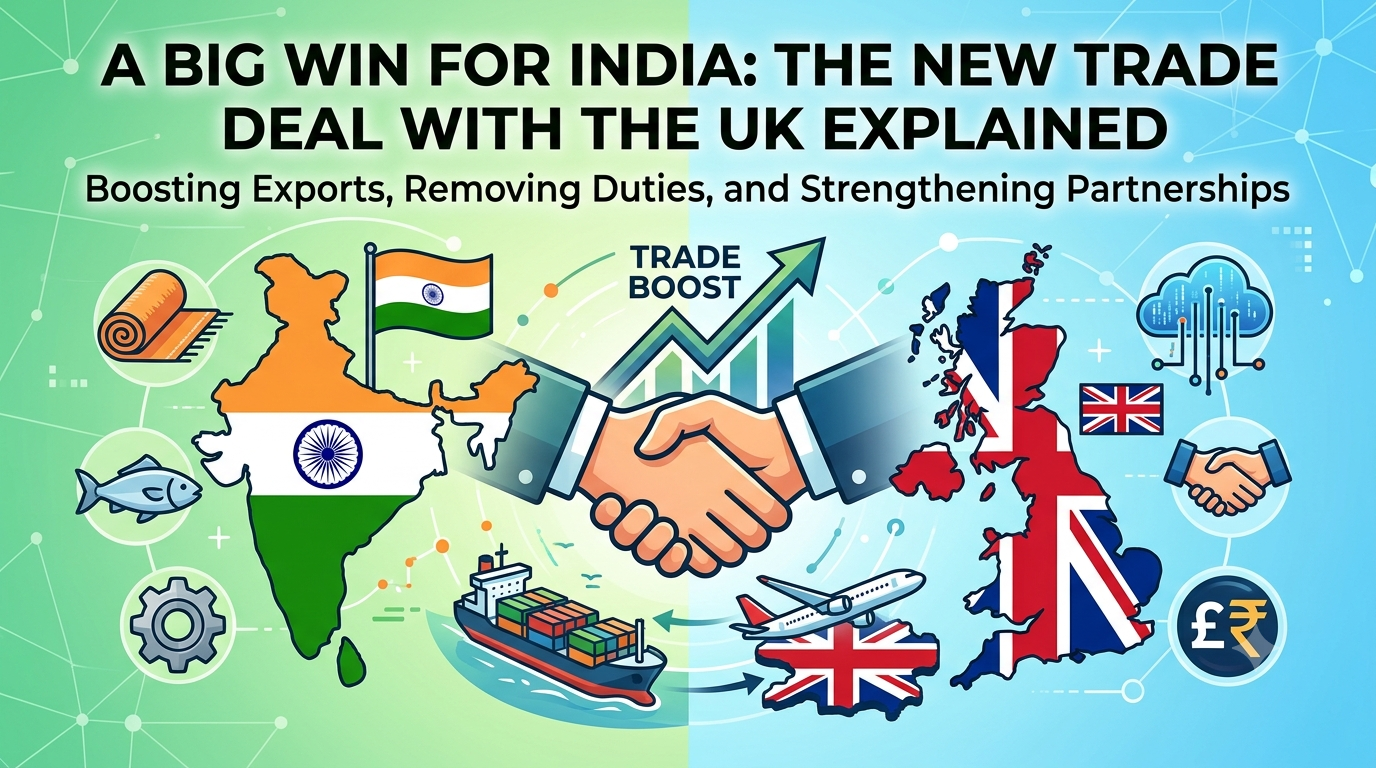
India and the United Kingdom have officially kicked off a massive new trade partnership. Thanks to this new agreement, 99% of the goods India sells to the UK will no longer face extra import taxes (known as duties or tariffs).
The results were visible immediately. On the very first day the deal went live, Indian businesses sold about $140 million worth of tax-free goods to the UK. Many experts believe this deal could be as important for India’s future as the major economic changes the country made back in 1991.
Which Businesses Benefit the Most?
For years, Indian sellers struggled to compete with countries like Vietnam and Bangladesh in the UK market because those countries didn’t have to pay import taxes.
Clothes and Textiles: Before this deal, Indian clothing faced a 12% tax in the UK.
Seafood: Indian marine products faced taxes as high as 20%.
Now that these taxes are dropped to zero, Indian makers of clothes, shoes, leather goods, jewelry, medicines, and machinery have a fair chance to sell their products at competitive prices and grow their businesses.
It’s Not Just About Physical Goods
While selling items is important, “services” (like IT, banking, and professional work) are a huge part of this deal. The UK’s economy is heavily driven by services, making up 80% of its total output.
To help each other grow, both countries are opening up their service industries to one another. Right now, India and the UK do about $60 billion worth of trade together each year. With this new open-door policy, they are aiming to push that number to $100 billion by the year 2030.
What Indian Businesses Must Do to Succeed
Removing taxes is only the first step. Small and medium-sized Indian businesses still have to put in the work to win over UK buyers.
Since the taxes are gone, UK buyers might try to negotiate for lower prices. More importantly, Indian companies have to meet the UK’s strict rules for quality and the environment. To truly succeed, Indian businesses need to stop just selling raw materials and start creating finished, high-quality products that meet global green standards.
The Big Picture
All over the world, massive global trade organizations (like the WTO) are moving slowly because it’s hard to get over 150 countries to agree on things. Because of this, direct deals between two countries—like this one between India and the UK—are becoming the best way to do business.
For India, this deal shows a new level of confidence. Instead of being afraid of foreign competition, India is opening its doors, upgrading its technology, and proving that it is ready to be a major, trusted manufacturing hub for the entire world.