




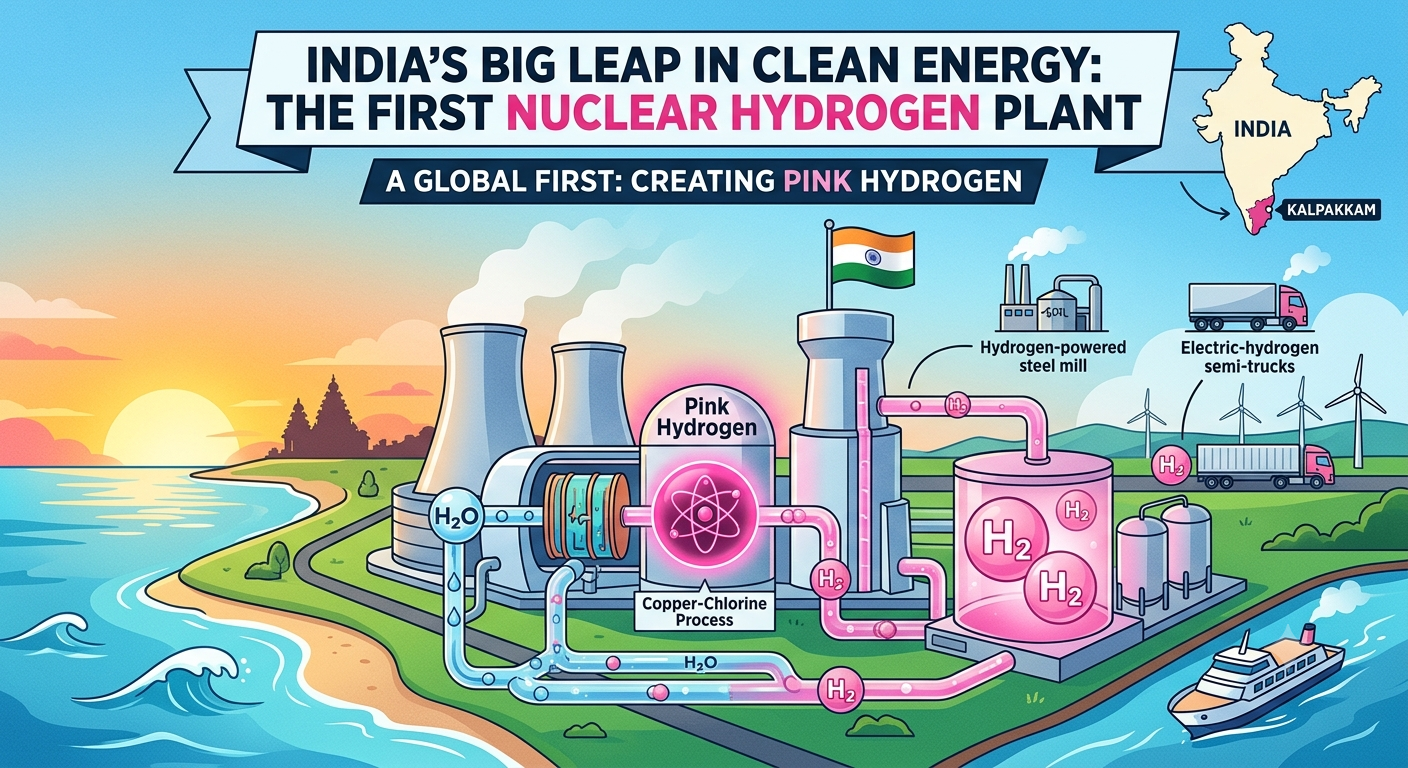
India has recently achieved something amazing for the environment. The country has set up the world’s very first facility that uses nuclear power to create hydrogen fuel. This is a massive step toward using cleaner energy and reducing harmful pollution around the globe.
Here is a simple breakdown of how it works and why it matters.
Understanding the “Colors” of Hydrogen
Even though hydrogen is an invisible gas, scientists use colors to describe how it is made. Here is a quick guide to what those colors mean:
Where and How Does It Work?
This new facility is located in Kalpakkam, Tamil Nadu. Instead of just using normal electricity to separate hydrogen from water, scientists are using a special method called the Copper-Chlorine Thermochemical Cycle.
In simple terms, a nuclear reactor generates an incredible amount of heat. This facility takes that intense heat and mixes it with copper and chlorine chemicals. This combination easily breaks water apart into oxygen and hydrogen, making the whole process highly efficient.
Why is Pink Hydrogen So Important?
Making hydrogen with nuclear power has some major benefits over other methods:
It Never Sleeps: Solar panels need the sun, and wind turbines need a breeze. A nuclear plant, however, can run 24 hours a day, 7 days a week, providing a steady supply of hydrogen.
It Saves Space: Building a nuclear hydrogen plant takes up much less land than building massive farms for solar panels or wind turbines.
It Cleans Up Big Industries: Heavy industries like steel making, fertilizer production, and large transport trucks cannot easily run on batteries. Clean hydrogen fuel is the perfect solution for them.
It Avoids Waste: Whenever the public doesn’t need as much electricity from the power grid, the nuclear plant can simply use its extra power to make more hydrogen.
What Are the Challenges?
Even though this is a brilliant idea, there are still a few hurdles to cross:
High Costs: Building a facility that combines nuclear power with chemical processing is very expensive right now.
Tricky Technology: It is highly complex to safely connect a chemical plant to an extremely hot nuclear reactor. The materials used must be incredibly strong.
Safety Fears: People are often nervous about nuclear energy. Adding chemical production into the mix means the safety rules have to be stricter than ever.