


In the past, dealing with government offices often meant waiting in long lines, dealing with endless paperwork, and constantly having to prove your honesty. Over the last 12 years, there has been a massive shift in how the system works. Instead of doubting citizens, the focus is now on trusting them and making services as simple as possible.
Trusting the Citizen: The Power of Your Own Signature
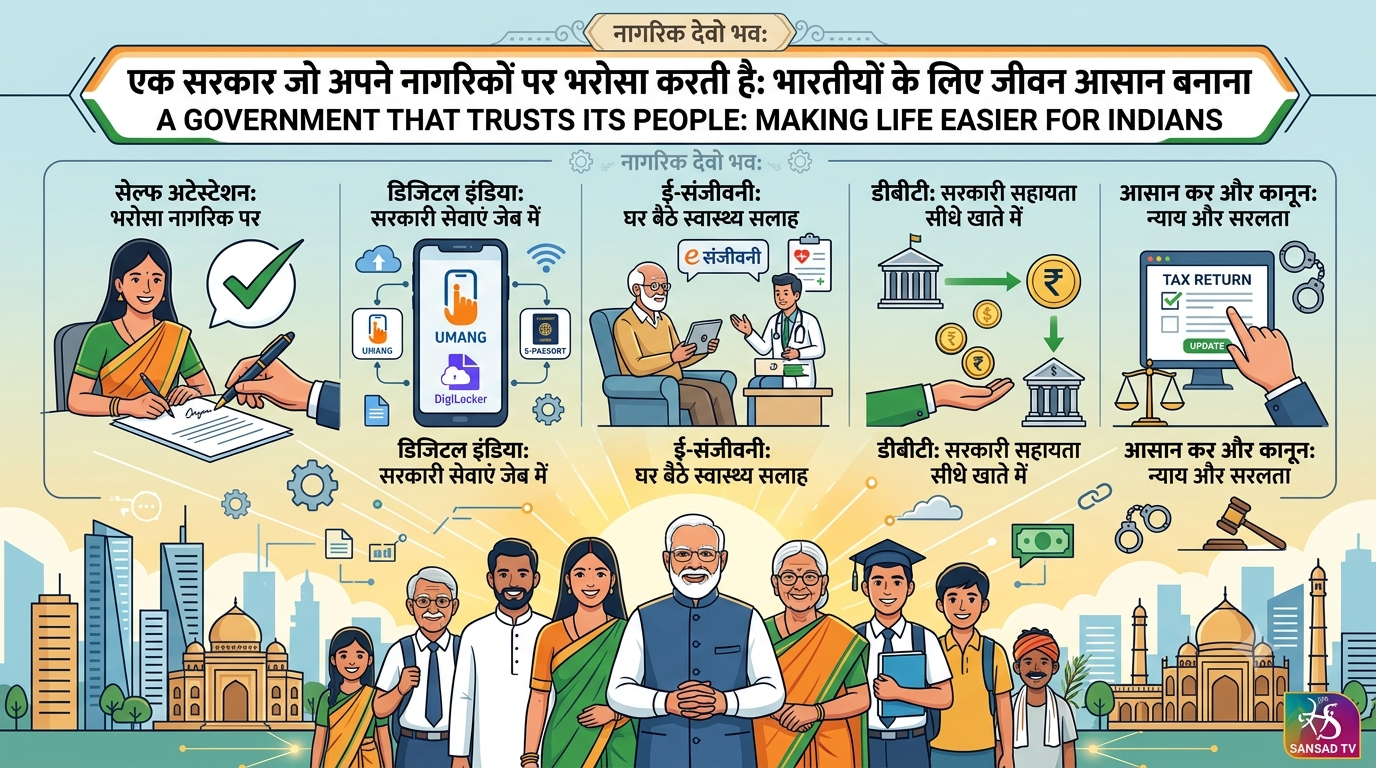
The biggest change started with a very simple idea: trusting the common man. Previously, if you needed to submit copies of your documents, you had to run around finding a special “gazetted officer” to sign them and prove they were real. The government stopped this rule. Now, you can just sign your own documents (self-attestation). This saved everyone time and money, proving that the system finally trusts its people.
Digital India: The Government on Your Phone
Technology has been used to bring government offices right to your fingertips, saving you trips to physical offices.
All-in-One Apps: Apps like Umang let you access thousands of government services from your phone.
No More Paper Files: With DigiLocker, you can safely store your driving license, school mark sheets, and other important papers digitally. Over 50 crore people use it today.
Faster Passports: Getting a passport used to take nearly two months. Today, thanks to online apps and digital police verification, it takes just a few days.
Healthcare from Home
Medical help has also become much easier to get. Through a service called eSanjeevani, millions of people (especially women and the elderly) have consulted top doctors through video calls without leaving their homes. Additionally, everyone can now get a free digital health account to safely store all their doctor’s prescriptions and test reports in one place.
Direct Help, No Middlemen
When the government wants to help citizens with financial aid, pensions, or scholarships, the money no longer passes through multiple hands where it could get lost. Through Direct Benefit Transfer (DBT), the money goes straight into the bank accounts of the people who need it.
Making Taxes Simple and Fair
Paying taxes used to be confusing and scary for the common man. The government has taken big steps to fix this:
Less Tax to Pay: The rules have been simplified, and by 2026, people earning up to ₹12 lakhs don’t have to pay any income tax.
Fixing Mistakes Safely: If you accidentally make a mistake while filing your taxes, you can easily update it later without the fear of being punished or getting legal notices.
One Country, One Tax: The introduction of GST meant that businesses no longer have to pay different taxes in every state. It made moving goods across the country faster and cheaper.
Fairer Laws and Faster Results
The government also realized that going to jail for a tiny, accidental mistake is unfair. Through new laws, hundreds of small offenses are no longer punished with jail time, but just a fine. Thousands of old, useless laws were entirely thrown out.
To make sure important projects are actually completed on time, the Prime Minister uses a special digital platform to personally check on their progress.
The Bottom Line:
The goal of all these changes is to put the citizen first. By cutting down complicated rules, using modern technology, and—most importantly—trusting the people, the government is making everyday life much smoother and more respectful for everyone.