




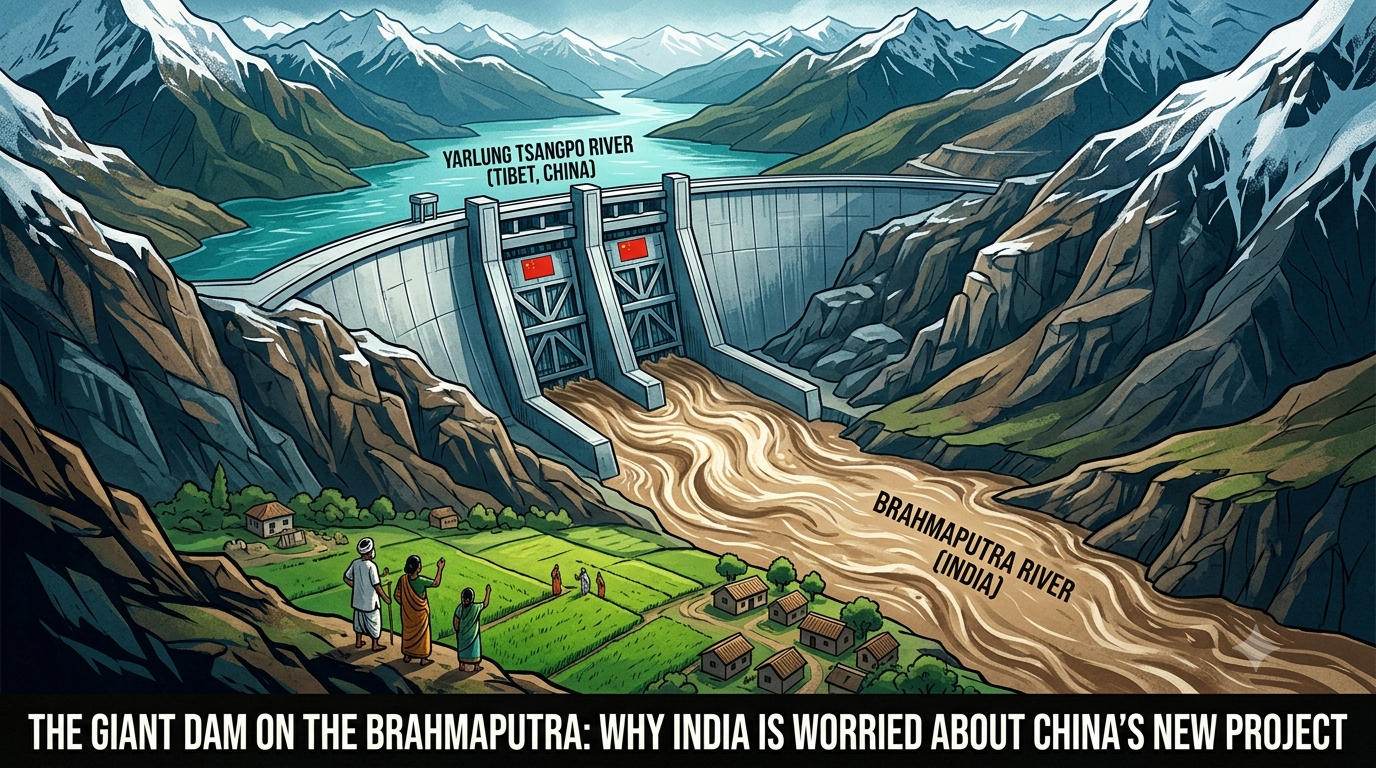
China has recently given the green light to build a massive dam for electricity on the Yarlung Tsangpo River. While China builds large structures all the time, this specific project is causing a lot of worry in neighboring countries. Why? Because this river flows directly down from the mountains into India, where it is known as the mighty Brahmaputra. This giant dam has turned into a major political issue, making people worry about the environment, safety, and who truly controls the water.
Why the River is So Important to India
To understand why India is nervous, you have to look at how much the country relies on the Brahmaputra River, especially in northeastern states like Assam and Arunachal Pradesh.
Farming and Jobs: The river is the main source of water for crops, fishing, and local businesses, keeping millions of people financially afloat.
Everyday Water: It provides essential drinking water for a huge population.
Nature and Wildlife: The river environment is home to unique plants and animals that need the water to flow naturally to survive.
What is China Trying to Do?
China wants to use the incredibly fast-flowing water dropping down from the Himalayas to generate a massive amount of electricity. While creating power is their main goal, building such a giant structure at the top of the river gives China a huge advantage. Because they are “upstream,” they essentially hold the keys to the water that eventually flows down into India and Bangladesh.
India’s Biggest Fears
Building a giant dam on a shared river creates several major problems for India:
Using Water as a Weapon: The biggest fear is that China could control the flow of the river on purpose. They could hold back water during the dry season, causing severe droughts in India. Worse, they could release too much water during the rainy season, causing massive floods downstream.
Border Pressure: The dam is being built very close to Arunachal Pradesh. Because India and China already have disagreements over this border area, building a huge dam so close feels like a strategic move to put pressure on India.
Hurting the Environment: Naturally flowing rivers carry rich soil and mud that act as free fertilizer for farms downstream. A giant dam traps all this good soil, meaning Indian farms will lose out on essential nutrients. It also ruins the natural habitat for fish and other river life.
Earthquake and Flood Dangers: The Himalayan mountains have a lot of earthquakes. Storing an ocean of water in one place is so heavy that it can actually trigger earthquakes. If a disaster happens and the dam breaks or has to release water suddenly, India would get hit by deadly flash floods with almost no warning.
The Road Ahead
This giant dam is no longer just about generating electricity; it is a serious political problem between two powerful neighbors. Sharing a river requires a lot of trust, which is currently missing. To protect its people and its land, India will need to keep pushing for open communication and demand clear agreements on how the water is shared safely.