




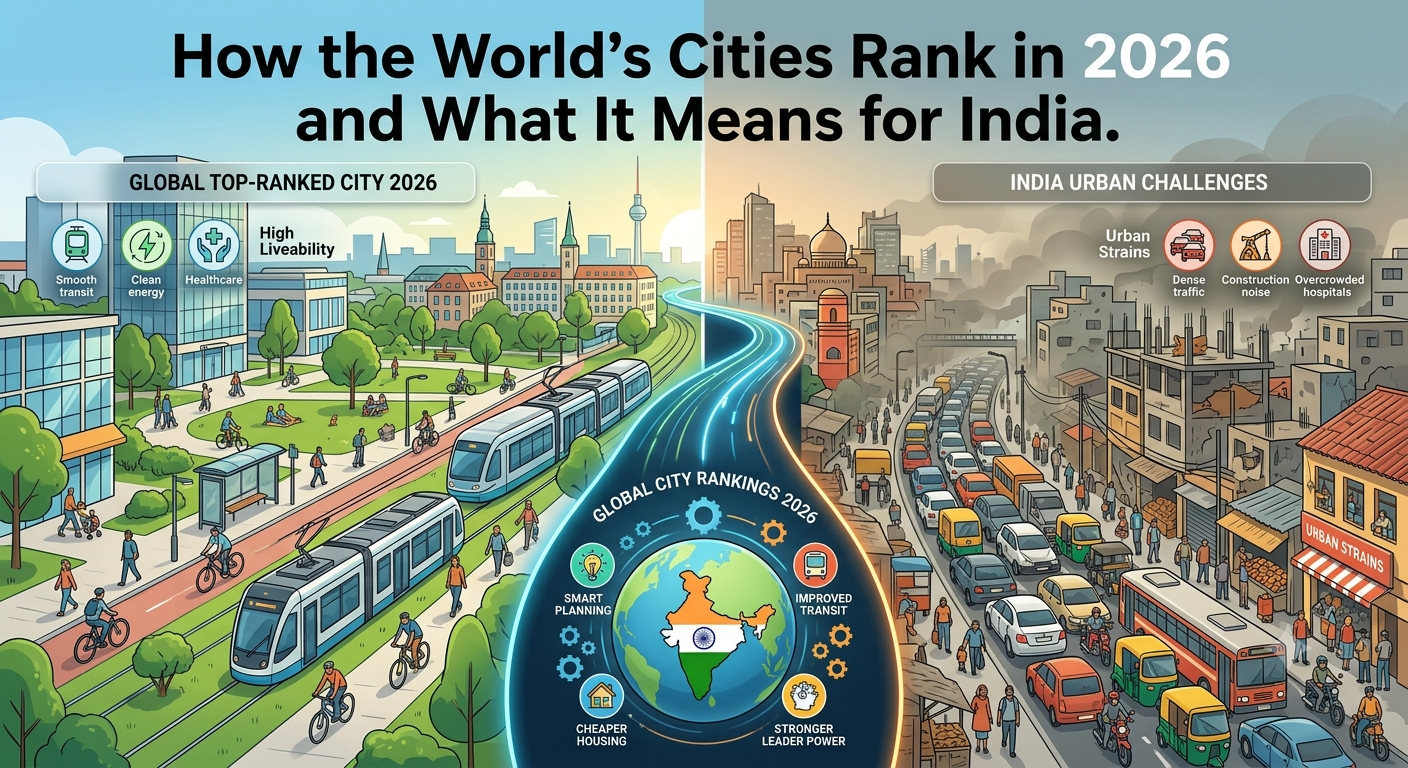
A great city is not just about having tall buildings; it is about how comfortable and happy its people are. Every year, a report called the Global Liveability Index ranks 173 cities around the world to see which ones offer the best living conditions. The newly released 2026 list shows us the best cities in the world and highlights the daily struggles people face in Indian cities.
How Are Cities Judged?
To figure out how “liveable” a city is, the report scores them on five main areas:
Safety: Is the city peaceful? Does it have low crime rates and no major conflicts?
Healthcare: Are there good, easily accessible doctors and hospitals?
Culture and Nature: Does the city protect its environment and offer fun cultural activities?
Education: Are there good schools and colleges available for everyone?
Basic Needs: Does the city have good roads, public transport, housing, and clean water?
The Best Cities in 2026
For the second year in a row, Copenhagen (in Denmark) took the number one spot as the best city to live in. The top five spots went to cities in Europe and Australia:
- Copenhagen
- Vienna
- Zurich
- Melbourne
- Geneva
Globally, the average score was okay but not perfect. While hospitals and schools improved in many countries, the world became a bit less safe overall. This drop in safety was caused by ongoing wars, protests, and political unrest in different parts of the world.
Where Does India Stand?
For India, the report was a bit of a wake-up call. Not a single Indian city made it into the top 100.
New Delhi came in at 120.
Mumbai ranked 121.
Chennai was 123.
Bengaluru ranked 127.
This does not mean these cities are bad places to live, but it clearly shows that they are struggling with major growing pains and poor planning.
Why Are Indian Cities Struggling?
The biggest problem for Indian cities is that they are growing much faster than they can handle. This rapid, unplanned growth leads to several everyday problems:
Housing Shortages: There are not enough affordable homes, which forces many people to live in crowded slums.
Traffic and Transport: There are too many cars and not enough good buses or trains, leading to terrible traffic jams.
Pollution: High levels of dirty air and poor garbage cleanup cause health issues for residents.
Overcrowded Hospitals: Because the population is growing so fast, public hospitals and clinics are often too crowded to help everyone quickly.
How to Fix These Problems
To move up on the list and create better lives for their people, Indian cities need to focus on a few clear solutions:
Smart Planning: Cities need to be planned out carefully before more buildings and neighborhoods are added.
Stronger Local Leaders: City governments need the power and money to fix local problems quickly.
Better Public Transport: Building clean, reliable, and wide-reaching bus and train networks so people don’t have to drive as much.
Cheaper Housing: Building more affordable homes so that everyone has a safe and clean place to live.
Conclusion
Making Indian cities better places to live is highly important for the country’s future. By taking these daily problems seriously and planning ahead, India can build stronger, healthier, and happier cities for everyone.