

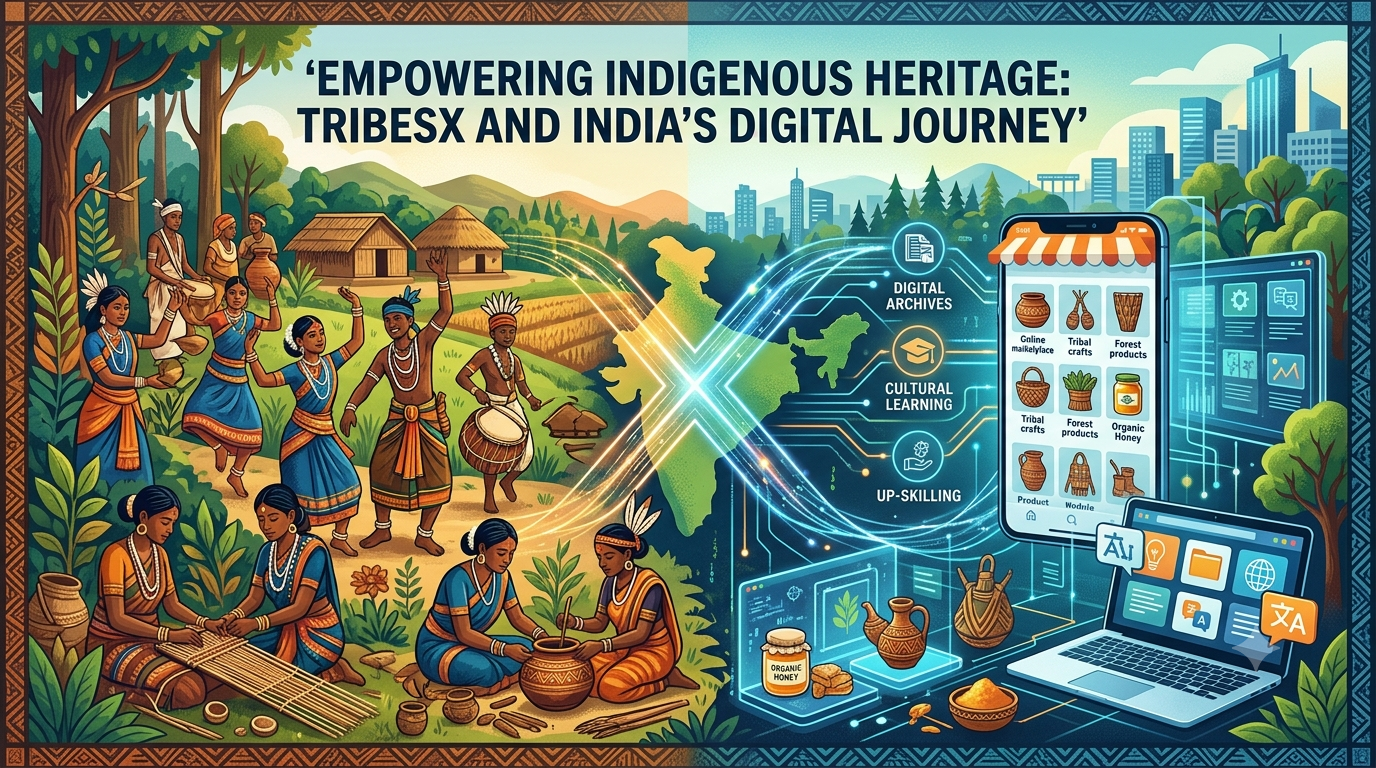
India’s profound diversity is perhaps best reflected in its indigenous communities, whose unique languages, folk arts, ecological wisdom, and traditional practices have been passed down orally for generations. However, the rapid rise of the digital age and artificial intelligence poses a unique challenge to these age-old oral traditions. To address this, India has introduced TribesX, a pioneering digital initiative designed not only to safeguard indigenous heritage but to weave it into the fabric of the modern digital economy.
Scaling Digital Archives: The Birth of TribesX
Originally launched under the banner of “Aadi Sanskriti,” the initiative has evolved into the comprehensive TribesX platform. Today, it hosts an expansive library of over 10,000 digital assets—including historical documents, audio files, and videos—alongside more than 45 UGC-aligned educational courses. With India’s tribal population standing at over 10.45 crore (roughly 8.6% of the nation), the platform’s mission is vital. It seeks to ensure that this massive demographic can seamlessly connect their historical identity with future livelihood opportunities.
This digital leap is made possible by the broader expansion of internet connectivity across remote regions. Through supplementary AI-powered portals like “Aadiwani,” major indigenous languages are being translated and documented, ensuring that the deep philosophical and ecological insights hidden within native songs and folklore are immortalized for future generations.
Reclaiming the Narrative
For decades, the mainstream understanding of indigenous groups was filtered through secondary, often colonial-era texts, which frequently painted these communities as “backward.” TribesX is dismantling this outdated narrative by empowering these communities to tell their own stories.
By prioritizing authentic, community-driven participation, the platform bridges the gap between historical misrepresentation and ground reality. Furthermore, it serves as a critical lifeline for Particularly Vulnerable Tribal Groups (PVTGs), providing the tools necessary to rescue their unique languages and cultural memories from the brink of extinction.
Economic Independence Through Digital Marketplaces
TribesX goes far beyond cultural archiving; it acts as a digital bridge connecting remote artisans to global markets. Through government-backed upskilling programs like Aadi Karmayogi and partnerships with the National Skill Development Corporation (NSDC), indigenous youth are learning how to navigate the modern e-commerce landscape.
The platform actively champions tribal craftsmanship. Instead of focusing on mass-produced uniformity, it celebrates the raw, distinctive, and asymmetrical beauty of indigenous art, giving artisans a dedicated online marketplace to sell their creations fairly and directly to consumers.
The Strategic Backbone: Tribal Research Institutes (TRIs)
TribesX is closely supported by various Tribal Research Institutes (TRIs), which function as localized think tanks. These institutes play a crucial role in adapting overarching national policies to fit the specific needs and contexts of regional tribal areas, ensuring that development budgets are utilized effectively.
TRIs are also driving educational reform. By aligning with the National Education Policy, they have successfully developed primary learning materials in 21 native languages. This ensures that young children in remote areas can begin their educational journey in their mother tongue. Additionally, TRIs actively work to conserve numerous localized crafts, ranging from traditional textiles to bamboo and clay work.
TRIFED: Eliminating Exploitation in Forest Produce
A significant portion of India’s indigenous economy revolves around organic forest produce—a massive market worth billions globally. Historically, tribal gatherers, who source up to 80% of India’s organic forest goods, have been exploited by intermediaries due to a lack of storage and packaging resources.
Enter TRIFED (Tribal Cooperative Marketing Development Federation of India). Through initiatives like the Apna Bazaar scheme, indigenous collectors are provided with the necessary infrastructure to clean, package, and brand their products. By establishing a Minimum Support Price (MSP) for over 40 types of forest commodities, TRIFED effectively cuts out middlemen, allowing workers to realize the true market value of highly sought-after goods like organic forest honey and native seeds.
Integrating with India’s Vision 2047
As India marches toward its goal of becoming a fully developed nation by 2047, experts agree that true national progress is impossible if its most vulnerable populations are left behind. Advancements in digital infrastructure, particularly Direct Benefit Transfers (DBT), have already revolutionized the delivery of welfare by eliminating systemic leaks and directly empowering citizens financially.
TribesX represents the next step in this evolution. It reinforces the idea that indigenous communities are not merely passive recipients of government aid, but active, equal partners in the nation-building process. By integrating traditional ecological knowledge, sustainable practices, and rich cultural arts into the mainstream, India is proving that modernization does not require the erasure of tradition.