




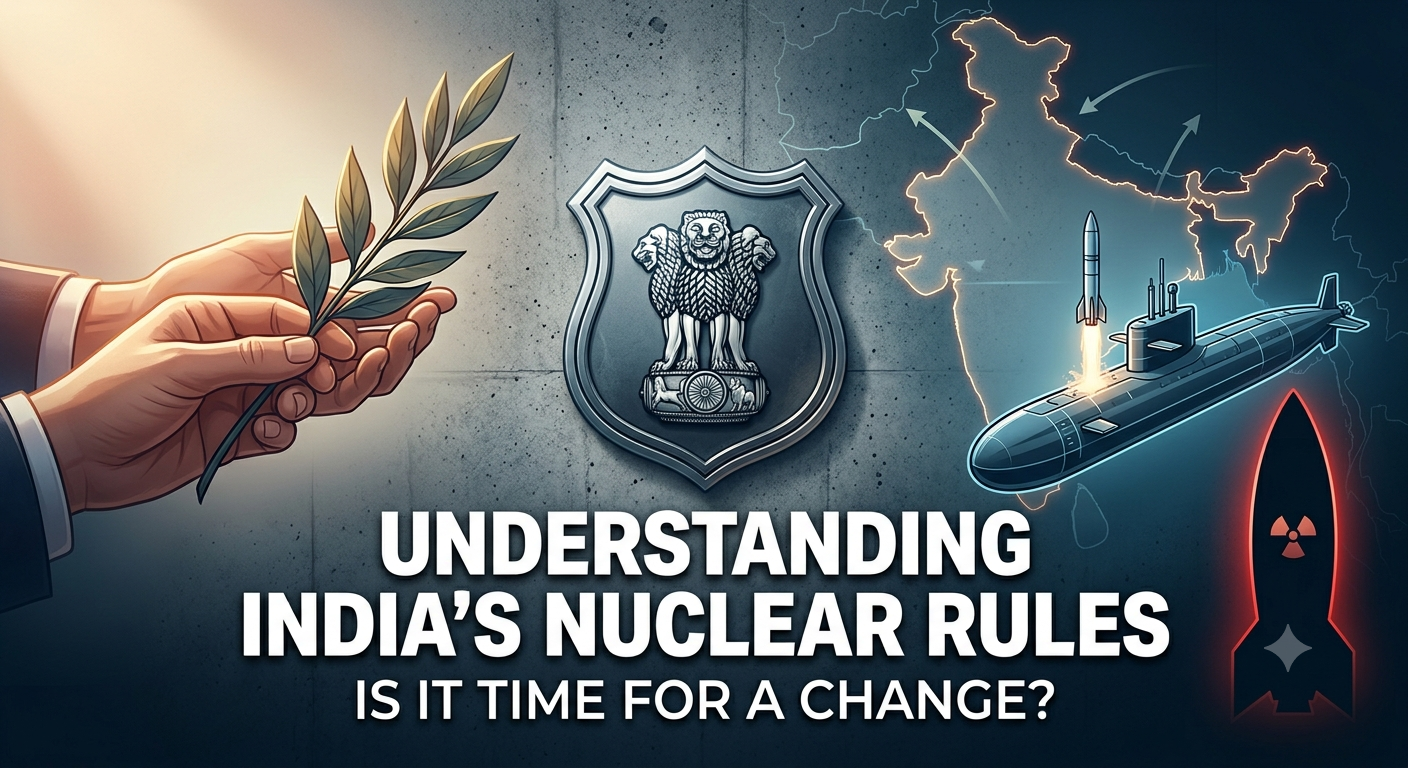
Nuclear weapons are the most dangerous tools ever created. When India became a free country, it wanted global peace and no nuclear bombs. However, to stay safe in a tough neighborhood, India eventually had to build its own nuclear weapons.
When it did, India made a big promise to the world: “We will never use these weapons first.” This rule is called the “No First Use” (NFU) policy. But as the world changes, many are asking if India should rethink this promise.
Here is a simple breakdown of how India’s nuclear rules work and why they are being debated today.
How India Became a Nuclear Power
India did not rush to build nuclear bombs. The decision was pushed by security threats:
- In 1962, India fought a war with China, and just two years later, China tested its own nuclear bomb. This made India realize it needed to protect itself.
- In 1974, India tested a nuclear device, but called it a “peaceful explosion” just to show it had the technology.
- Finally, in 1998, India officially tested nuclear bombs and declared itself a nuclear-armed country. Pakistan quickly tested its own bombs right after.
What is the “No First Use” (NFU) Policy?
When India announced it had nuclear weapons, it created a set of rules for how to use them:
- Never Attack First: India promises it will never start a nuclear war. It will only use nuclear weapons if another country attacks India (or Indian troops) with nuclear bombs first.
- Hit Back Harder (Massive Retaliation): If someone does attack India with a nuclear bomb, India will strike back so hard that the enemy will suffer unacceptable damage.
- Just Enough Weapons: India doesn’t want to be in a race to build thousands of bombs. It only keeps enough weapons to scare enemies away.
- Attack from Anywhere: If India is attacked, it has the power to fire back from land-based missiles, fighter jets, or hidden submarines in the ocean.
- The Exception: Even if an enemy doesn’t use nuclear bombs, but attacks India with major biological or chemical weapons, India still keeps the right to hit back with nuclear weapons.
Who Pushes the Button?
In India, the military cannot decide to start a nuclear attack on its own. Only elected civilian leaders have this power. The Prime Minister is the head of the group (called the Nuclear Command Authority) that holds the ultimate authority to order a nuclear strike. They make this decision using advice and information from top security experts.
Why Did India Make This Promise?
In 1998, when India tested its bombs, the world was angry and put economic punishments (sanctions) on the country. By promising “No First Use,” India proved it was a responsible, peaceful nation that only wanted to protect itself.
This smart move helped India a lot. The world trusted India again. The punishments were lifted, and countries like the United States even signed special deals to share peaceful nuclear energy technology with India.
Why Are People Wanting to Change It Now?
Today, India’s neighbors are changing the rules of the game, making experts wonder if India needs a new plan:
China’s Growing Arsenal: China is rapidly building more nuclear weapons. Some reports say they could have over 1,000 bombs in the coming years. This makes people worry if India’s “small but effective” stockpile is still enough to scare China.
Pakistan’s Small Bombs: Pakistan refuses to promise “No First Use.” Instead, they have built small, “tactical” nuclear bombs meant for the battlefield. They threaten to use these small bombs first if India’s army ever attacks. They are testing India, betting that India won’t actually destroy whole cities just because Pakistan used a small bomb on a battlefield.
Should India Change Its Rule?
Experts are split on what to do next.
Some say keeping the “No First Use” rule is good because the world trusts India, and it saves the country from spending billions of dollars on a nuclear arms race.
Others say that actually changing the rule to allow a “first strike” would require making way more weapons and missiles, which is incredibly expensive.
A middle path is to keep the current policy but leave the exact details a little blurry. By not explaining exactly what India might do, it keeps enemies guessing and afraid to try anything dangerous.
The Bottom Line: India’s original nuclear promise was a brilliant strategy that kept the country safe and earned global respect. However, as neighboring countries build more aggressive weapons, India will have to constantly balance its peaceful history with the need to survive in a modern world.