


The Shifting Global Paradigm
In an era defined by great power rivalries, economic realignments, and shifting geopolitical centers of gravity, India is steadily moving from the periphery to the core of global decision-making. Prime Minister Narendra Modi’s diplomatic engagements—highlighted by his attendance at the 52nd G7 Summit in France and a landmark visit to Slovakia—serve as a clear indicator of New Delhi’s elevated status. The world no longer views India simply as a vast market; it is increasingly recognized as a foundational pillar of the 21st-century international order.
Redefining the G7 and Championing the Global South
Historically, the G7 operated as a closed circle of the wealthiest Western nations. However, internal rifts over trade frameworks and climate commitments have made the bloc realize the necessity of inclusive global governance. India’s recurring presence at these summits highlights an undeniable reality: major global challenges cannot be solved without New Delhi’s input.
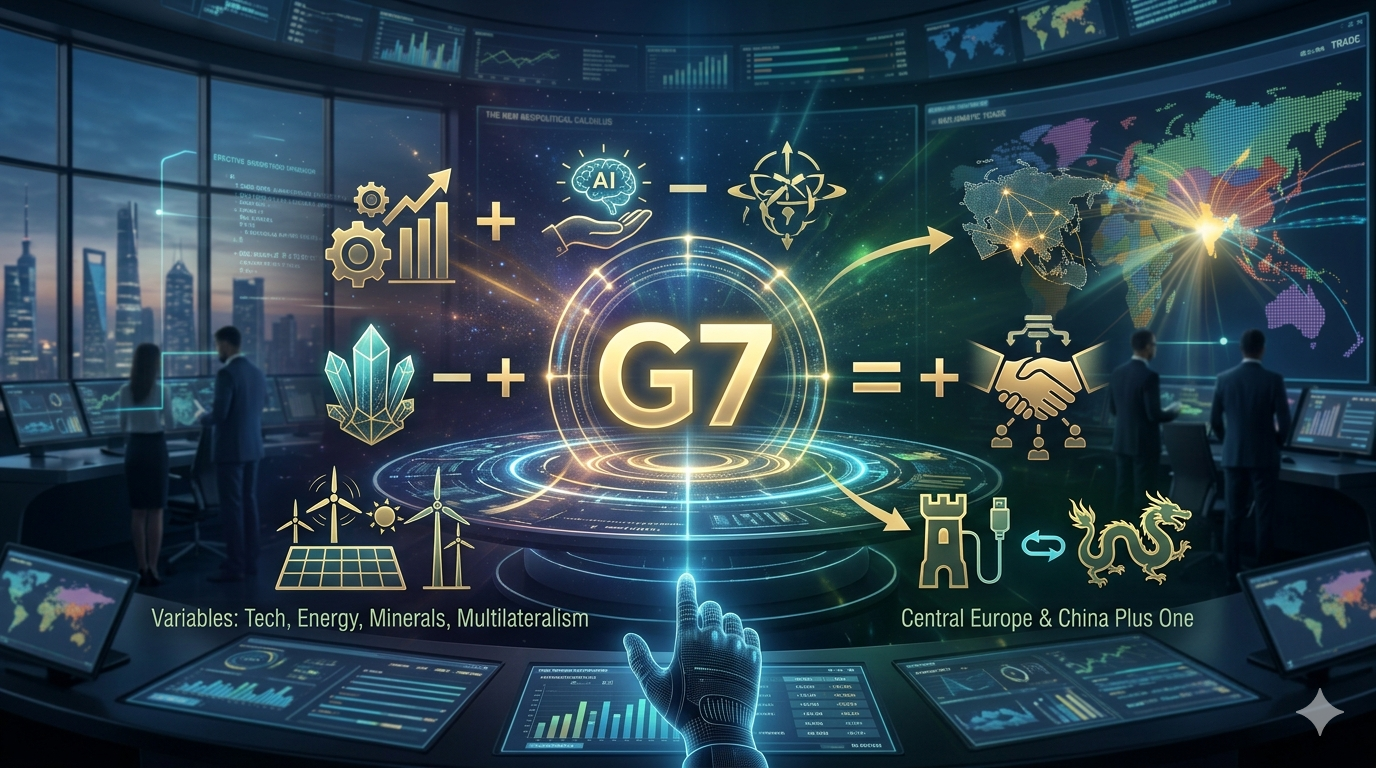
At current summits, the dialogue has expanded far beyond traditional economics to include the governance of artificial intelligence, supply chain resilience, critical minerals, and energy security. Within this arena, India has successfully positioned itself as the definitive voice for the Global South. While some affluent countries roll back their environmental pledges, India continues to pioneer climate initiatives, showcasing its heavy investments in renewable energy and remaining steadfast in its goal to reach net-zero emissions by 2070.
France: A Historically Dependable Partner
A crucial element of India’s European strategy is its deep-rooted relationship with France. Paris was remarkably prescient in the late 1990s, identifying India as a formidable and independent Asian powerhouse long before many of its Western peers.
Today, this strategic partnership is incredibly multifaceted. It encompasses vital sectors such as nuclear energy, space exploration, and advanced defense manufacturing. From the procurement of Rafale jets to prospective joint ventures in developing cutting-edge aircraft engines, France has proven to be an unwavering ally. Even during historical periods when other nations imposed technological embargoes on India, Paris maintained its cooperative stance.
The Power of Strategic Autonomy
At the heart of India’s foreign policy is the doctrine of “Strategic Autonomy.” Rather than tethering itself to a single geopolitical bloc, India engages pragmatically across the global spectrum. Because of its sheer size, demographic dividend, and economic trajectory, New Delhi naturally cultivates concurrent relationships with Washington, Moscow, and various European capitals.
This independent approach allows India to act as a stabilizing force in global conflicts. For example, amid the ongoing war in Ukraine, India has consistently advocated for territorial integrity, diplomacy, and peace, while simultaneously working with global partners to shield developing nations from the resulting shocks to food and energy supplies.
Expanding Horizons: The Importance of Central Europe
While engagements with heavyweights like France dominate the headlines, the Prime Minister’s visit to Slovakia—the first such trip by an Indian premier in over 30 years—is a masterstroke of long-term planning.
As global industries look to diversify their supply chains away from over-reliance on a single nation (the “China Plus One” strategy), Central and Eastern Europe present massive untapped potential. Engaging with countries like Slovakia opens up alternative trade corridors, creates new collaborative spaces for technological innovation, and provides fresh opportunities for India’s massive IT workforce. It reflects a comprehensive diplomatic vision that values the unique contributions of smaller, strategically located nations.
Looking Ahead
India’s current diplomatic maneuvers across Western and Central Europe are not isolated events; they are part of a grander strategy. By driving global narratives on technology, sustainable development, and multi-alignment, India is actively shaping the future of international relations. This proactive global footprint is a vital stepping stone in New Delhi’s ambitious journey to becoming a fully developed nation—a ‘Viksit Bharat’—by the year 2047.