




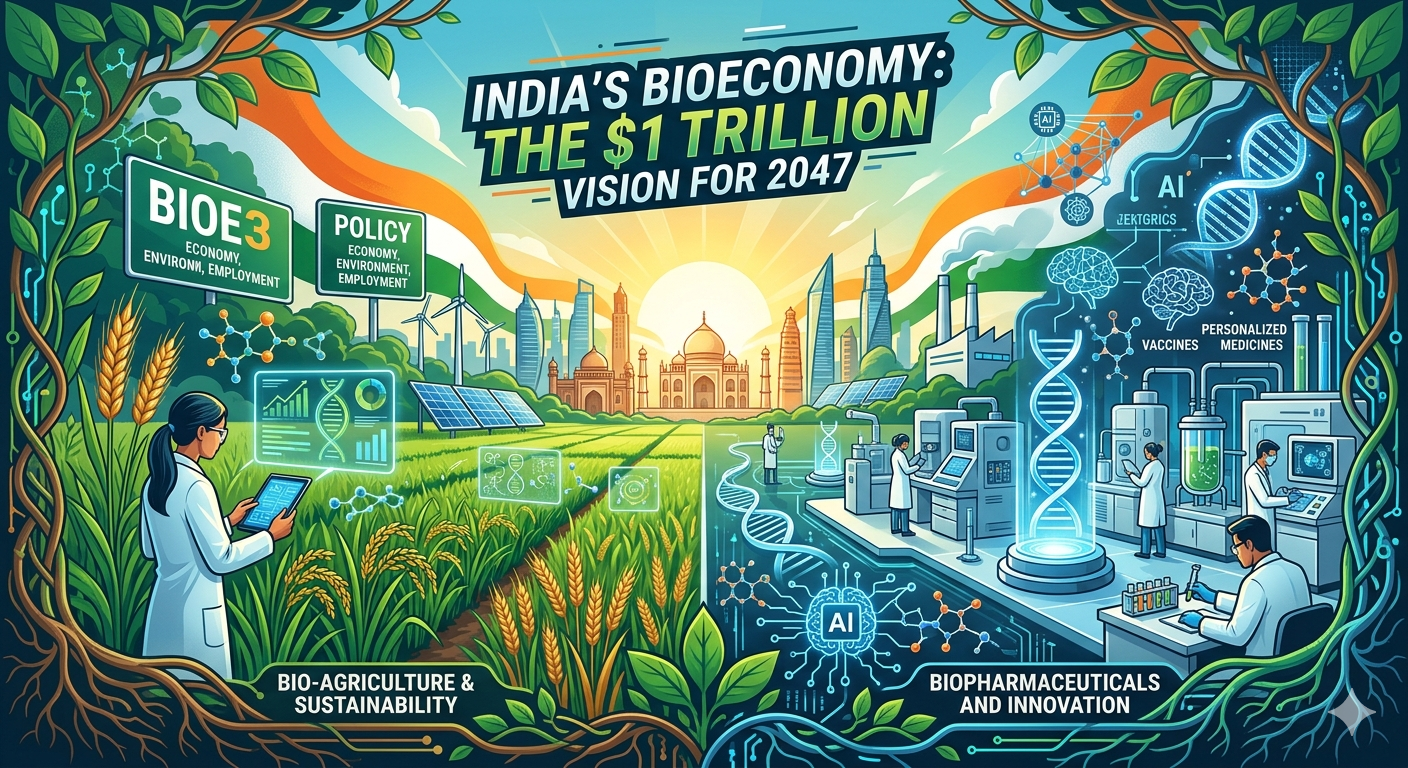
A New Era of Economic Evolution
The trajectory of the 21st century is increasingly being shaped by biological innovation, and India is positioning itself at the forefront of this global shift. Leveraging its immense biodiversity, advanced scientific infrastructure, and thriving startup ecosystem, the country has set an ambitious target: cultivating a $1 trillion bioeconomy by the year 2047. This milestone is deeply intertwined with India’s broader aspirations of achieving developed nation status through sustainable, self-reliant, and inclusive practices.
Accelerated Industry Expansion
The last ten years have witnessed explosive growth within the Indian biological sector. By 2024, the industry’s valuation soared past $130 billion. This momentum has been fueled by significant advancements in biopharmaceuticals, agricultural biotechnology, and bioinformatics. The global health crisis of the COVID-19 pandemic also served as an unexpected catalyst, accelerating the industry’s capabilities and cementing India’s reputation as a dependable hub for global bio-manufacturing and innovation.
The sector’s robust potential is anchored in five fundamental strengths:
A rich variety of climatic zones and a diverse demographic landscape.
A deep well of highly skilled scientific and technical talent.
Continuous improvements in the ease of doing business.
A surging domestic and international appetite for biologically derived products.
A historically proven track record of successful biotech delivery and scaling.
The BioE3 Framework: A Blueprint for the Future
To capitalize on this momentum, the government introduced the BioE3 Policy—a strategic initiative focusing on the intersection of the Economy, the Environment, and Employment. This comprehensive framework is designed to transform India into a premier global manufacturing destination for sustainable biological goods.
Key pillars of this initiative include:
Fostering R&D and Innovation: Building state-of-the-art biomanufacturing facilities and integrating Artificial Intelligence (AI) from the ground up to predict, diagnose, and optimize biological processes.
Championing the Circular Economy: Shifting away from traditional chemical industries toward regenerative models that minimize pollution and prioritize sustainable materials, such as biodegradable plastics and smart proteins.
Workforce Development: Generating a massive wave of high-quality green jobs while upskilling the current workforce to handle next-generation technologies.
Global Leadership and Sustainable Solutions
The ripple effects of a thriving bioeconomy extend far beyond financial metrics; they offer concrete solutions to some of humanity’s most pressing challenges. In the realm of healthcare, Indian biotechnology continues to democratize access to life-saving vaccines, personalized medicines, and affordable diagnostics—already supplying vaccines to more than 150 nations.
Simultaneously, in the agricultural sector, biological innovations are creating climate-resilient crops and sustainable food alternatives, directly addressing the dual threats of global warming and food insecurity.
Looking Ahead
The transition toward a biology-driven economy represents a defining chapter in India’s modern history. By combining strategic government policies like BioE3 with cutting-edge artificial intelligence and a commitment to green growth, India is moving beyond merely participating in the global bioeconomy. Instead, it is stepping up to lead it, offering sustainable, scalable solutions for a rapidly changing world.